Before you cook
Background Recipe story & origin
This classic version represents the steakhouse standard: properly poached shrimp and a cocktail sauce with real horseradish kick. Shrimp cocktail emerged as an American restaurant in the early 20th century, reaching peak popularity in the 1950s and 1960s when it became synonymous with steakhouse dining and special occasions. The dish traces to the broader tradition of seafood cocktails that appeared in American cookbooks by the 1900s, with oyster cocktails documented in Fannie Farmer's 'Boston Cooking-School Cook Book' (1896). As refrigeration improved and shrimp became more widely available through the Gulf Coast fishing industry (1920s-1940s), shrimp cocktail replaced oysters as the dominant appetizer. The cocktail sauce formula of ketchup, horseradish, lemon, and Worcestershire likely evolved from earlier seafood sauces and was standardized by mid-century, appearing in cookbooks like 'The Joy of Cooking' (Rombauer, various editions from 1936). Las Vegas casinos and New York steakhouses made the dish classic in the 1950s-1970s, often serving massive portions as loss leaders to attract high-rolling customers.
Before you start Equipment you'll need
- large pot — provides enough water for shrimp to cook evenly without crowding
- slotted spoon — removes shrimp from water while draining excess liquid
- large bowl with ice water — Stops cooking immediately to prevent overcooking and locks in tender texture through rapid temperature reduction
- small mixing bowl — Combines sauce ingredients thoroughly and allows for proper mixing and flavor development before serving
Safety Safety & allergen notes
- Do not overcook shrimp; they continue cooking briefly after removal.
- Ice bath stops cooking immediately to prevent rubbery texture.
- Keep shrimp refrigerated until serving; shellfish spoils quickly at room temperature.
Non-negotiables Rules for success
-
Use shell-on shrimp and peel after cooking for better flavor.
Shells protect the meat during cooking and add flavor to the poaching liquid
-
Poach shrimp gently; never boil vigorously.
Vigorous boiling creates tough, rubbery shrimp; gentle poaching keeps them tender
-
Transfer to ice bath immediately after cooking.
Ice bath stops carryover cooking and locks in tender texture
-
Chill shrimp thoroughly before serving.
Warm shrimp cocktail is unappetizing; cold temperature is essential to the dish
Prep Get set first
About 5 min of prep
- Prepare large bowl of ice water before cooking shrimp
- Thaw shrimp if frozen
- Slice lemon for poaching liquid
- Measure sauce ingredients
Active time is about 15 minutes. Shrimp need at least 30 minutes to chill before serving, so plan accordingly.
Ingredients
Instructions
Unlock Grouped Step Actions
Plus members get tap-to-check action steps and live ingredient swaps for this recipe.
-
Make the cocktail sauce
In a small bowl, combine ketchup, horseradish, lemon juice, Worcestershire, hot sauce, and salt. Stir well. Taste and adjust horseradish or hot sauce to preference. Refrigerate while preparing shrimp.
-
Prepare the poaching liquid
Fill a large pot with 3 quarts water. Add salt, peppercorns, bay leaves, and lemon slices. Bring to a boil, then reduce to a gentle simmer.
-
Poach the shrimp
Add shrimp to the simmering water. Cook 2 to 3 minutes until shrimp are pink and just cooked through. They should be opaque and C-shaped, not tightly curled.
-
Ice bath and peel
Using a slotted spoon, transfer shrimp immediately to a large bowl of ice water. Let cool completely, about 5 minutes. Drain, peel, and devein shrimp, leaving tails on if desired.
-
Chill and serve
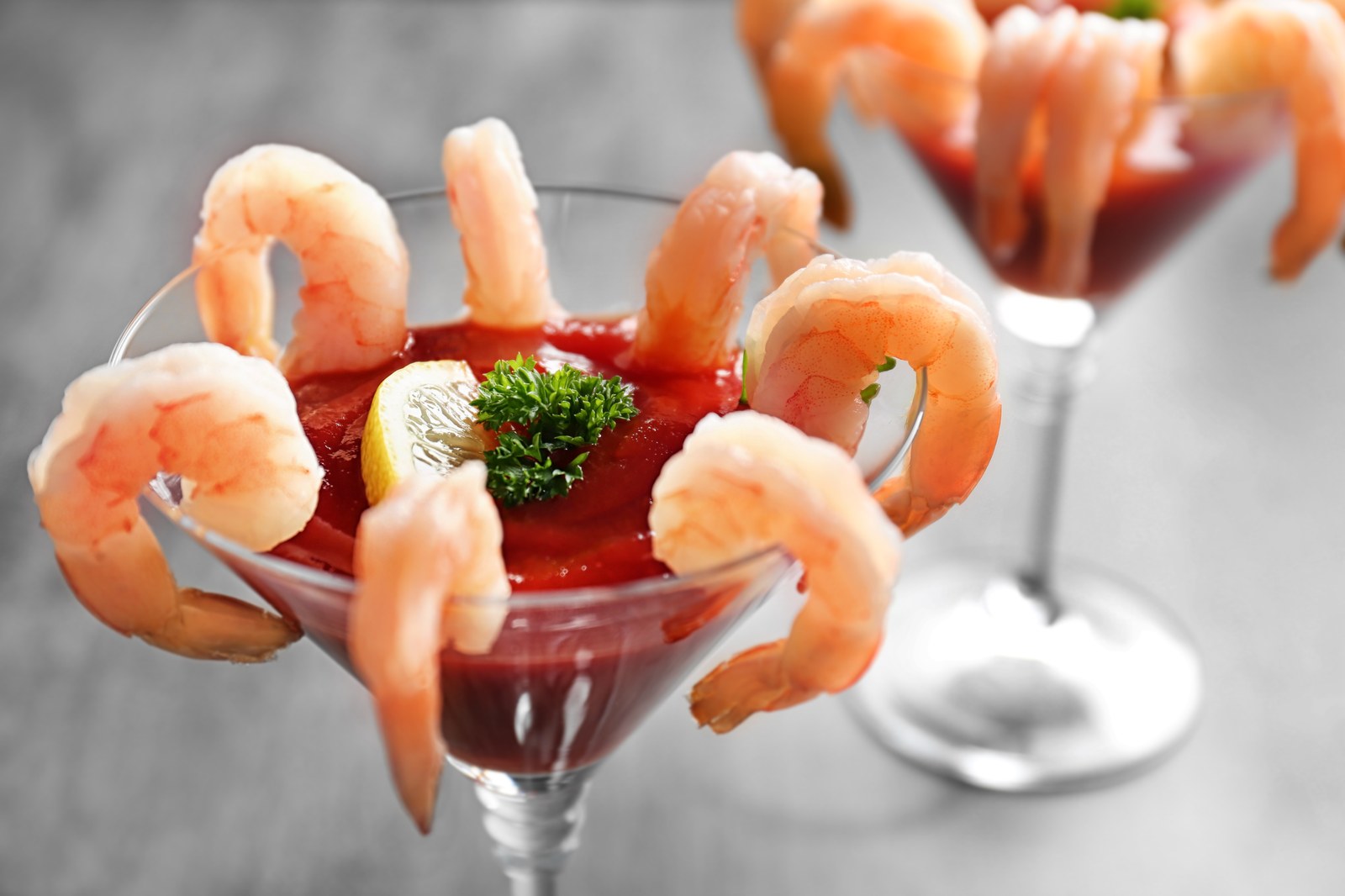
Refrigerate shrimp at least 30 minutes until thoroughly chilled. Arrange on a platter or individual glasses with cocktail sauce for dipping. Serve with lemon wedges.
Chef's notes
Large shrimp (21-25 count per pound) are ideal for cocktail presentation.
Shrimp can be poached up to 24 hours ahead and refrigerated.
Sauce improves after 30 minutes of resting; can be made a day ahead.
For extra flavor, save shells and simmer in poaching liquid first.
Serve on a bed of crushed ice with lemon wedges.