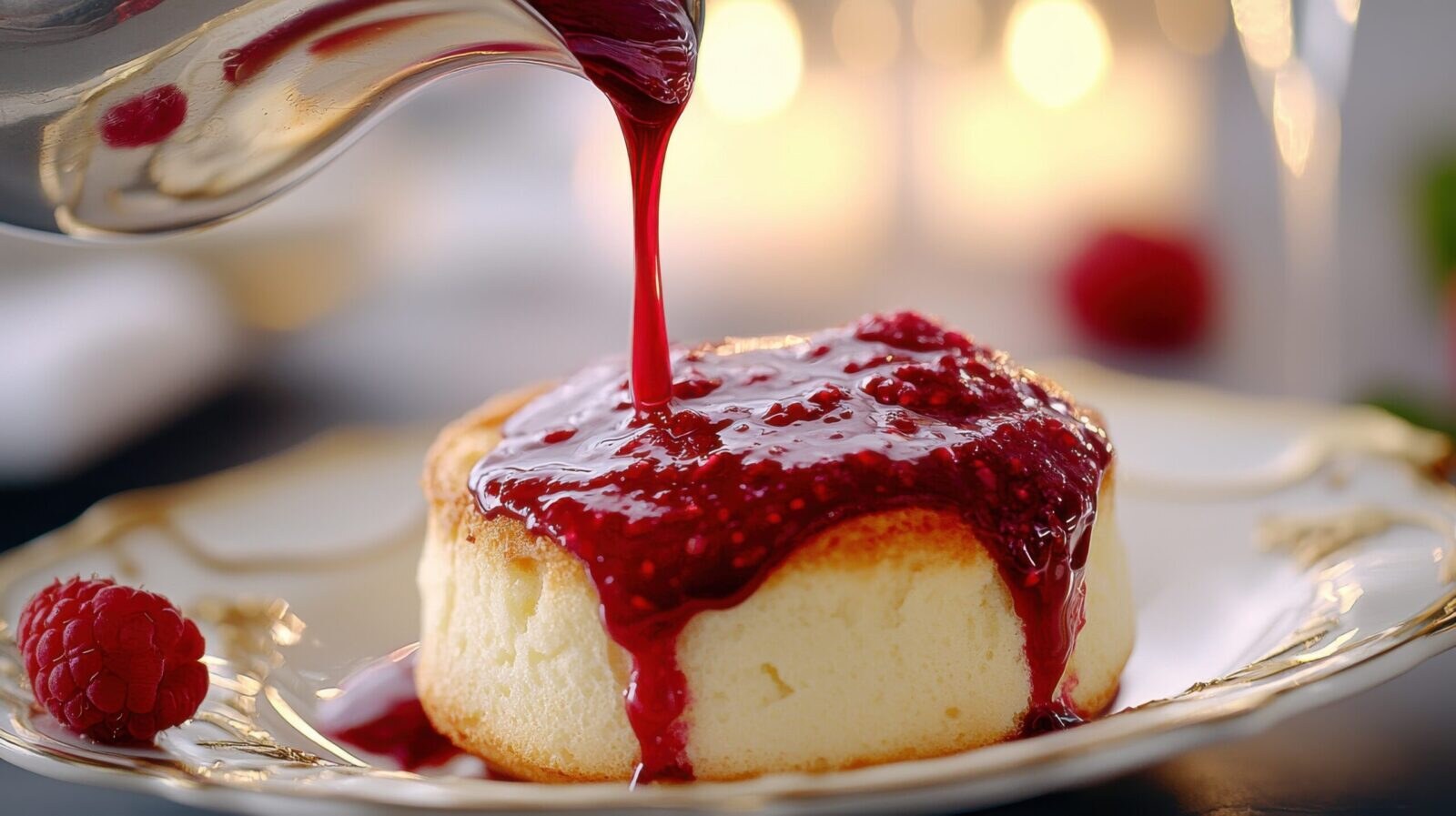
Before you cook
Background Recipe story & origin
Raspberry coulis developed in France during the 18th century as part of the broader evolution of French classical cuisine and sauce-making techniques. The term 'coulis' derives from the French word 'couler,' meaning 'to flow,' and originally referred to a rich meat-based sauce. However, as French chefs refined their craft during the Enlightenment, they began creating fruit-based versions that were lighter and more visually striking than their savory counterparts. Raspberry coulis specifically became popular in aristocratic kitchens and fine dining establishments, where its brilliant red color and tart-sweet flavor made it an ideal complement to vanilla creams, panna cottas, and other delicate desserts. The sauce gained particular prominence during the 19th and early 20th centuries as part of the nouvelle cuisine movement, which emphasized lighter preparations and artistic plating. Chefs valued coulis for both its aesthetic appeal—the vivid crimson hue added visual drama to white plates—and its ability to enhance rather than mask the flavors of primary desserts. The rise of home cooking and recreational baking in the mid-20th century brought raspberry coulis beyond restaurant kitchens into domestic use, particularly in European and North American households.nnToday, raspberry coulis remains a cornerstone of classic French pastry and fine dining dessert presentations. Its simplicity—requiring only fresh or frozen raspberries, sugar, and minimal processing—belies its sophistication. Modern variations include straining for silky texture, infusing with liqueurs, or incorporating complementary flavors like vanilla or lemon, yet the fundamental technique and purpose established centuries ago remains unchanged.
Before you start Equipment you'll need
- saucepan — distributes heat evenly to gently cook raspberries without scorching
- fine-mesh strainer — removes seeds and pulp to create the signature smooth, seedless texture
- wooden spoon — stirs gently to avoid crushing berries before straining
- small bowl — catches strained coulis for cooling and storage
Safety Safety & allergen notes
- Hot saucepan and raspberry mixture can cause burns - use pot holders when handling and keep hands away from steam
- Do not touch the hot mixture or taste it directly from the pan - allow it to cool to room temperature before serving
- When straining hot coulis, pour slowly and carefully to avoid splashing hot liquid onto skin
- Be cautious when pressing solids through the strainer - the mixture remains hot during straining, so use the back of a spoon rather than fingers
Non-negotiables Rules for success
-
Use medium heat and stir gently for first 2 minutes until sugar dissolves
Gentle stirring prevents berry breakdown and seed extraction; medium heat ensures even sugar dissolution without scorching the delicate fruit
-
Stop stirring and simmer undisturbed for 3-4 minutes
Continuous stirring breaks down berries and releases seeds into the mixture; allowing berries to settle and soften naturally keeps seeds intact for straining
-
Press gently on solids when straining, don't force through the mesh
Aggressive pressing forces seeds and skin particles through the strainer, creating a gritty texture; gentle pressing extracts only liquid and pulp while leaving seeds behind
-
Cool to room temperature before refrigerating
Hot coulis poured directly into cold storage can cause condensation and separation; cooling allows flavors to set and prevents the mixture from breaking down
Prep Get set first
About 5 min of prep
- Measure 12 oz fresh raspberries, 3 tablespoons granulated sugar, and 1 tablespoon fresh lemon juice
- Set out saucepan and wooden spoon
- Prepare fine-mesh strainer and small bowl for straining
- Have a spoon ready for pressing solids
This quick coulis takes only 21 minutes total—6 minutes active cooking plus 15 minutes cooling—so have everything prepped and ready to go.
Ingredients
Instructions
Unlock Grouped Step Actions
Plus members get tap-to-check action steps and live ingredient swaps for this recipe.
-
Cook the raspberries
Combine fresh raspberries, granulated sugar, and fresh lemon juice in a saucepan over medium heat. Stir gently with a wooden spoon until the sugar dissolves and the berries release their juice, about 2 minutes. Simmer without stirring for 3 to 4 minutes until the mixture is syrupy and berries have softened.
-
Strain and cool
Pour the warm raspberry mixture through a fine-mesh strainer set over a small bowl, pressing gently on the solids with the back of a spoon to extract all liquid and pulp. Discard the seeds and solids remaining in the strainer. Allow the coulis to cool to room temperature, about 15 minutes, then refrigerate until ready to serve.
Chef's notes
Strain while warm for easiest passage through the mesh; cold coulis becomes thicker and slower to press.
Taste after straining and adjust sweetness with additional sugar or tartness with lemon juice as needed.
Coulis thickens slightly as it cools; thin with water or a splash of raspberry liqueur if it becomes too stiff.
Freeze in ice cube trays for easy portioning; thaw at room temperature before serving.
Use frozen raspberries if fresh are unavailable; thaw and drain excess liquid before cooking.