Before you cook
Background Recipe story & origin
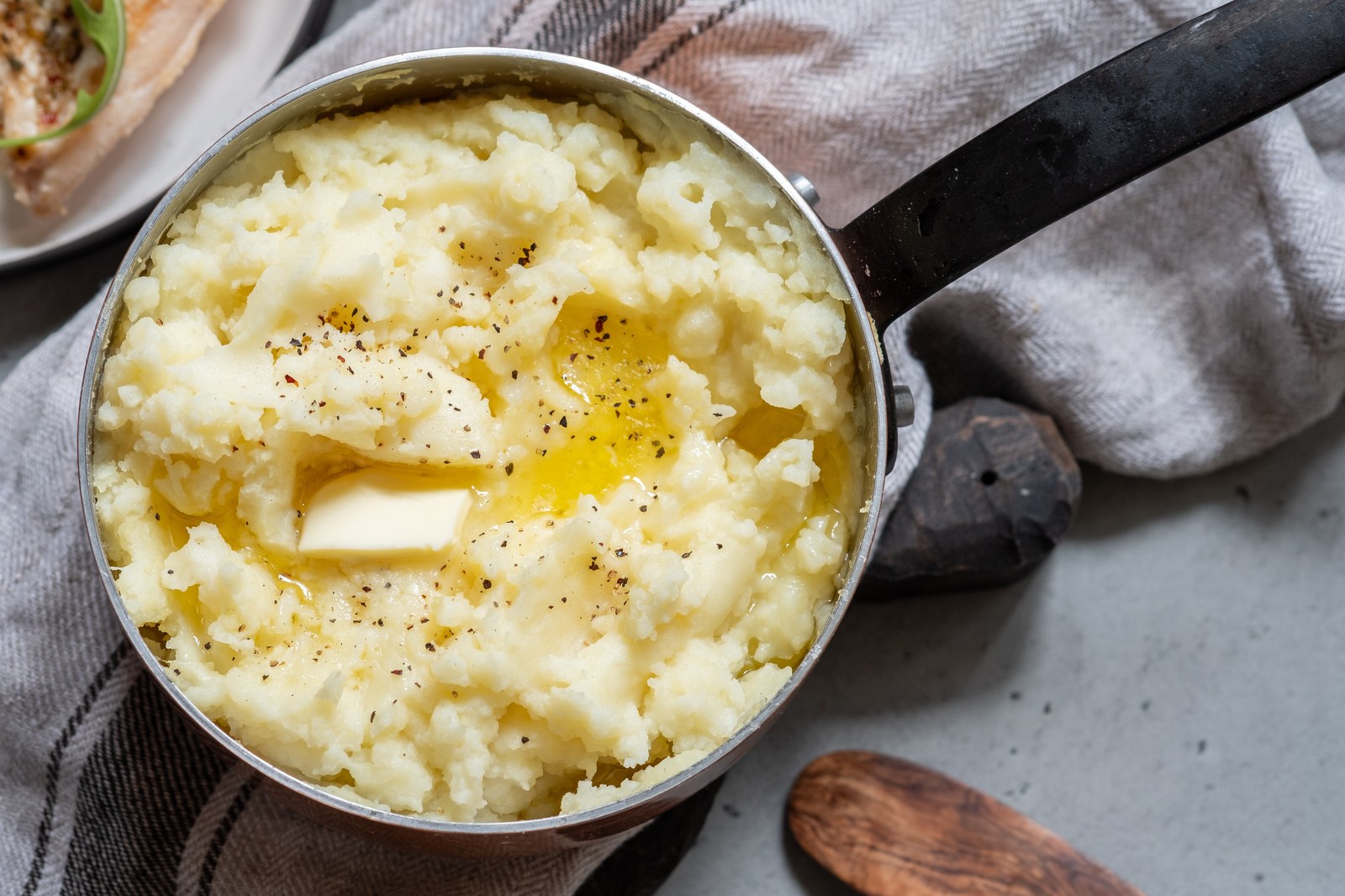
Mashed potatoes have roots in European cooking, where they appeared in cookbooks like Hannah Glasse's 'The Art of Cookery Made Plain and Easy' (1747) in England. The dish arrived in America with European settlers in the 1700s, and by the 1800s, mashed potatoes were a standard American table dish as potato varieties spread widely and dairy became more accessible. Early American versions used only butter and salt, while later adaptations (by the late 1800s) incorporated milk or cream for smoother texture. The dish appeared in American cookbooks like 'The Boston Cooking-School Cook Book' (1896 by Fannie Farmer) and became a holiday centerpiece by the 1900s. By the 1950s, mashed potatoes were an American comfort food icon, appearing in cookbooks like 'The Joy of Cooking' (1951 edition) and 'Betty Crocker's Picture Cook Book' (1950). This classic version reflects the straightforward American home style: russets, warm milk and butter, and just enough seasoning, the simple, comforting dish that never left the American dinner table.
Before you start Equipment you'll need
- large pot — handles large batches with room for stirring without overflow
- colander — drains pasta and vegetables fast without losing anything down the drain
- potato masher or ricer — breaks down potatoes to your preferred texture without making them gluey
- small saucepan — heats quickly for small quantities without waste
- wooden spoon or spatula — won't scratch cookware and wooden handle stays cool during extended stirring
- chef's knife — sharp blade makes precise cuts for even cooking and safer prep
- cutting board — stable surface protects your counters and keeps ingredients contained
Safety Safety & allergen notes
- Steam escapes aggressively when draining potatoes. Keep face and hands clear.
- Hot milk can scorch. Keep heat low when warming.
- A ricer creates smooth potatoes but can pinch fingers if used carelessly.
Non-negotiables Rules for success
-
Cut potatoes evenly so even cubes cook at the same rate.
Uneven pieces cook at different rates, creating some mushy and others undercooked
-
Start potatoes in cold water to ensure even cooking and prevent gummy centers.
Prevents uneven cooking and gummy texture.
-
Warm the milk and butter to prevent cooling the potatoes and keep texture smooth.
Maintains smooth texture and prevents cooling.
-
Do not over mash as excessive mashing builds gluten and makes potatoes gluey.
Over-mashing breaks down starch and creates sticky, gluey texture instead of fluffy
-
Salt the potatoes early so seasoning in the water pulls into the potato, not just over the top.
Ensures seasoning penetrates the potatoes.
Prep Get set first
About 3 min of prep
- Prepare large pot
- Have colander ready
- Have potato masher or ricer ready
- Have small saucepan ready
- Have wooden spoon or spatula ready
- Have chef's knife and cutting board ready
Have all equipment ready before starting. Potatoes cook quickly once boiling.
Ingredients
Instructions
Unlock Grouped Step Actions
Plus members get tap-to-check action steps and live ingredient swaps for this recipe.
-
Prep the potatoes
Peel and cut potatoes into even chunks. Place them in a large pot and cover with cold water by one inch. Add 1 teaspoon salt.
-
Simmer until tender
Bring to a boil, then reduce heat to a steady simmer. Cook 12 to 15 minutes, until potatoes are easily pierced with a fork.
-
Warm the milk and butter
In a small saucepan, heat milk and butter over low heat (250-275°F surface) until the butter melts. Do not boil.
-
Drain the potatoes
Drain using a colander. Let steam escape for 2 minutes to remove excess moisture.
-
Mash the potatoes
Return potatoes to the pot. Mash gently with a masher or pass through a ricer for extra smooth texture.
-
Add the milk and butter
Slowly fold in the warm milk and butter mixture. Stop when potatoes look creamy but still hold shape.
-
Season and serve
Add remaining salt and black pepper. Stir gently and serve immediately.
Chef's notes
Pairs with roasted chicken, pot roast, grilled meats, meatloaf, and holiday gravies.
If potatoes seem stiff, add a splash more warm milk.
For extra richness, replace half the milk with cream.
Russets create the fluffiest result. Yukon Golds make creamier, denser mashed potatoes.
Avoid using a blender or food processor. It overworks starch and creates glue.