Before you cook
Background Recipe story & origin
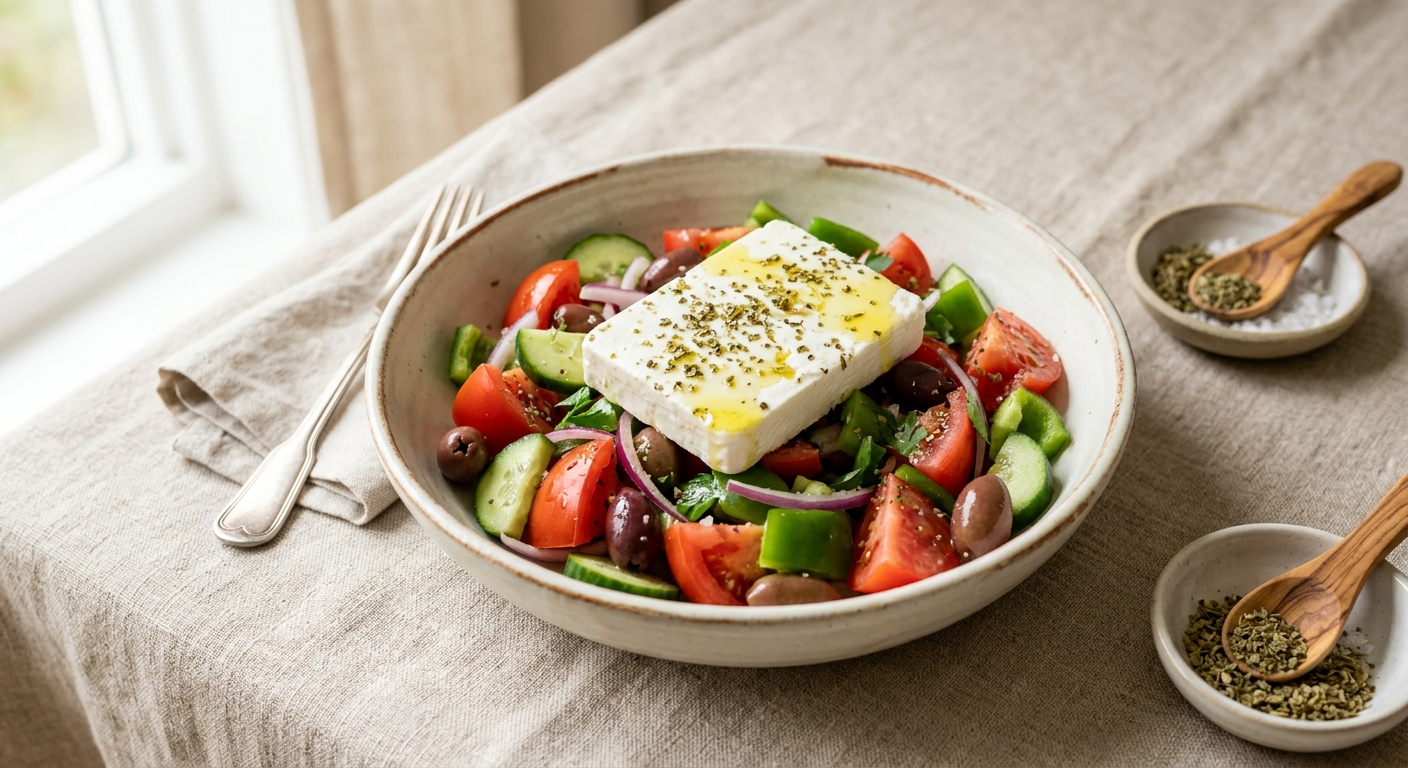
The Greek salad, known in Greece as 'horiatiki salata' (χωριάτικη σαλάτα), meaning 'village salad' or 'country salad,' traces its roots to the agricultural communities of rural Greece, where farmers and villagers assembled simple meals from whatever the land provided. Tomatoes, cucumbers, olives, and local cheese were the building blocks of everyday sustenance long before the dish gained any formal name or recognition. The addition of feta cheese—a brined curd cheese with origins stretching back over 8,000 years in the Greek peninsula—gave the salad its defining character, and the use of Kalamata olives tied it firmly to the olive-growing culture that has shaped Greek civilization since antiquity.nnThe salad as we recognize it today became more codified during the 20th century, particularly as tourism to Greece expanded in the 1960s and 1970s. Tavernas across the Greek islands and mainland began serving horiatiki as a standard offering, and visitors from Europe and America carried the idea home with them. The dish they encountered was notably different from what would later be called 'Greek salad' abroad—no lettuce, no dressing beyond a generous pour of extra-virgin olive oil, and a thick slab of feta resting on top rather than crumbled throughout. Oregano, dried or fresh, finished the bowl with an herbal fragrance that became inseparable from the dish's identity.nnAs Greek cuisine spread globally through immigration and restaurant culture, the salad evolved in its new homes. Western adaptations introduced romaine lettuce, red onion, and bottled dressings, creating a looser interpretation that retained the spirit of the original while accommodating different palates and ingredient availability. In Greece itself, however, the horiatiki remains largely unchanged—a testament to the philosophy that the best food needs no improvement, only the finest seasonal ingredients and a good bottle of local olive oil.
Safety Safety & allergen notes
- Keep fingers clear of knife blade when slicing onions, cucumbers, tomatoes, and peppers - use a claw grip with your non-knife hand
- Wash hands thoroughly after handling raw vegetables to prevent cross-contamination
- Be cautious when peeling cucumber - use a vegetable peeler or knife carefully to avoid cutting your fingers
- Ensure knife is sharp and stable on cutting board to prevent slipping while chopping vegetables
Non-negotiables Rules for success
-
Pat vegetables completely dry after washing
Excess water dilutes the dressing and makes the salad watery instead of flavorful and crisp
-
Remove all seeds and white membrane from bell pepper
These parts are bitter and have an unpleasant texture that detracts from the fresh, clean taste of the salad
-
Slice red onion thinly
Thin slices distribute onion flavor evenly throughout the salad; thick pieces create overpowering bites
-
Dress and serve immediately
Salting and dressing too early draws moisture from vegetables, making them limp and soggy rather than crisp
-
Toss gently rather than vigorously
Rough handling breaks apart delicate vegetables and crumbles feta into fine pieces instead of maintaining their structure
Prep Get set first
About 8 min of prep
- Wash and dry tomatoes, cucumber, and bell pepper
- Set up cutting board and sharp chef's knife
- Gather large salad bowl and small mixing bowl
- Have whisk, paper towels, and all ingredients ready
- Measure out olive oil, red wine vinegar, and dried oregano
Greek salad comes together quickly with about 15 minutes of active chopping and mixing, making it perfect for a fast, fresh meal.
Ingredients
Instructions
Unlock Grouped Step Actions
Plus members get tap-to-check action steps and live ingredient swaps for this recipe.
-
Wash and dry vegetables
Wash the tomatoes, cucumber, and bell pepper under cold running water and pat dry with paper towels.
-
Prepare tomatoes
Cut the tomatoes into quarters or bite-sized chunks and place them in a large salad bowl.
-
Prepare cucumber
Peel the cucumber and cut it into half-moons or chunks, then add to the bowl with the tomatoes.
-
Add red onion
Slice the red onion thinly and add it to the bowl.
-
Prepare bell pepper
Remove the seeds and white membrane from the red bell pepper, then cut it into bite-sized pieces and add to the bowl.
-
Add olives
Add the Kalamata olives to the salad.
-
Add feta cheese
Cut the feta cheese into cubes or crumbles and add to the salad.
-
Make dressing
In a small bowl, whisk together the olive oil, red wine vinegar, and dried oregano until combined.
-
Dress and toss salad
Pour the dressing over the salad and gently toss to combine all ingredients.
-
Season and serve
Season with salt and black pepper to taste, then serve immediately.
Chef's notes
Best served fresh within a few hours of preparation to maintain crispness
For make-ahead: prepare components separately and assemble just before serving
Serve alongside grilled chicken, fish, or chickpeas for added protein
Pairs well with warm pita bread or crusty bread