Before you cook
Before you start Equipment you'll need
- Large skillet (12-inch stainless steel or cast iron recommended) — Provides sufficient surface area for even browning of chicken and prevents overcrowding, which is critical for developing a golden crust and cooking chicken through evenly
- Meat thermometer — Ensures chicken reaches safe internal temperature of 165°F without overcooking, preventing foodborne illness and dry meat
- Paper towels — Dries chicken surface before cooking to promote browning and crisping through the Maillard reaction
- Wooden spoon or spatula — Heat-resistant tool for stirring garlic and sauce without scratching the pan, and for turning chicken safely
- Measuring spoons and cups — Ensures accurate proportions of garlic, butter, and seasonings for balanced flavor
- Sharp knife — Efficiently minces garlic into small, uniform pieces that cook quickly and distribute flavor evenly throughout the dish
- Cutting board — Provides safe surface for mincing garlic and prevents cross-contamination
- Plate for resting chicken — Allows cooked chicken to rest and retain juices, ensuring moist, tender meat when served
- Aluminum foil — Loosely tents resting chicken to keep it warm while preserving the crispy skin
Safety Safety & allergen notes
- Chicken must reach 165°F (74°C) internally to be safe - use a meat thermometer in the thickest part to verify doneness and prevent foodborne illness
- Hot skillet and oil can cause severe burns - use long-handled utensils when placing chicken and always keep hands away from steam rising from the pan
- When deglazing with wine, pour carefully to avoid splashing hot liquid - keep face and hands back from the pan
- Hot skillet handles remain extremely hot after cooking - always use pot holders or oven mitts when handling the pan, and warn others it is hot
Non-negotiables Rules for success
-
Pat chicken breasts completely dry before seasoning
Moisture on the surface prevents proper browning and creates steam that inhibits crust formation during searing
-
Heat oil until shimmering before adding chicken
Oil at proper temperature creates an immediate sear that locks in juices and develops golden-brown crust; cool oil causes sticking and pale color
-
Don't move chicken while searing the first side
Moving the chicken breaks the developing crust and prevents even browning; undisturbed contact allows the Maillard reaction to create flavor and color
-
Verify internal temperature reaches 165°F (74°C) in the thickest part
This temperature kills harmful bacteria; undercooking risks foodborne illness, while overcooking dries out the meat
-
Stir garlic constantly over medium heat and remove when fragrant
Garlic burns quickly and becomes bitter at high temperatures; constant stirring prevents scorching while releasing aromatic compounds
-
Add butter one tablespoon at a time and fully incorporate before adding more
Gradual incorporation creates an emulsion that produces a silky sauce; adding all at once causes the sauce to break and become greasy
Prep Get set first
About 8 min of prep
- Pat chicken breasts dry with paper towels
- Measure out salt, pepper, and garlic powder
- Mince 8 cloves of garlic
- Measure olive oil, butter, white wine, chicken broth, and lemon juice
- Have meat thermometer ready
- Chop fresh parsley
- Set out large skillet, wooden spoon, cutting board, and serving plates
Total active cooking time is about 29 minutes, so have all ingredients prepped and equipment ready before you start searing the chicken.
Ingredients
Instructions
Unlock Grouped Step Actions
Plus members get tap-to-check action steps and live ingredient swaps for this recipe.
-
Season the chicken
Pat the chicken breasts dry with paper towels and season both sides evenly with salt, pepper, and garlic powder.
-
Heat the oil
Heat olive oil in a large skillet over medium-high heat until shimmering.
-
Sear first side
Carefully place chicken breasts in the hot skillet and sear without moving them, until the bottom is golden brown.
-
Sear second side
Flip the chicken breasts and sear the other side until golden and the internal temperature reaches 165°F (74°C) when measured with a meat thermometer in the thickest part.
-
Rest the chicken
Transfer the cooked chicken breasts to a clean plate and tent loosely with foil to keep warm.
-
Sauté garlic
Reduce heat to medium and add butter to the same skillet, then add minced garlic and sauté until fragrant, stirring constantly to prevent burning.
-
Deglaze pan
Pour in the white wine and use a wooden spoon to scrape up any browned bits from the bottom of the pan, cooking until the liquid reduces slightly.
-
Make the sauce
Add the chicken broth and lemon juice, then stir in the remaining butter one tablespoon at a time until fully incorporated and the sauce is silky.
-
Finish the chicken
Return the chicken breasts to the skillet and spoon the sauce over them, simmering to warm through and allow flavors to meld.
-
Adjust seasoning
Taste the sauce and adjust seasoning with salt and pepper as needed, then stir in red pepper flakes if using.
-
Plate and serve
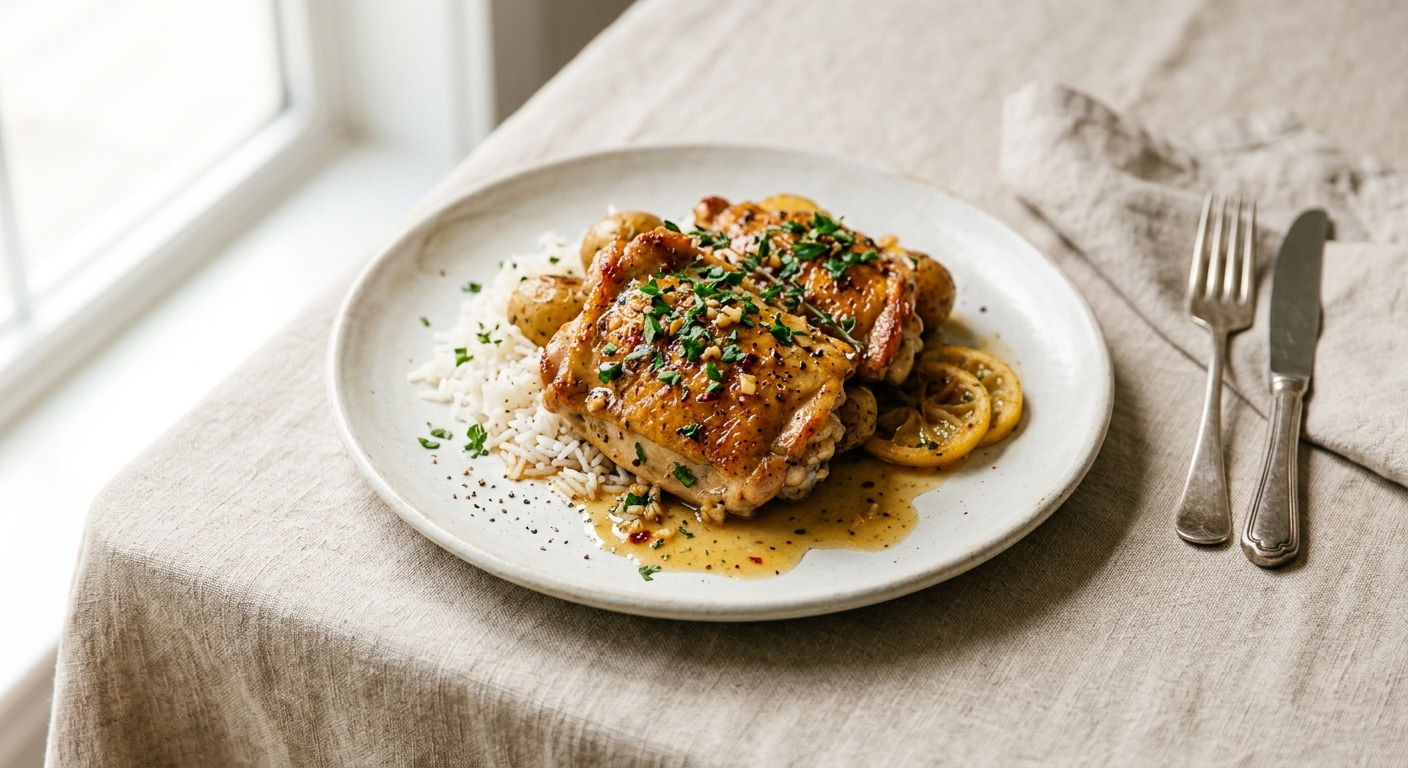
Transfer chicken breasts to serving plates and spoon the garlic butter sauce generously over each breast, then garnish with fresh parsley.
Chef's notes
Serve with rice, pasta, roasted vegetables, or crusty bread to soak up the delicious sauce
For a lighter version, substitute half the butter with olive oil or use Greek yogurt to finish the sauce instead of additional butter
Pairs well with a crisp white wine such as Sauvignon Blanc or Pinot Grigio