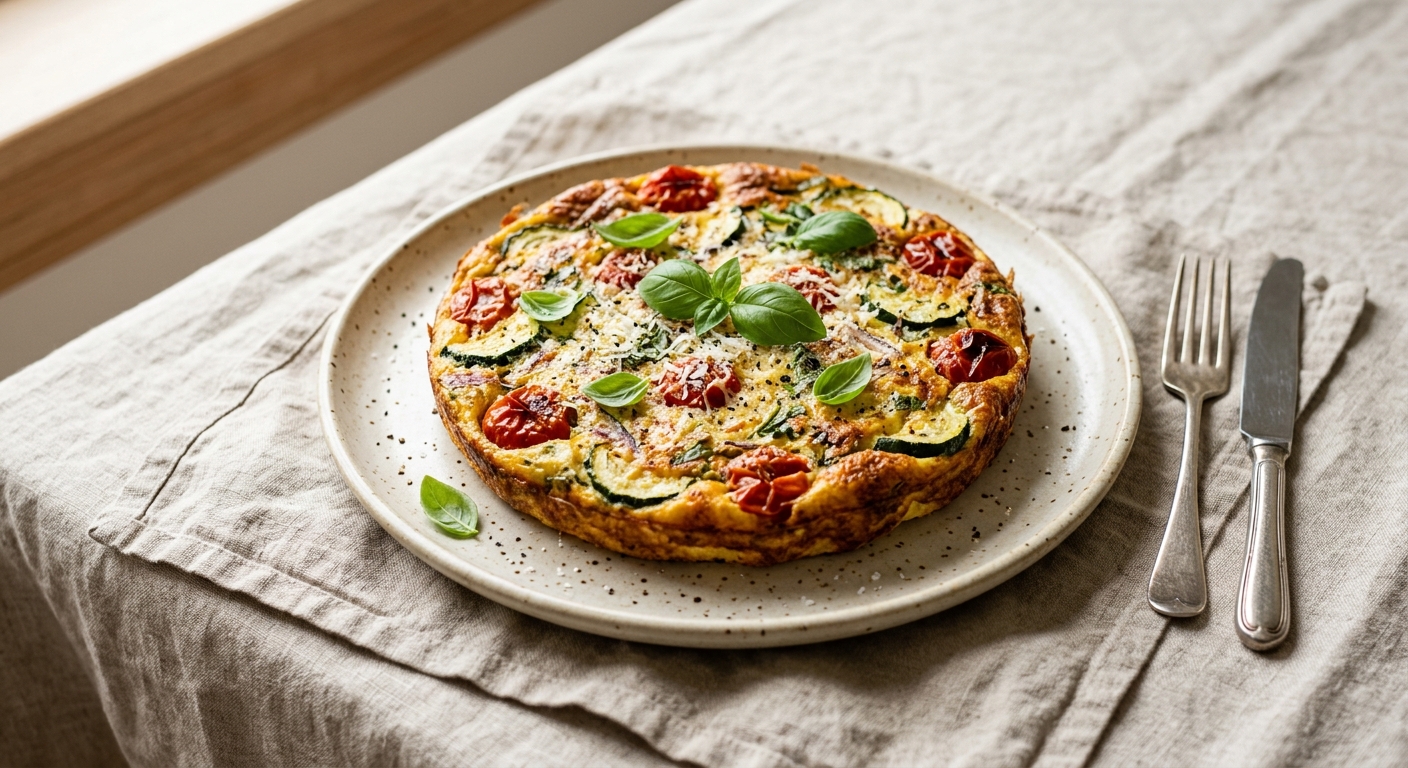
Before you cook
Background Recipe story & origin
The frittata's story begins in ancient Rome, where eggs were a staple of the Roman diet and cooks developed early versions of egg-based dishes cooked in oil or fat. The word 'frittata' itself derives from the Italian 'friggere,' meaning 'to fry,' and references to similar preparations appear in Roman culinary texts dating back centuries. As Italian regional cooking evolved through the medieval and Renaissance periods, the frittata became a cornerstone of cucina povera—the 'poor kitchen' philosophy that elevated simple, affordable ingredients into nourishing and flavorful meals. Eggs, available even to the humblest households, became the canvas onto which cooks could fold leftover vegetables, cured meats, cheeses, and herbs.nnUnlike the French omelette, which is delicate, folded, and cooked quickly over high heat, the Italian frittata developed its own identity as a thicker, open-faced egg dish cooked slowly and often finished under a broiler or by flipping in the pan. Each region of Italy claimed its own version: in Naples, frittatas were enriched with pasta and cheese; in Rome, artichokes and guanciale were favored; in the north, wild mushrooms and fontina found their way into the eggs. This regional diversity became one of the frittata's defining characteristics—a dish with a consistent technique but infinite local expression.nnBy the 19th and 20th centuries, as Italian immigrants carried their culinary traditions to the Americas and beyond, the frittata gained international recognition as both a practical weekday meal and an elegant brunch centerpiece. Today it occupies a cherished place in Italian home cooking, celebrated for the same virtues that made it beloved two millennia ago: simplicity, versatility, and the remarkable ability to turn ordinary ingredients into something deeply satisfying.
Safety Safety & allergen notes
- Oven and skillet will be extremely hot - use oven mitts or pot holders when handling the oven-safe skillet throughout cooking and when transferring to/from the oven
- Keep hands and arms away from the skillet when stirring hot oil and vegetables to avoid splashing burns
- The skillet handle remains hot even after removing from stovetop - always use pot holders before touching
- When pouring the egg mixture into the hot skillet, pour slowly and carefully to prevent hot spattering
- Allow the frittata to cool for the full 2 minutes before slicing to avoid steam burns and to prevent eggs from breaking apart
Non-negotiables Rules for success
-
Use an oven-safe skillet throughout cooking
The skillet must transition directly from stovetop to oven without damage; non-oven-safe handles will melt or burn at 375°F
-
Cook vegetables until softened before adding eggs
Raw or undercooked vegetables won't finish cooking during the brief oven time and will remain hard and unpalatable
-
Let edges set on stovetop for 2-3 minutes before transferring to oven
This initial setting prevents the egg mixture from sloshing and allows the bottom to develop structure, ensuring even cooking
-
Bake only until center is just set, not fully firm
Overbaking dries out the frittata; residual heat continues cooking after removal, creating a creamy center
-
Cool for 2 minutes before slicing
Cutting immediately breaks the delicate set structure and causes pieces to fall apart; brief cooling allows the frittata to firm up enough to hold together
Prep Get set first
About 8 min of prep
- Preheat oven to 375°F (190°C)
- Gather and measure all ingredients
- Dice onion, bell peppers, and potatoes (or use pre-cooked potatoes)
- Thaw spinach if using frozen
- Have 10-inch oven-safe skillet ready
- Gather large mixing bowl, whisk, wooden spoon, and oven mitts
About 30 minutes total including 10 minutes oven time; most active work happens in the first 10 minutes.
Ingredients
Instructions
Unlock Grouped Step Actions
Plus members get tap-to-check action steps and live ingredient swaps for this recipe.
-
Preheat oven
Preheat your oven to 375°F (190°C).
-
Prepare egg mixture
In a large bowl, whisk together the eggs, whole milk, grated Parmesan cheese, salt, black pepper, and dried Italian herbs until well combined.
-
Heat oil in skillet
Heat olive oil in a 10-inch oven-safe skillet over medium heat.
-
Cook onions and peppers
Add the onion, diced and cook until softened. Add the bell peppers, diced and potatoes, diced and cook.
-
Add spinach and ham
Stir in the fresh spinach and ham, diced (if using) and cook until the spinach begins to wilt.
-
Coat skillet with butter
Add the butter to the skillet and allow it to melt, coating the bottom and sides evenly.
-
Pour egg mixture into skillet
Pour the egg mixture into the skillet over the vegetables. Stir gently to distribute the ingredients evenly.
-
Set edges on stovetop
Let the frittata cook on the stovetop until the edges begin to set.
-
Bake in oven
Transfer the skillet to the preheated oven. Bake until the center is set and the top is lightly golden.
-
Cool and serve
Remove from the oven and let cool. Slice into wedges and serve.
Chef's notes
Frittata can be served warm, at room temperature, or cold, making it great for meal prep.
For a creamier texture, use heavy cream instead of milk.
This dish pairs well with a simple green salad and crusty bread.
Store covered in the refrigerator for up to 3 days before serving.
Tomorrow's Meal
Crispy Frittata Breakfast Sandwich
Cold frittata sliced into wedges, pan-fried until edges crisp, nestled in crusty bread with fresh greens and a quick aioli
You'll need to pick up:
Quick overview:
- Slice cold frittata into 1/2-inch wedges
- Heat 2 tablespoons oil in skillet over medium-high heat
- Fry wedges 2-3 minutes per side until golden and crispy at edges
- Toast bread lightly while frittata cooks
- Spread aioli on bread, layer with greens and warm frittata wedge
- Serve immediately while frittata is still warm