Before you cook
Background Recipe story & origin
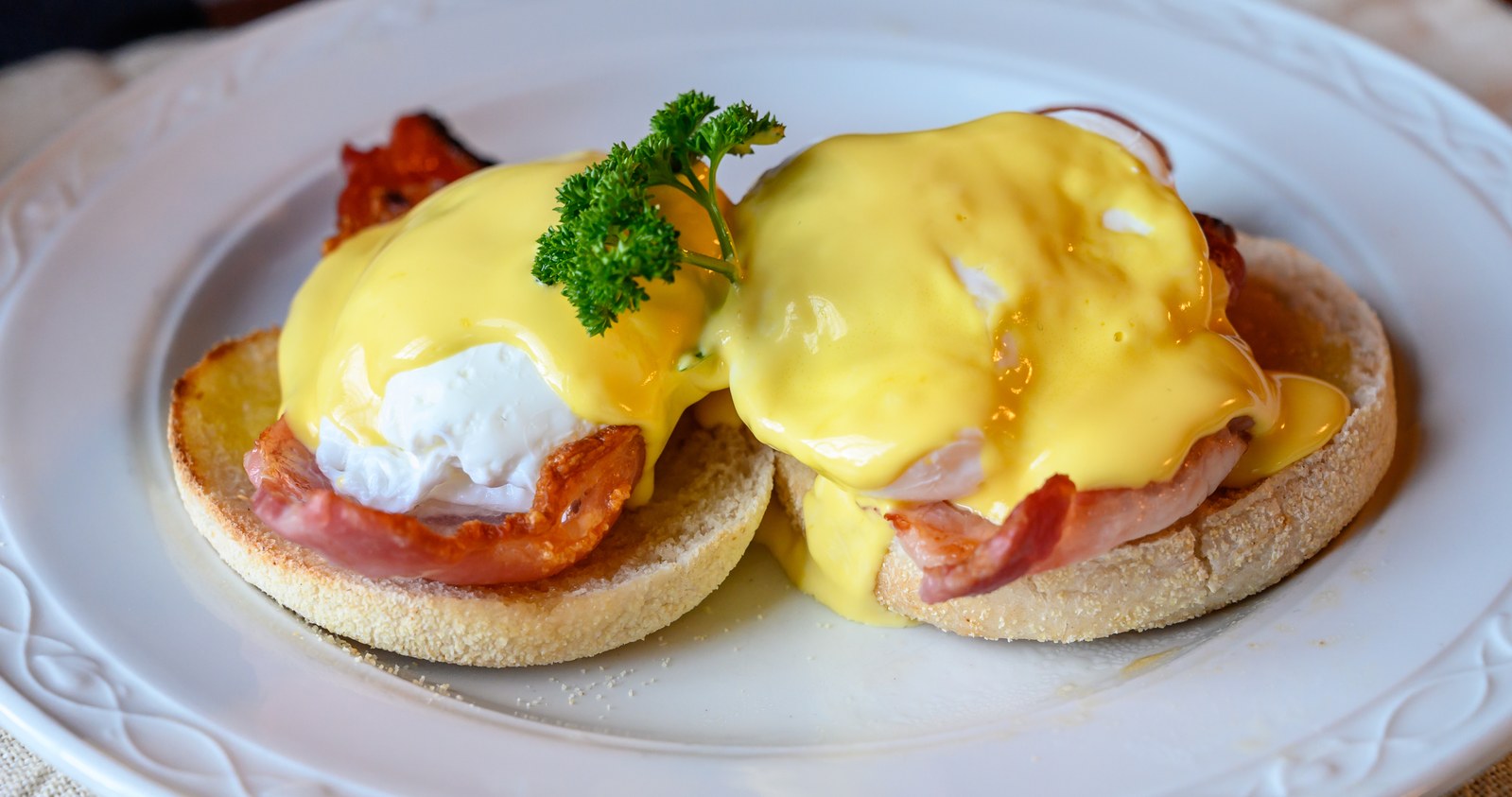
Few dishes have a more delightfully disputed origin story than Eggs Benedict. The most colorful version traces back to 1894, when Lemuel Benedict—a Wall Street broker nursing a hangover—shuffled into the Waldorf Hotel in New York City and ordered 'buttered toast, poached eggs, crisp bacon, and a hooker of hollandaise.' The maître d'hôtel, the legendary Oscar Tschirky, was so taken with the combination that he refined it slightly, swapping the toast for English muffins and the bacon for Canadian bacon, and added it to the Waldorf's menu permanently.nnThe competing claim is only slightly less dramatic. Banker LeGrand Benedict and his wife reportedly grew bored with the menu at the storied Delmonico's restaurant around 1893 and challenged the chef to create something new for their breakfast. The result, developed collaboratively at the table, was remarkably similar: English muffin, ham, poached egg, hollandaise. Both Delmonico's and the Waldorf were the crown jewels of Gilded Age New York dining, and both claims have documentary support—which means the dish was almost certainly an idea whose time had simply come.nnWhat's undisputed is the cultural moment Eggs Benedict represents. The late 19th century saw wealthy New Yorkers pioneering the concept of the leisurely late-morning meal—what would eventually become 'brunch'—and Eggs Benedict became its signature dish. The combination of rich hollandaise, runny poached egg, smoky Canadian bacon, and crisp English muffin is a study in contrasts that rewards both the cook's technique and the diner's patience. More than 130 years later, it remains the gold standard of brunch menus everywhere.
Before you start Equipment you'll need
- saucepan — Holds simmering water for poaching eggs gently until whites set and yolks remain runny
Safety Safety & allergen notes
- Double boiler water can boil rapidly - keep hands clear and use pot holders when handling the setup
- Hollandaise made with raw egg yolks poses salmonella risk - use pasteurized eggs or heat yolks to 160°F before adding butter
- Simmering water for poaching reaches 180-190°F - keep face and hands back from steam and use a slotted spoon to avoid splashing
- Melted butter in hollandaise is extremely hot - drizzle slowly and keep away from skin to prevent severe burns
- Hot toasted muffins can cause burns - use tongs or a plate to handle, do not touch directly
Non-negotiables Rules for success
-
Whisk egg yolks with lemon juice over double boiler, never direct heat
Direct heat causes eggs to scramble and curdle; double boiler provides gentle, even heat that emulsifies yolks into a smooth sauce
-
Drizzle melted butter in slowly while whisking constantly for 8 minutes
Rapid butter addition breaks the emulsion and creates greasy, separated sauce; slow whisking incorporates fat gradually and maintains creamy texture
-
Keep hollandaise warm but never above 160°F
Temperatures above 160°F cause proteins to coagulate and sauce to break; too cool and it solidifies
-
Poach eggs in simmering water with vinegar, not boiling water
Boiling water causes egg whites to shred and scatter; gentle simmer keeps whites intact while vinegar helps set them quickly
-
Assemble and serve immediately
Hollandaise begins to separate as it cools and eggs cool rapidly; serving immediately ensures warm, properly textured components
Prep Get set first
About 8 min of prep
- Gather all ingredients: eggs, muffins, bacon, butter, egg yolks, lemon juice, vinegar
- Prepare saucepan for double boiler setup
- Have whisk ready for hollandaise
- Set up toaster for muffins
- Prepare bacon for warming
This recipe takes about 20 minutes total active time with simultaneous cooking of hollandaise and poached eggs.
Ingredients
Instructions
Unlock Grouped Step Actions
Plus members get tap-to-check action steps and live ingredient swaps for this recipe.
-
Make the hollandaise
Whisk yolks with lemon juice over double boiler. Slowly drizzle in melted butter while whisking. Season with salt and cayenne pepper.
-
Poach the eggs
Bring water with vinegar to a simmer. Gently slide eggs into water. Cook until whites are set but yolks remain runny.
-
Toast and warm components
Toast muffins until golden. Warm bacon in skillet.
-
Assemble and serve
Place toasted muffin on plate, top with bacon, poached egg, and hollandaise sauce. Garnish and serve immediately.
Chef's notes
Hollandaise can be made up to 2 hours ahead and kept warm in a thermos or over warm (not hot) water
English muffins and Canadian bacon can be toasted and kept warm separately for up to 15 minutes before assembly
Poach eggs no more than 5 minutes before serving for best texture
For easier poaching, add 1 tablespoon white vinegar to water to help eggs hold their shape
Substitute smoked salmon or sautéed spinach for Canadian bacon for Eggs Royale or Eggs Florentine variations