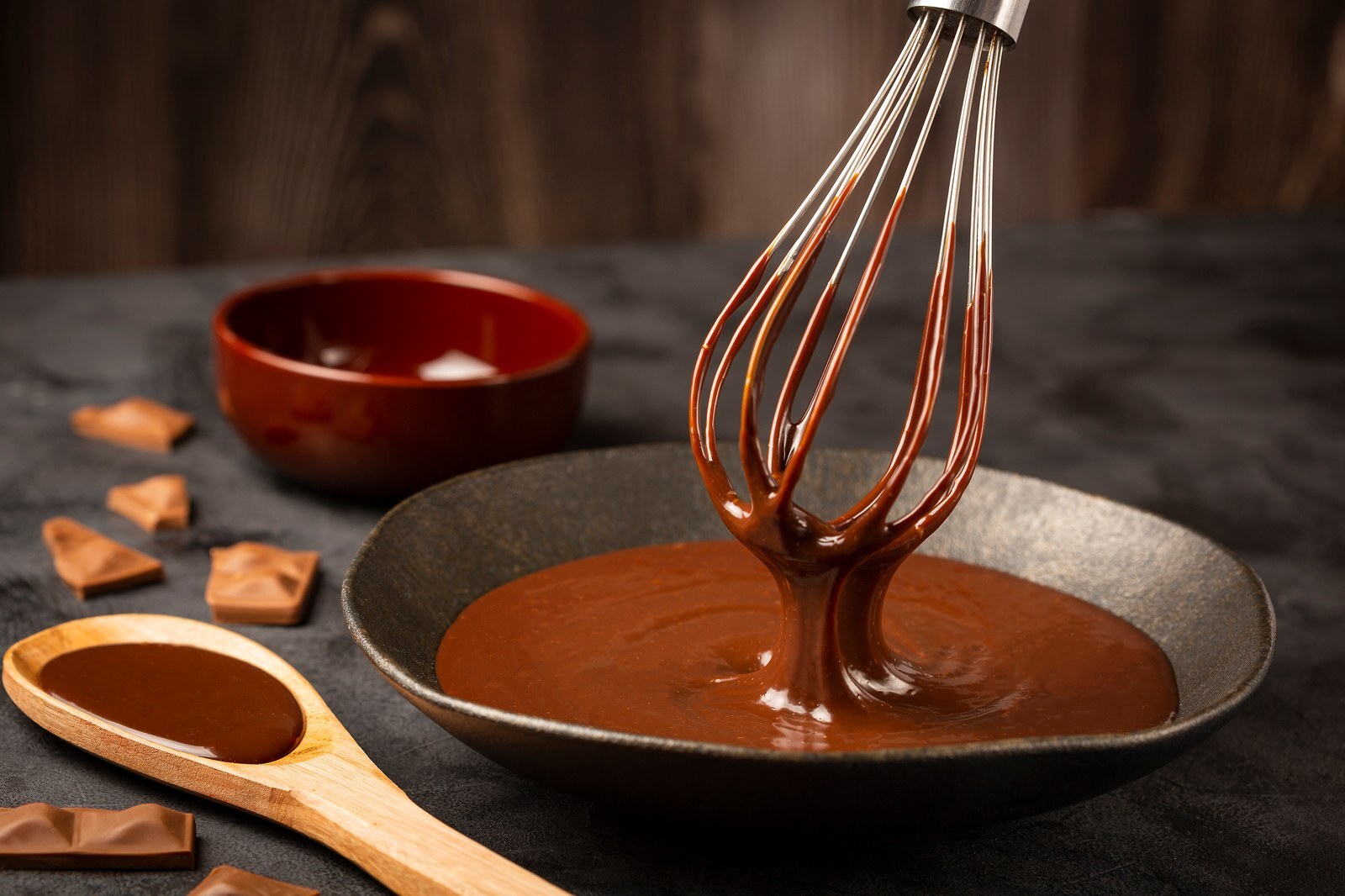
Before you cook
Background Recipe story & origin
Dark chocolate ganache originated in 19th-century France, though its exact creation story remains delightfully mysterious. The most popular origin tale credits a Parisian pastry chef who accidentally poured hot cream into a bowl of melted chocolate, and rather than discard the mixture, discovered it created a luxuriously smooth, glossy emulsion. The name 'ganache' itself has uncertain origins—some food historians suggest it comes from the French slang word for a foolish person, implying the 'foolish' mistake that led to its invention, while others believe it derives from the Spanish word 'guanaco,' referring to a llama. By the mid-1800s, ganache had become a cornerstone of French haute cuisine, used by master chocolatiers and pastry chefs to create elegant truffles, fill cakes, and glaze desserts. The technique gained particular prominence during the Belle Époque period when chocolate confectionery became a luxury art form in Paris. What made ganache revolutionary was its versatility: by adjusting the ratio of cream to chocolate, pastry chefs could create different textures—from thick, moldable ganache for truffles to pourable ganache for glazing. Dark chocolate ganache specifically became prized for its sophisticated bitter-sweet flavor profile, elevating desserts from simple confections to refined delicacies. The recipe spread throughout Europe and eventually worldwide, becoming fundamental to professional pastry-making and home baking alike. Today, ganache remains one of the most essential techniques in chocolate work, unchanged in principle for nearly two centuries.
Before you start Equipment you'll need
- heavy-bottomed saucepan — heats cream evenly without scorching; prevents seizing when poured over chocolate
- heatproof bowl — holds chocolate while hot cream is poured in; must withstand thermal shock
- whisk or wooden spoon — emulsifies chocolate and cream into smooth, glossy texture; prevents lumps
- instant-read thermometer — confirms cream reaches 180°F for proper chocolate melting; ensures food safety
Safety Safety & allergen notes
- Hot cream reaches 180°F and can cause severe burns - use pot holders when handling the saucepan and avoid leaning over steam
- When pouring hot cream over chocolate, pour slowly and carefully to prevent splashing; keep hands and face away from the bowl
- The heatproof bowl will be very hot after the cream is added - use pot holders or a kitchen towel when handling it
- Whisk carefully to avoid hot ganache splashing out of the bowl onto skin or eyes
Non-negotiables Rules for success
-
Heat cream to 180°F or steaming stage, not boiling
Excessive heat can cause cream to break or separate; proper temperature ensures optimal emulsification with chocolate without damaging the cream's fat structure
-
Let hot cream sit on chocolate undisturbed for 1 minute before whisking
Residual heat gently melts chocolate without direct heat, preventing scorching and ensuring smooth, glossy texture; whisking too early traps air and creates graininess
-
Use a heatproof bowl, not direct heat, for melting chocolate
Direct heat causes chocolate to scorch and seize; gentle residual heat from cream prevents breaking the cocoa butter emulsion
-
Whisk until completely smooth and glossy, about 1 minute
Thorough whisking fully incorporates cream into chocolate and removes lumps; under-mixing leaves grainy texture, over-mixing can cause separation
-
Use immediately while warm for pourable consistency, or cool fully for spreadable
Warm ganache flows smoothly as glaze; cooling to room temperature increases viscosity as cocoa butter sets, creating thicker consistency for spreading
Prep Get set first
About 8 min of prep
- Chop 8 oz dark chocolate into small, uniform pieces
- Measure out 1 cup heavy cream
- Gather heavy-bottomed saucepan, heatproof bowl, and whisk
- Have instant-read thermometer or visual cues ready
- Clear counter space for cooling if making spreadable ganache
This is a quick 7-minute active recipe, but plan an extra 30 minutes if you want a thicker, spreadable consistency instead of using it warm.
Ingredients
Instructions
Unlock Grouped Step Actions
Plus members get tap-to-check action steps and live ingredient swaps for this recipe.
0/5 actions complete
Start checking off actions as you prep
-
Heat the cream
heavy-bottomed saucepan
-
Melt the chocolate
heatproof bowl
-
Use or cool
Chef's notes
Chop chocolate into small, uniform pieces for faster, more even melting.
Use cream with at least 35% fat; lower-fat cream may not emulsify properly.
Do not stir immediately after pouring hot cream over chocolate; let sit 1 minute so residual heat begins melting the chocolate.
If ganache breaks (appears grainy or separated), whisk in 1 tablespoon cool cream at a time until smooth.
For a pourable glaze, use immediately while warm. For a spreadable filling, cool to room temperature (about 30 minutes) before using.
Store covered at room temperature up to 5 days, or refrigerate up to 2 weeks.