Before you cook
Background Recipe story & origin
Crêpes originated in Brittany, France, where buckwheat 'galettes' were peasant fare from the 13th century onward. The word 'crêpe' comes from Latin 'crispa' (curled). Wheat flour crêpes developed for sweet preparations, while buckwheat remained for savory. Crêpes are traditionally cooked on a 'billig' (flat griddle) and spread with a 'rozell' (T-shaped spreader). Sweet crêpes with butter and sugar became café fare; elaborate versions (crêpes Suzette, flambéed in orange-butter sauce) emerged in fine dining. Crêpe stands spread beyond Brittany to Paris and worldwide. The batter is simple-flour, eggs, milk, butter-but technique matters: the pan must be properly seasoned and heated, the batter spread thin and even. French tradition serves crêpes on La Chandeleur (February 2); flipping crêpes while holding a coin brings luck. Crêpes represent French café culture and Breton culinary heritage.
Before you start Equipment you'll need
- crêpe pan or nonstick skillet — Specialized flat pan provides even heat for cooking thin delicate crêpes with proper browning
Ingredients
Instructions
Unlock Grouped Step Actions
Plus members get tap-to-check action steps and live ingredient swaps for this recipe.
-
Make the batter
Whisk flour, eggs, milk, melted butter, sugar, salt, and vanilla until smooth. Batter should be thin like heavy cream. Rest 30 minutes (or refrigerate up to 24 hours).
-
Cook the crêpes
Heat buttered crêpe pan over medium heat (325-350°F surface). Pour 3 tablespoons batter, immediately swirl to coat pan thinly. Cook 1-2 minutes until edges lift and bottom is golden. Flip, cook 30 seconds more. Stack on plate.
-
Fill and serve
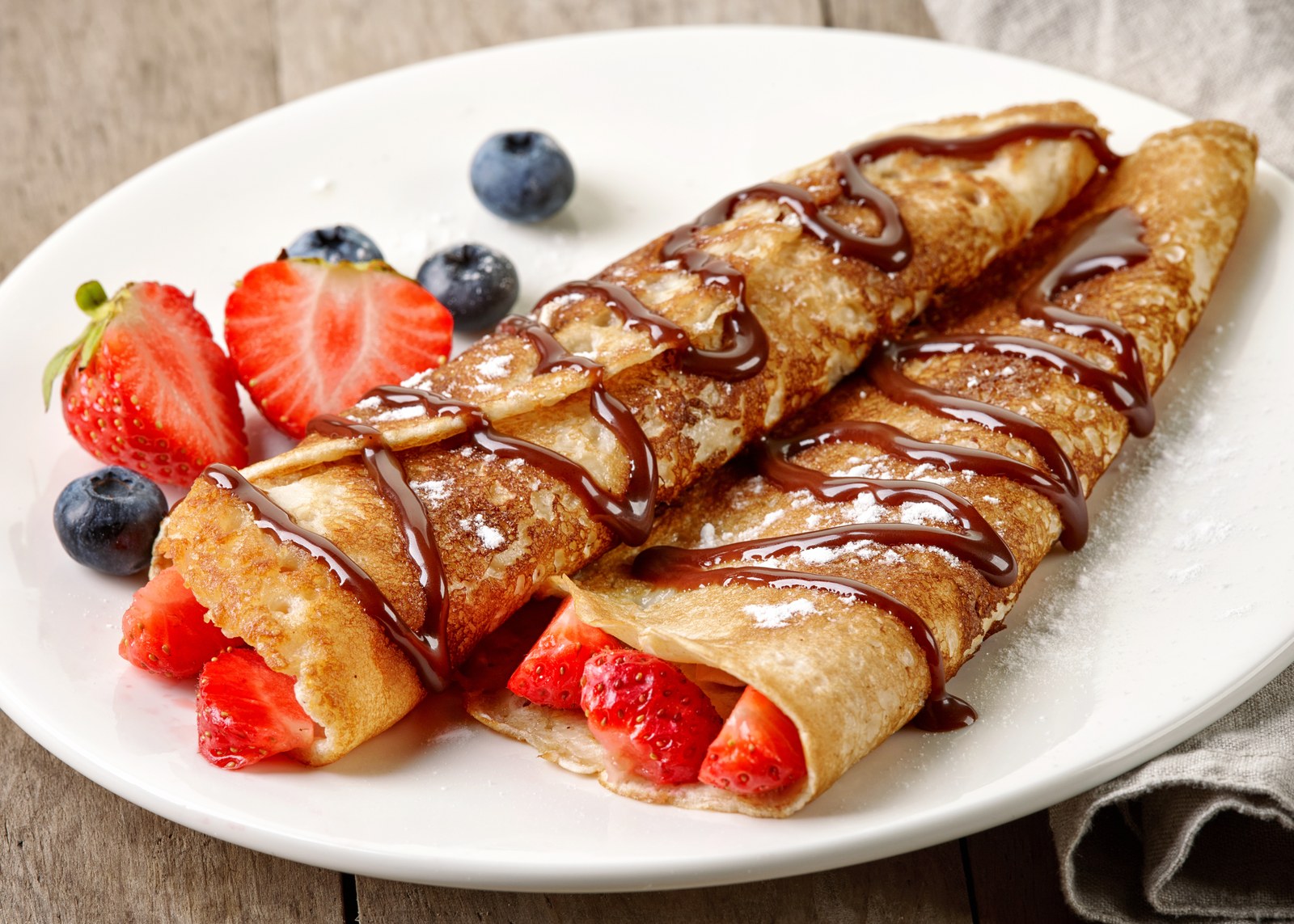
Serve warm with butter and sugar, lemon juice and sugar, Nutella, or jam. Fold into quarters or roll.