Before you cook
Background Recipe story & origin
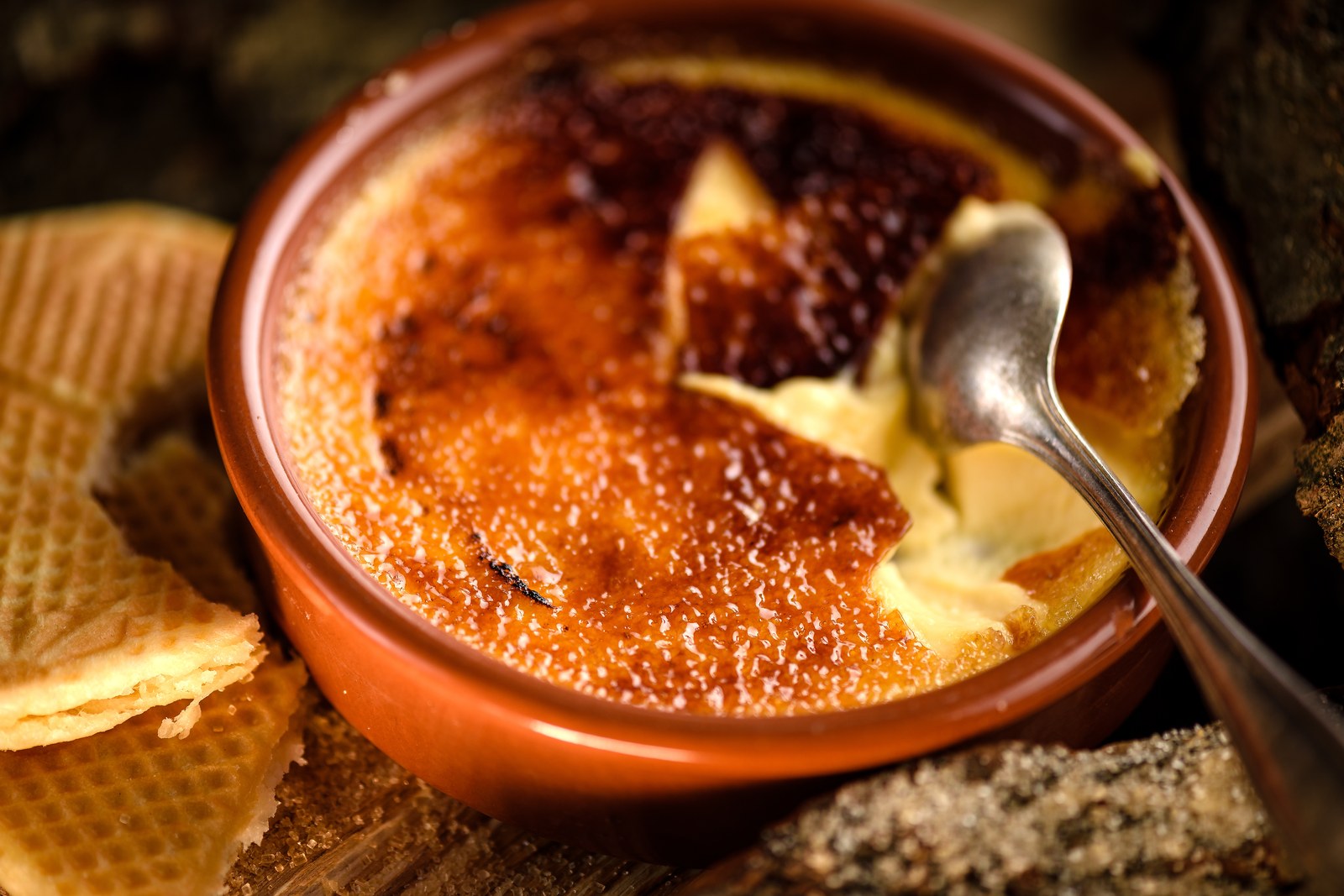
Crème brûlée represents the globalization of dessert menus and French classical technique's enduring appeal. Crème brûlée's origins are disputed among France, England, and Spain. French 'crème brûlée,' English 'burnt cream,' and Catalan 'crema catalana' all feature custard with caramelized sugar top. The French version-vanilla custard baked in ramekins, chilled, then topped with sugar caramelized by torch or broiler-became the modern standard. The dish may date to the 17th century at Cambridge's Trinity College. French restaurants popularized it in the 1980s, making it ubiquitous on dessert menus worldwide. The technique requires proper custard (eggs, cream, vanilla, sugar) baked gently in a water bath until just set, then fully chilled before caramelizing the sugar top. The contrast of brittle, bitter caramel over cold, creamy custard defines the dish.
Before you start Equipment you'll need
- ramekins — Individual ceramic dishes provide even heat distribution for baking custards in water bath
- torch — Provides intense direct heat for caramelizing sugar on top of custards creating crackling crust
Ingredients
Instructions
Unlock Grouped Step Actions
Plus members get tap-to-check action steps and live ingredient swaps for this recipe.
-
Make the custard
Heat cream with vanilla bean seeds and pod until simmering. Whisk yolks with sugar and salt until pale. Temper with hot cream. Strain.
-
Bake until set
Pour into ramekins. Bake in water bath at 325°F 40-45 minutes until set but jiggly in center. Chill at least 4 hours.
-
Brûlée the top
Sprinkle 1 tbsp sugar evenly over each custard. Torch until caramelized and crackling. Serve within 10 minutes.