Before you cook
Background Recipe story & origin
The story of coleslaw stretches back over two thousand years to ancient Rome, where cabbage was a dietary staple and Romans routinely dressed it with vinegar, eggs, and spices. The dish traveled through medieval Europe in various forms, always centered on cabbage's practicality—it was cheap, hardy, and available year-round. But the dish we recognize today began taking shape in the Netherlands, where cooks dressed finely shredded kool (cabbage) with a sla (salad) of oil, vinegar, and sometimes cream. Dutch settlers brought this tradition to New Amsterdam—modern-day New York—in the 1600s, and the word 'coleslaw' is a direct anglicization of the Dutch 'koolsla.'nnThe creamy transformation came in the late 18th and early 19th centuries, as mayonnaise—invented in France around 1756—slowly made its way into home kitchens. Early American cookbooks began featuring mayonnaise-dressed cabbage salads by the mid-1800s, and the combination proved irresistible. The rise of commercial mayonnaise brands like Hellmann's in the early 20th century made creamy coleslaw accessible to every household, cementing its place as an American staple. Regional variations flourished: the American South favored sweeter, creamier versions, while vinegar-based slaws remained popular in the Carolinas and parts of the Midwest.nnBy the mid-20th century, coleslaw had become inseparable from American barbecue culture, appearing alongside pulled pork, fried chicken, and fish fry spreads from coast to coast. Fast food chains standardized a mild, creamy version that introduced it to millions more. Today, nearly every cuisine that has encountered American influence has its own take on the dish, yet coleslaw remains deeply tied to its Dutch-American roots—a humble, shredded cabbage salad that has quietly endured for centuries.
Before you start Equipment you'll need
- large mixing bowl — extra room prevents spills when mixing and makes folding easier
- medium bowl — just enough space to combine without creating extra dishes
- whisk — wire loops incorporate air and break up lumps better than spoons
- chef's knife — sharp blade makes precise cuts for even cooking and safer prep
- cutting board — stable surface protects your counters and keeps ingredients contained
- tongs — long handles keep your hands safe from heat while flipping and moving food
Safety Safety & allergen notes
- Use a sharp knife and stable cutting board when shredding vegetables; keep fingers curled away from the blade to prevent cuts.
- Once dressed, refrigerate promptly; mayo-based slaws should stay chilled below 40°F to prevent bacterial growth.
- Wash hands, cutting board, and knife thoroughly after handling raw vegetables to prevent cross-contamination.
Non-negotiables Rules for success
-
Slice cabbage as thinly as possible for tender texture.
Thick cabbage pieces are tough and hard to eat.
-
Salt cabbage and let sit 10 minutes to draw out moisture.
Prevents watery slaw that dilutes dressing and ensures proper texture.
-
Squeeze out excess water before adding dressing.
Wet cabbage makes thin, runny slaw and prevents proper dressing coating.
-
Add dressing gradually while tossing, not all at once.
Prevents oversaturation and ensures even coating of all vegetables.
-
Refrigerate for 20 minutes before serving.
Allows flavors to meld together and cabbage to soften slightly for better texture.
Prep Get set first
About 5 min of prep
- Prepare large mixing bowl
- Prepare medium bowl
- Have whisk ready
- Have chef's knife ready
- Have cutting board ready
- Have tongs ready
- Gather all ingredients (cabbage, carrots, mayo, vinegar, mustard, sugar, pepper, celery seed, salt)
This recipe has about 15 minutes of active prep work, plus 20 minutes chilling time—perfect for a quick side dish.
Ingredients
Instructions
Unlock Grouped Step Actions
Plus members get tap-to-check action steps and live ingredient swaps for this recipe.
-
Shred the vegetables
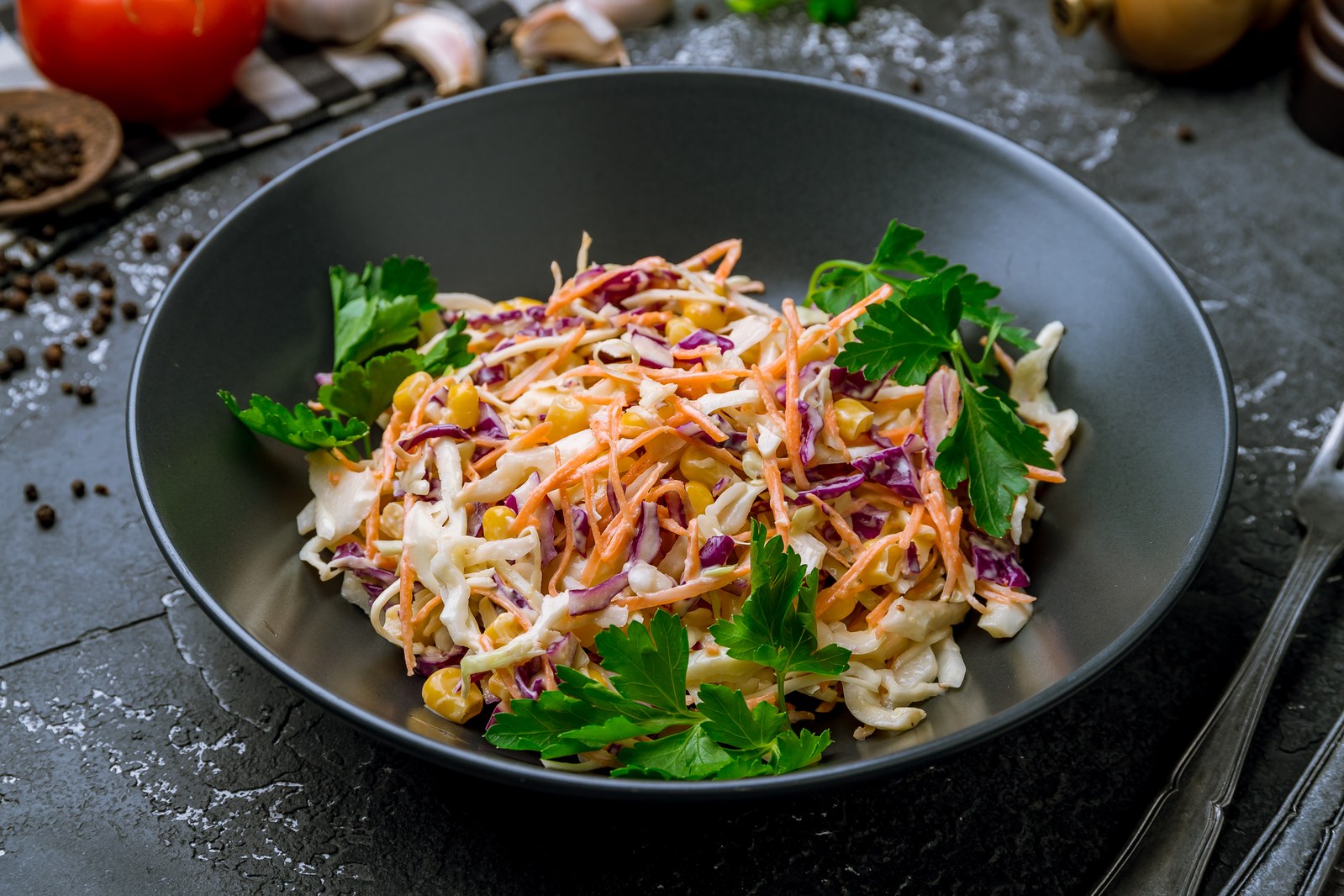
Shred green cabbage, red cabbage, and carrots. Place in large bowl. Sprinkle with salt and toss. Let sit 10 minutes, then blot lightly with paper towel.
-
Whisk the dressing
In medium bowl, whisk mayonnaise, apple cider vinegar, Dijon mustard, sugar, black pepper, and celery seed until smooth.
-
Combine and toss
Pour dressing gradually over cabbage mixture, tossing with tongs until lightly coated. Add dressing slowly to avoid oversaturation.
-
Taste and adjust
Taste and adjust sugar, vinegar, or salt to preference.
-
Chill and serve
Refrigerate until flavors settle and cabbage softens slightly.
Chef's notes
Add more vinegar for tangier slaw or more sugar for classic deli style
Pre-salt cabbage to prevent watery slaw and improve texture
Can add minced onion or chives for sharper flavor
Best served within 24 hours; cabbage loses crunch over time
Can be assembled up to 4 hours ahead, dress just before serving for crispest texture