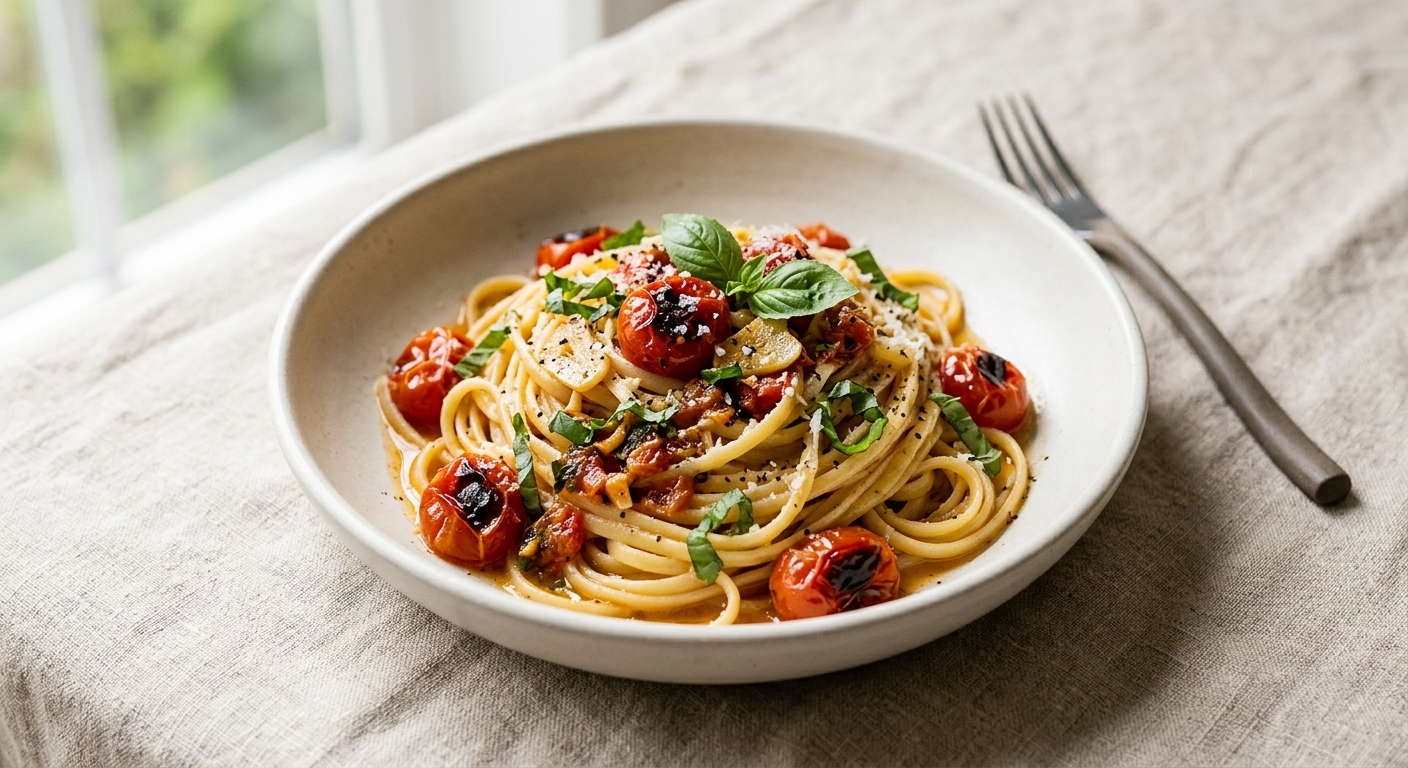
Before you cook
Background Recipe story & origin
The roots of blistered tomato sauces stretch back to the coastal kitchens of Campania and Sicily, where cooks discovered centuries ago that exposing ripe tomatoes to intense, direct heat — whether a wood-fired hearth or a scorching cast-iron pan — transformed their flavor entirely. The Maillard reaction caramelizes the natural sugars, concentrating the tomato's sweetness while adding a subtle smokiness that no slow-simmered sauce can replicate. This technique predates the modern recipe by generations, passed down through southern Italian households as an instinct rather than a written instruction.nnWhite wine entered the picture through the influence of northern Italian cooking traditions, particularly from Liguria and Tuscany, where wine-based pan sauces — known as 'al vino bianco' preparations — became a hallmark of refined home cooking by the 19th century. The practice of deglazing with white wine to lift the caramelized fond from a hot pan was a technique borrowed from French haute cuisine but eagerly adopted by Italian cooks who recognized its ability to add acidity and depth. Butter, long considered a northern Italian indulgence compared to the olive oil-dominant south, began appearing in Neapolitan sauces as trade and cultural exchange blurred regional boundaries.nnBy the mid-20th century, Italian-American restaurant kitchens — particularly in New York and San Francisco — synthesized these regional traditions into the kind of quick, elegant pan sauce this recipe represents. Garlic and fresh basil, both Mediterranean staples with roots in ancient Greek and Roman cooking, became the aromatic backbone that tied the dish together. Today, this style of sauce sits at the crossroads of rustic Italian tradition and modern weeknight practicality, a dish that feels simultaneously ancient and effortlessly contemporary.
Before you start Equipment you'll need
- Large skillet or sauté pan (at least 10 inches) — Provides enough surface area for tomatoes to blister properly and allows sauce to reduce evenly without overcrowding
- Wooden spoon or heat-safe spatula — Essential for stirring delicate blistering tomatoes and deglazing the pan without damaging the fruit or scratching the cookware
- Chef's knife — Needed for mincing garlic finely and slicing basil to distribute flavors evenly throughout the sauce
- Cutting board — Safe surface for prepping garlic and basil before adding to the pan
- Measuring cups and spoons — Ensures accurate proportions of wine, butter, and seasonings for balanced sauce flavor
Safety Safety & allergen notes
- Hot oil can splatter when tomatoes are added - keep face and hands away from the skillet and consider using a splatter screen
- The skillet handle and rim remain extremely hot throughout cooking - always use pot holders or oven mitts when handling
- Do not stir tomatoes for the first 2-3 minutes as they may pop and release hot oil - wait until blistering is complete
- When deglazing with wine, pour slowly and carefully as the liquid will steam and bubble vigorously on the hot pan surface
- Taste the sauce only after it has cooled slightly to avoid burns from hot liquid or steam
Non-negotiables Rules for success
-
Do not stir tomatoes for the first 2-3 minutes
Undisturbed contact with hot oil creates blistered, charred skin that develops deep flavor; stirring prevents proper caramelization and char development
-
Reduce heat to medium before adding garlic
Medium-high heat will burn garlic quickly, creating bitter, acrid flavors that overpower the sauce; medium heat allows fragrance to develop without scorching
-
Cook garlic for only 1 minute until fragrant
Garlic releases its aromatic compounds quickly; overcooking turns it bitter and harsh, ruining the delicate balance of the sauce
-
Add butter one tablespoon at a time on low heat while stirring constantly
Low heat and gradual addition allows butter to emulsify into the wine-tomato liquid, creating a silky sauce; high heat or adding all at once causes butter to separate and creates a greasy texture
-
Add fresh basil after removing from heat and serve immediately
Heat destroys basil's delicate volatile oils and fresh flavor; adding off-heat preserves bright, aromatic basil notes that define the sauce
Prep Get set first
About 8 min of prep
- Large skillet or sauté pan (at least 10 inches) ready
- Wooden spoon or heat-safe spatula on hand
- Garlic cloves peeled and thinly sliced
- Fresh basil leaves picked from stems
- Cherry tomatoes rinsed and dried
- Unsalted butter cut into tablespoon portions
- Dry white wine measured and ready
- Kosher salt and black pepper accessible
- Measuring cups and spoons ready
This is a quick 12-15 minute sauce that demands attention once you start cooking, so have everything prepped and within arm's reach.
Ingredients
Instructions
Unlock Grouped Step Actions
Plus members get tap-to-check action steps and live ingredient swaps for this recipe.
-
Prep garlic and basil
Peel and thinly slice the garlic cloves. Pick the basil leaves from the stems and set aside.
-
Heat the olive oil
Heat the olive oil in a large skillet over medium-high heat until the oil shimmers and just begins to smoke slightly.
-
Blister the tomatoes on one side
Add the cherry tomatoes to the skillet in a single layer. Do not stir for the first 2 to 3 minutes, allowing the tomatoes to blister and char on one side.
-
Finish blistering and burst the tomatoes
Stir the tomatoes once and continue cooking for another 2 to 3 minutes until they are blistered all over and beginning to burst. Use the back of a spoon or a spatula to gently press a few of the tomatoes to release their juices.
-
Add garlic and red pepper flakes
Reduce the heat to medium and add the sliced garlic and red pepper flakes if using. Stir and cook for 1 minute until the garlic is fragrant but not browned.
-
Deglaze with white wine
Pour in the white wine and stir to scrape up any browned bits from the bottom of the pan. Let the wine simmer for 3 to 4 minutes until it reduces by about half.
-
Mount the butter
Reduce the heat to low and add the butter one tablespoon at a time, stirring constantly after each addition until fully melted and incorporated into the sauce.
-
Season the sauce
Season the sauce with salt and black pepper. Taste and adjust seasoning as needed.
-
Finish with basil and serve
Remove the skillet from the heat and tear the fresh basil leaves directly into the sauce. Stir gently to combine and serve immediately.
Chef's notes
This sauce is best served immediately while the butter is still emulsified and the basil is fresh and bright.
Store in an airtight container in the refrigerator for up to 3 days before serving.
This sauce pairs beautifully with spaghetti, linguine, or pappardelle. Reserve about half a cup of pasta cooking water before draining to help marry the sauce to the noodles.
For a non-alcoholic version, substitute the white wine with low-sodium chicken broth or vegetable broth and add a small squeeze of fresh lemon juice for brightness.
To make this sauce heartier, add cooked shrimp, Italian sausage, or cannellini beans during the final minute of cooking.