Before you cook
Background Recipe story & origin
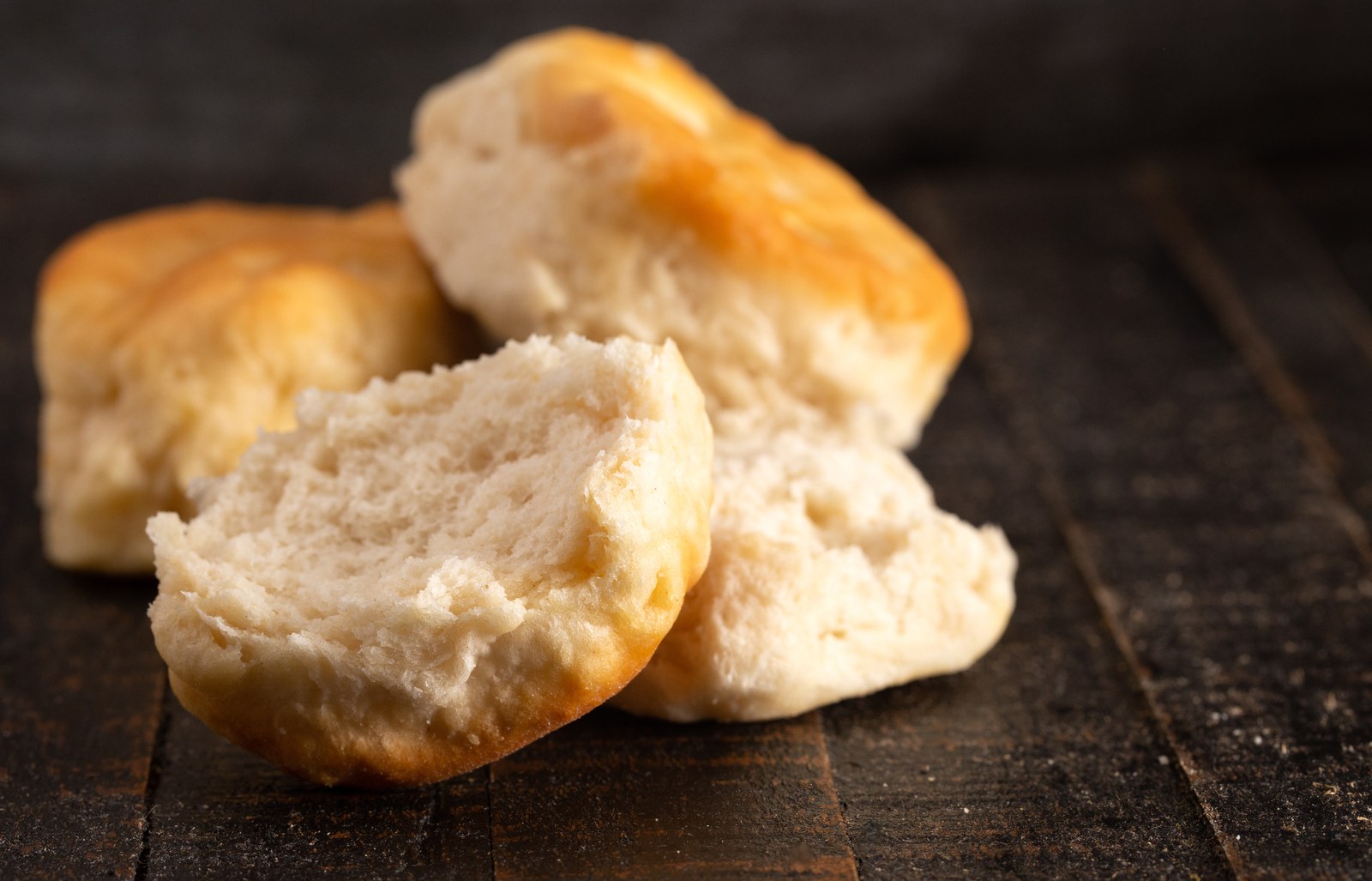
American buttermilk biscuits emerged in the 1800s when soft winter wheat (low-protein flour ideal for tender pastries) became widely cultivated in the American South. The invention of baking powder by Eben Norton Horsford in 1856 (marketed as 'Rumford Baking Powder' in 1869) eliminated the need for yeast, making quick breads practical for home kitchens. Buttermilk, a byproduct of butter-making, became the standard liquid in Southern biscuit recipes by the 1870s, as its acidity reacted with baking powder to create lift. The technique of cutting cold butter into flour (rather than melting it) was codified in cookbooks like 'The Virginia House-Wife' (1824 by Mary Randolph) and became standard in Southern cooking. During the Civil War (1861-1865), biscuits became essential camp food for Confederate soldiers, who made them with minimal ingredients over open fires. By the 1900s, biscuits were a Southern staple, appearing in cookbooks like 'The Settlement Cook Book' (1901) and 'The Joy of Cooking' (1931). This classic version follows that tradition: soft flour, cold butter, buttermilk, and baking powder, the fast, tender quick bread that became a Southern icon.
Before you start Equipment you'll need
- large mixing bowl — extra room prevents spills when mixing and makes folding easier
- whisk — wire loops incorporate air and break up lumps better than spoons
- bench scraper — cuts dough cleanly and scrapes your work surface in one efficient motion
- biscuit cutter 2.5–3 inch — necessary for proper technique and best results with this recipe
- sheet pan — large flat area fits more food and promotes even cooking
- parchment — necessary for proper technique and best results with this recipe
Safety Safety & allergen notes
- Do not overwork the dough - it toughens quickly.
- Keep butter cold to avoid greasy biscuits.
- Biscuit cutter edges are sharp; press straight down, do not twist.
Non-negotiables Rules for success
-
Keep butter cold and work quickly to prevent melting.
Cold butter creates steam pockets that make biscuits flaky.
-
Use buttermilk for tender crumb and tangy flavor.
Acid tenderizes gluten and creates characteristic biscuit flavor.
-
Mix just until dough comes together, no more.
Overworking develops gluten and creates tough, dense biscuits.
-
Pat dough to 3/4 inch thickness for proper rise.
Too thin creates crispy crackers; too thick underbakes center.
-
Bake at high heat (450°F) for tall, flaky layers.
Hot oven creates rapid steam for maximum rise and flakiness.
Prep Get set first
About 3 min of prep
- Preheat oven to 450°F
- Prepare large mixing bowl
- Have whisk ready
- Have bench scraper ready
- Have 2.5-3 inch biscuit cutter ready
- Have sheet pan ready
- Have parchment ready
Have all equipment ready before starting. Oven should be preheated. Keep butter and buttermilk cold.
Ingredients
Instructions
Unlock Grouped Step Actions
Plus members get tap-to-check action steps and live ingredient swaps for this recipe.
-
Prep and preheat
Preheat oven to 450°F and line a sheet pan with parchment.
-
Mix the dry ingredients
In a large mixing bowl, whisk flour, baking powder, salt, and sugar until blended.
-
Cut in butter
Add cold butter cubes. Use fingertips or a pastry cutter to work butter into the flour until some pieces are pea-sized and some slightly larger.
-
Add the buttermilk
Pour in cold buttermilk and gently fold until dough just begins to come together. Do not overmix.
-
Fold and layer
Turn dough onto lightly floured surface. Pat into a rectangle about 1 inch thick. Fold in half, pat again, and repeat once more for gentle layering.
-
Cut the biscuits
Pat dough into a ¾ to 1 inch thick slab. Press biscuit cutter straight down without twisting. Transfer to sheet pan.
-
Bake until golden
Brush tops with a little buttermilk. Bake 12 to 15 minutes until golden.
-
Serve warm
Let cool briefly. Serve warm with butter, honey, or jam.
Chef's notes
Baseline biscuit that pairs with fried chicken, pot roast, chilis, breakfast plates, and holiday meals.
If you want taller biscuits, chill the cut biscuits for 10 minutes before baking.
Sugar is optional but improves browning and adds classic diner flavor.
Leftovers reheat well at 300°F for 5 minutes.