Before you cook
Background Recipe story & origin
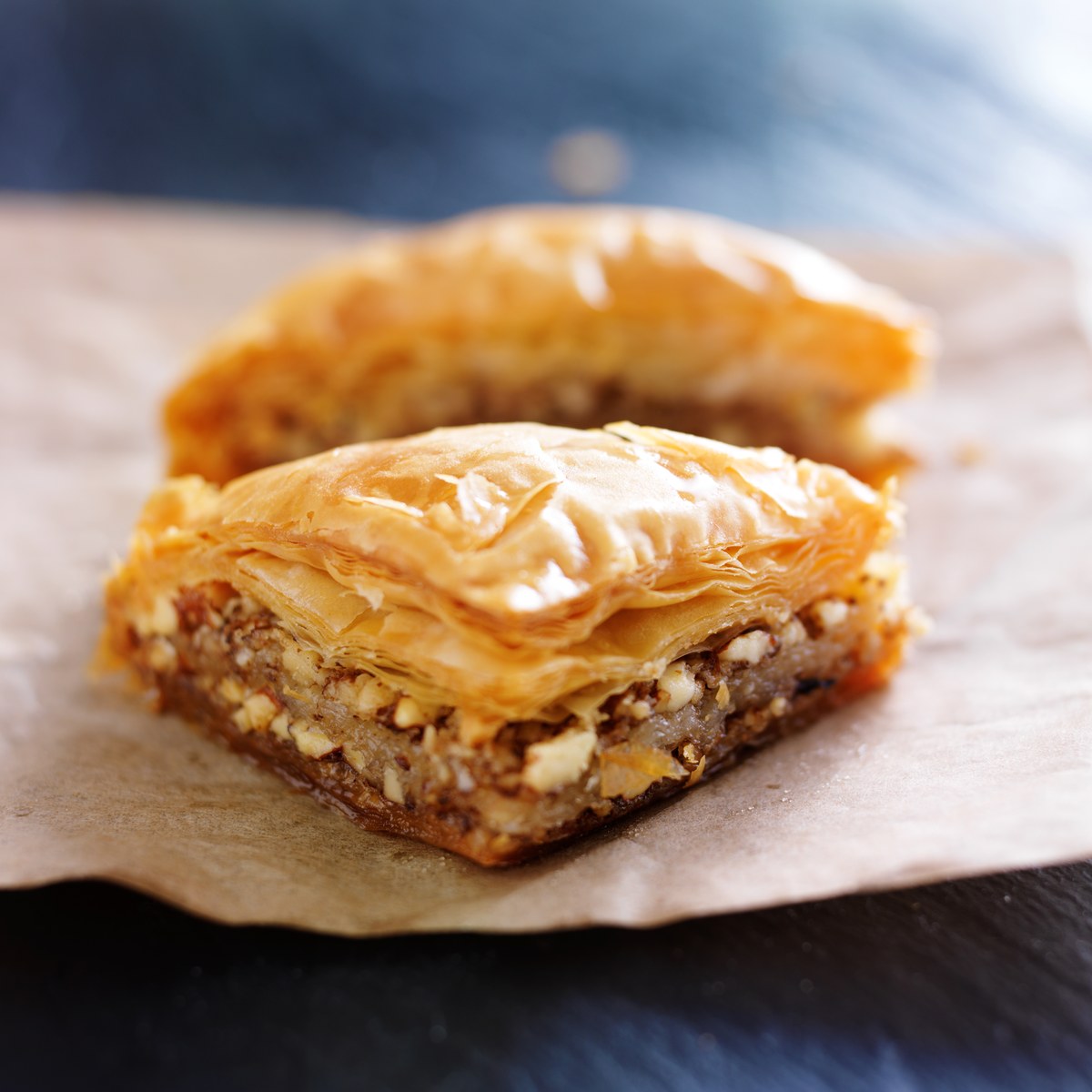
Baklava's origins span the Ottoman Empire, with competing claims from Turkey, Greece, and the Arab world. The layered pastry likely evolved from Assyrian origins (8th century BCE), refined in Ottoman palace kitchens from the 15th century onward. Ottoman chefs perfected stretching dough paper-thin-the famous yufka. Turkish baklava uses 40+ layers of phyllo, walnuts or pistachios, and sugar syrup with lemon. Greek versions typically use honey instead of sugar syrup and add cinnamon. Arab versions incorporate rose or orange blossom water. In Turkey, Gaziantep is famous for its pistachio baklava. Traditional preparation requires hand-stretched dough and clarified butter, not oil.
Before you start Equipment you'll need
- baking pan — Provides structure for baking layered baklava and bougatsa pastries
- saucepan — For making the honey syrup
Safety Safety & allergen notes
- Use caution with hot surfaces and oils.
- Handle knives carefully when prepping ingredients.
Non-negotiables Rules for success
-
Layer the components
Mix walnuts with cinnamon and cloves. Layer half the phyllo in buttered pan, brushing each sheet wit...
-
Make the syrup
Boil sugar, water, honey, lemon, cinnamon stick 10 minutes. Pour hot syrup over hot baklava. Let soa...
Prep Get set first
About 10 min of prep
- Prepare baking pan
- Prepare saucepan
This recipe takes about 50 minutes total.
Ingredients
Instructions
Unlock Grouped Step Actions
Plus members get tap-to-check action steps and live ingredient swaps for this recipe.
-
Layer the components
Mix walnuts with cinnamon and cloves. Layer half the phyllo in buttered pan, brushing each sheet with butter. Spread nut mixture. Top with remaining phyllo, brushing each. Cut into diamonds. Bake at 350°F 45-50 minutes until golden.
-
Make the syrup
Boil sugar, water, honey, lemon, cinnamon stick 10 minutes. Pour hot syrup over hot baklava. Let soak several hours or overnight.