Before you cook
Background Recipe story & origin
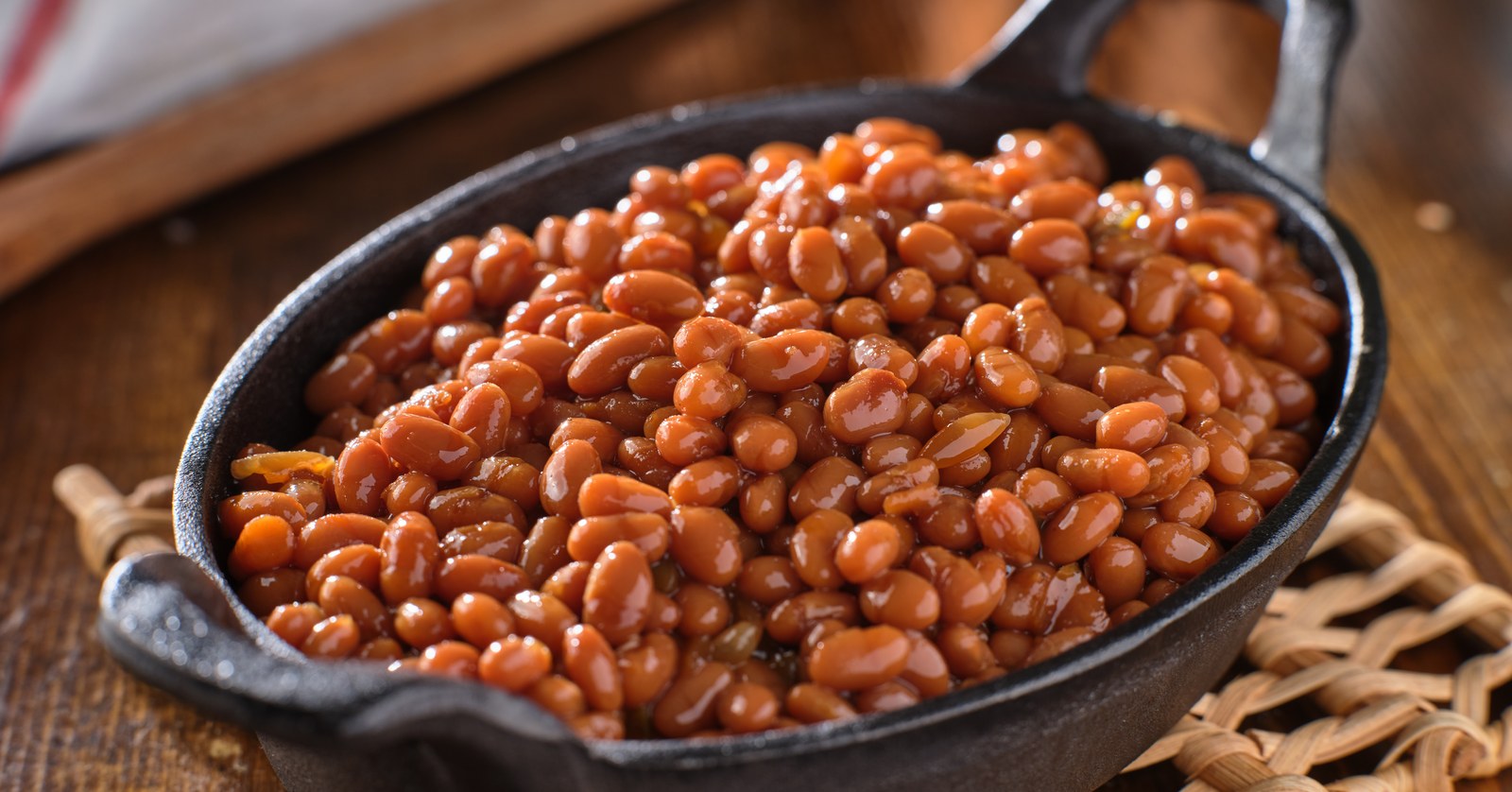
Baked beans originated with Native American tribes in New England, who cooked beans with maple syrup and bear fat in earthen pots buried in hot coals. English colonists in Massachusetts adapted the method, using molasses (a byproduct of the triangular trade) and salt pork in bean pots. By the 1800s, 'Boston Baked Beans' became a Saturday night tradition, beans slow-cooked overnight in brick ovens while families attended church on Sunday. The recipe appeared in cookbooks like Lydia Maria Child's 'The American Frugal Housewife' (1829) and Fannie Farmer's 'Boston Cooking-School Cook Book' (1896). As barbecue culture spread from the South and Midwest in the 1920s-1940s, baked beans evolved: Heinz introduced canned baked beans in 1895, and by the 1950s, home cooks began adding ketchup, brown sugar, and smoked seasonings to create the 'cookout style' that balanced New England's molasses tradition with barbecue's tomato-based sauces. This version represents that mid-century fusion: navy beans baked with molasses, tomato sauce, brown sugar, and smoked paprika, the style found at 1950s diners, church picnics, and backyard barbecues.
Before you start Equipment you'll need
- medium saucepan — right size for sauces without wasting stovetop space
- baking dish — distributes oven heat evenly so beans bake uniformly without hot spots
- wooden spoon — won't scratch cookware and wooden handle stays cool during extended stirring
- chef's knife — sharp blade makes precise cuts for even cooking and safer prep
- cutting board — stable surface protects your counters and keeps ingredients contained
Safety Safety & allergen notes
- Sauce contains sugar which can burn quickly. Keep heat low when simmering.
- Beans retain heat. Allow cooling time before serving.
- Handle hot baking dish with oven mitts.
Non-negotiables Rules for success
-
Use navy beans for their creamy texture and ability to absorb sauce.
Other beans don't break down properly or absorb flavors as well.
-
Simmer the sauce gently before baking to dissolve sugar completely.
Prevents grainy texture and ensures smooth, cohesive sauce.
-
Bake uncovered to allow liquid to evaporate and sauce to thicken.
Covering traps moisture and creates thin, watery beans.
-
Stir once halfway through baking to prevent edges from drying out.
Edges over-reduce quickly and can burn without stirring.
-
Let beans rest 10 minutes before serving.
Sauce thickens as it cools and clings better to beans.
Prep Get set first
About 3 min of prep
- Prepare medium saucepan
- Prepare baking dish
- Have wooden spoon ready
- Have chef's knife ready
- Have cutting board ready
Have all equipment ready before starting. The sauce comes together quickly once aromatics are softened.
Ingredients
Instructions
Unlock Grouped Step Actions
Plus members get tap-to-check action steps and live ingredient swaps for this recipe.
-
Preheat the oven
Heat oven to 350°F.
-
Sauté the aromatics
In a saucepan over medium heat (325-350°F surface), cook the diced onion for 3 minutes until softened. Add garlic and cook 1 minute.
-
Make the sauce
Stir in tomato sauce, ketchup, brown sugar, molasses, mustard, cider vinegar, Worcestershire sauce, smoked paprika, salt, and black pepper. Simmer 3 to 4 minutes until smooth and slightly thickened.
-
Combine beans and sauce
Place rinsed navy beans in a baking dish. Pour the warm sauce over the beans and fold gently to coat.
-
Add the bacon topping
Scatter browned bacon over the top or fold it in.
-
Bake uncovered
Bake uncovered for 60 to 70 minutes. Stir once halfway through. Beans should be thickened but still glossy.
-
Rest and serve
Let sit 10 minutes so the sauce settles and clings.
Chef's notes
Sauce thickens more as beans cool. Keep this in mind when judging doneness.
Bacon adds depth but is optional. For smoky depth without meat, add extra smoked paprika.
Meant to sit next to barbecue mains like ribs, pulled pork, burgers, and hot dogs.