Before you cook
Background Recipe story & origin
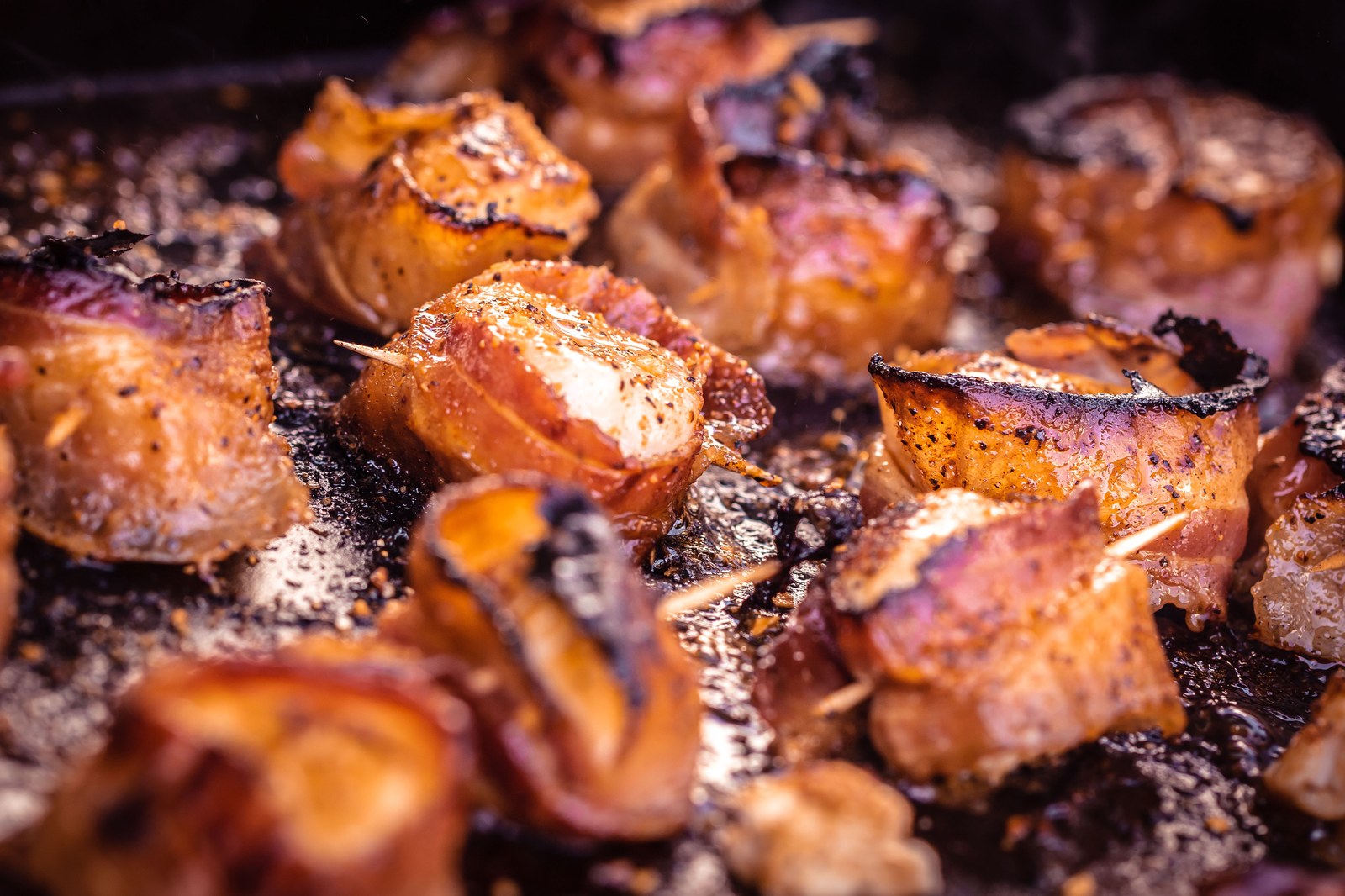
Bacon-wrapped scallops are not traditional coastal cooking. They emerged in mid-20th-century American steakhouse and cocktail culture, particularly in the 1950s-1960s, where surf-and-turf combinations signaled luxury. Bacon was added to scallops not for authenticity, but to protect delicate meat from dry heat and to extend perceived richness. The dish survived because it solved a real problem: scallops cook too fast for casual hosts, and bacon slows that window while adding insurance. When done right, it's one of the cleanest luxury bites you can serve.
Before you start Equipment you'll need
- rimmed baking sheet — catches rendered bacon fat safely during cooking
- wire rack — elevates scallops so bacon renders evenly instead of frying in fat
- paring knife — removes scallop side muscle cleanly
- paper towels — removes surface moisture from scallops - critical for browning
- tongs — turns scallops safely without piercing
- infrared thermometer — verifies oven temperature before baking
- instant-read meat thermometer — confirms scallop internal temperature precisely
Safety Safety & allergen notes
- Rendered bacon fat is extremely hot. Keep hands clear when removing from oven.
- Wooden toothpicks are safe for short oven baking when fully embedded in food and cooked below 425°F. They do not require soaking under these conditions.
- Do not use toothpicks under a broiler, on a grill, at temperatures above 425°F, or for cook times exceeding 25 minutes.
- Toothpicks will be hot after baking. Remove before serving or warn guests.
- Scallops overcook rapidly. Monitor internal temperature closely and pull early rather than late.
- Target scallop internal temperature is 115-120°F for tender, barely opaque center.
Non-negotiables Rules for success
-
Dry scallops thoroughly before wrapping.
Surface moisture prevents browning and causes steaming.
-
Use thin-cut bacon only.
Thick bacon will not render before scallops overcook.
-
Pull scallops early rather than late.
Scallops carry over quickly and turn rubbery if overcooked.
-
Monitor internal temperature, not time alone.
Size variation affects doneness faster than bacon timing.
Prep Get set first
About 5 min of prep
- Have scallops cleaned and dried
- Have bacon halved and patted dry
- Have toothpicks ready
- Have wire rack on baking sheet
- Have instant-read thermometer ready
- Have oven preheating to 400°F
Total time is 30 minutes. The doneness check at 10 minutes is mandatory - scallops overcook rapidly.
Ingredients
Instructions
Unlock Grouped Step Actions
Plus members get tap-to-check action steps and live ingredient swaps for this recipe.
-
Prepare the scallops
Remove the small side muscle from each scallop. Pat scallops completely dry with paper towels. Moisture control is critical for browning.
-
Prepare the bacon
Pat bacon dry with paper towels. Use thin-cut bacon only - thick bacon will not render before scallops overcook.
-
Wrap the scallops
Wrap each scallop with one half slice of bacon. Secure with a toothpick fully embedded through bacon and scallop.
-
Season lightly
Sprinkle scallops lightly with black pepper only. Do not add salt - bacon provides sufficient salinity.
-
Preheat the oven
Heat oven to 400°F. Verify temperature with infrared thermometer.
-
Arrange for baking
Place scallops on a wire rack set over a rimmed baking sheet. Space evenly.
-
Bake with turn
Bake 12 to 16 minutes total. Turn scallops once halfway through using tongs.
-
Doneness check (mandatory)
At 10 minutes, check one scallop with instant-read thermometer. Target internal temperature 115-120°F. If bacon is crisp before scallop reaches temp, remove immediately - pull early rather than late.
-
Rest and serve
Rest 2 minutes before serving. Remove toothpicks or warn guests.
Chef's notes
U-10 or U-12 size means 10-12 scallops per pound - these are large.
Remove the side muscle - it's tough and doesn't cook evenly.
Target internal temp is 115-120°F for tender, barely opaque center.
This is not a set-and-forget appetizer. Monitor closely.