Before you cook
Background Recipe story & origin
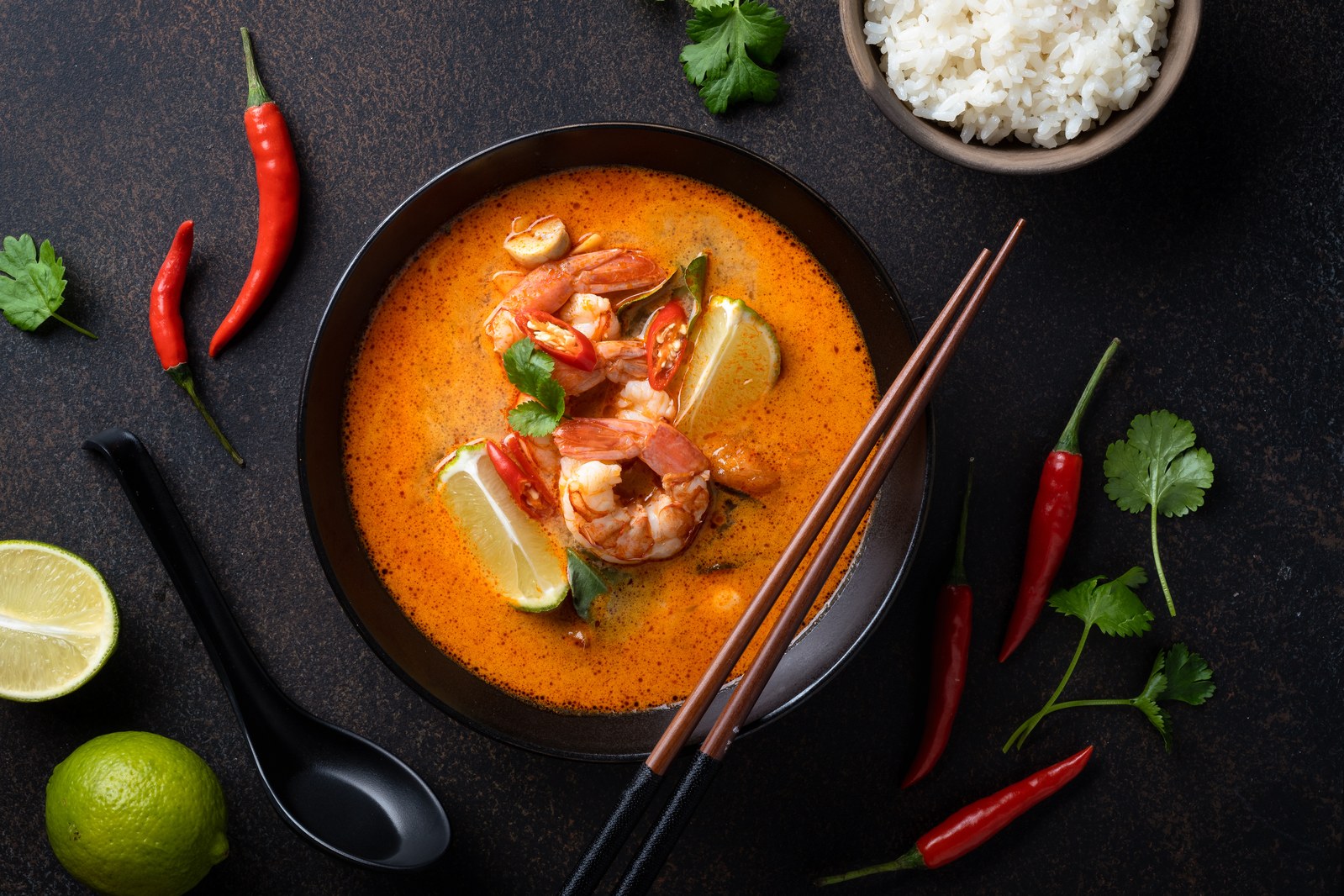
Tom yum originated in central Thailand, with 'tom' meaning boiled and 'yum' meaning mixed. The soup exemplifies Thai cuisine's balance of hot, sour, salty, and sometimes sweet. Its core aromatics-lemongrass, galangal, kaffir lime leaves-are distinctly Thai, while the sourness comes from lime juice (or tamarind) and the heat from Thai bird's eye chiles. Tom yum kung (with prawns) is the most famous version. The soup likely evolved from traditional Thai hot pots and Chinese influence, though it's been distinctly Thai for centuries. Two styles exist: tom yum nam sai (clear broth) and tom yum nam khon (creamy, with evaporated milk or coconut cream). River prawns are traditional; head-on adds flavor as diners suck the flavorful fat from the heads. The dish represents Thailand's sophisticated approach to balancing bold flavors.
Before you start Equipment you'll need
- large pot — Provides large capacity for simmering aromatic broth until flavors fully infuse
Safety Safety & allergen notes
- Lemongrass, galangal, and kaffir lime leaves are for flavor, not eating.
- Thai chiles are extremely hot; adjust to taste.
- Lime juice is added off heat to preserve brightness.
Non-negotiables Rules for success
-
Use fresh lemongrass, galangal, and kaffir lime leaves.
Dried versions lack the vibrant, aromatic quality essential to tom yum
-
Smash aromatics rather than chopping.
Smashing releases oils while keeping pieces large enough to identify and avoid eating
-
Add lime juice off heat at the end.
Heat destroys lime's bright acidity; adding last preserves its punch
-
Balance hot, sour, salty, and sweet.
Tom yum should hit all four tastes; adjust each component at the end
Prep Get set first
About 8 min of prep
- Smash lemongrass stalks
- Slice galangal
- Tear kaffir lime leaves
- Slice mushrooms
- Halve cherry tomatoes
- Smash Thai chiles
- Peel and devein shrimp
- Juice limes
Tom yum aromatics are smashed, not minced, to release flavor while staying identifiable for removal.
Ingredients
Instructions
Unlock Grouped Step Actions
Plus members get tap-to-check action steps and live ingredient swaps for this recipe.
-
Build the aromatic broth
Bring chicken broth to a boil in a large pot. Add lemongrass, galangal, kaffir lime leaves, and Thai chiles. Reduce heat and simmer 10 minutes to infuse aromatics.
-
Build the sauce
Add mushrooms, tomatoes, nam prik pao, fish sauce, and sugar. Simmer 5 minutes until mushrooms are tender.
-
Cook the shrimp and finish
Add shrimp and cook 2 to 3 minutes until just pink and curled. Remove from heat. Stir in lime juice. Taste and adjust: more fish sauce for salt, lime for sour, sugar for sweet, chiles for heat. Ladle into bowls and garnish with cilantro.
Chef's notes
Tom yum goong (with shrimp) is the most famous version.
The aromatics are not meant to be eaten; leave them in for presentation or strain.
Nam prik pao adds the characteristic red color; some versions omit it (tom yum nam sai).
Evaporated milk can be added for creamy version (tom yum nam khon).