Before you cook
Background Recipe story & origin
The butter baste technique became the home cook's classic weapon after being popularized by chefs like Alton Brown and J. Kenji López-Alt in the 2000s. Steakhouses had been doing it for decades, using clarified butter and high-powered burners to get crust and flavor simultaneously. The cast iron pan is key because it holds heat when cold meat hits it, unlike thinner pans that drop temperature and steam the meat. The combination of searing and basting solves the home kitchen's biggest problem: getting a crust without overcooking the interior. The garlic and thyme aren't just flavor; they perfume the butter as you baste, building layers of aroma. This is the technique that made home cooks realize they didn't need a $50 steakhouse meal to eat well.
Before you start Equipment you'll need
- cast iron skillet — holds and distributes high heat evenly for proper sear
- instant-read thermometer — Confirms doneness without guessing and provides accurate temperature readings for perfect results
Safety Safety & allergen notes
- Cast iron handle gets extremely hot; use a towel or handle cover.
- Oil will smoke at high heat; ensure good ventilation.
- Let steak rest before cutting or juices will run out.
- Butter will spatter; tilt pan away from you when basting.
Non-negotiables Rules for success
-
Temper the steak for at least 45 minutes.
Cold steak seizes up and cooks unevenly; room temp steak cooks edge to edge
-
Dry the surface completely.
Moisture is the enemy of browning; wet meat steams instead of sears
-
Get the pan ripping hot before the steak goes in.
Crust forms from high heat contact; lukewarm pan gives gray, sad meat
-
Baste continuously for 2-3 minutes.
Hot butter carries flavor and heat to the top while bottom sears
-
Rest at least 5 minutes before cutting.
Juices redistribute; cutting too soon means a dry steak and a puddle on the plate
Prep Get set first
About 5 min of prep
- Remove steak from fridge 45-60 minutes ahead
- Pat steak completely dry with paper towels
- Season generously with salt and pepper
- Have butter, garlic, and thyme ready by the stove
- Preheat cast iron over high heat for 5 minutes
- Open windows or turn on vent hood
This will smoke. A lot. That's normal. The smoke means you're getting a proper crust. Don't turn down the heat because you're scared.
Ingredients
Instructions
Unlock Grouped Step Actions
Plus members get tap-to-check action steps and live ingredient swaps for this recipe.
-
Temper and season
Remove steaks from refrigerator 45-60 minutes before cooking. Pat completely dry with a clean kitchen towel. Season generously on all sides with salt and pepper. Let sit at room temperature.
-
Sear the steak
Heat cast iron skillet over high heat (400-450°F surface) for 5 minutes until smoking. Add oil and swirl to coat. Place steaks in pan, pressing down gently for full contact. Sear without moving for 3-4 minutes until a deep brown crust forms. Flip once.
-
Butter the baste
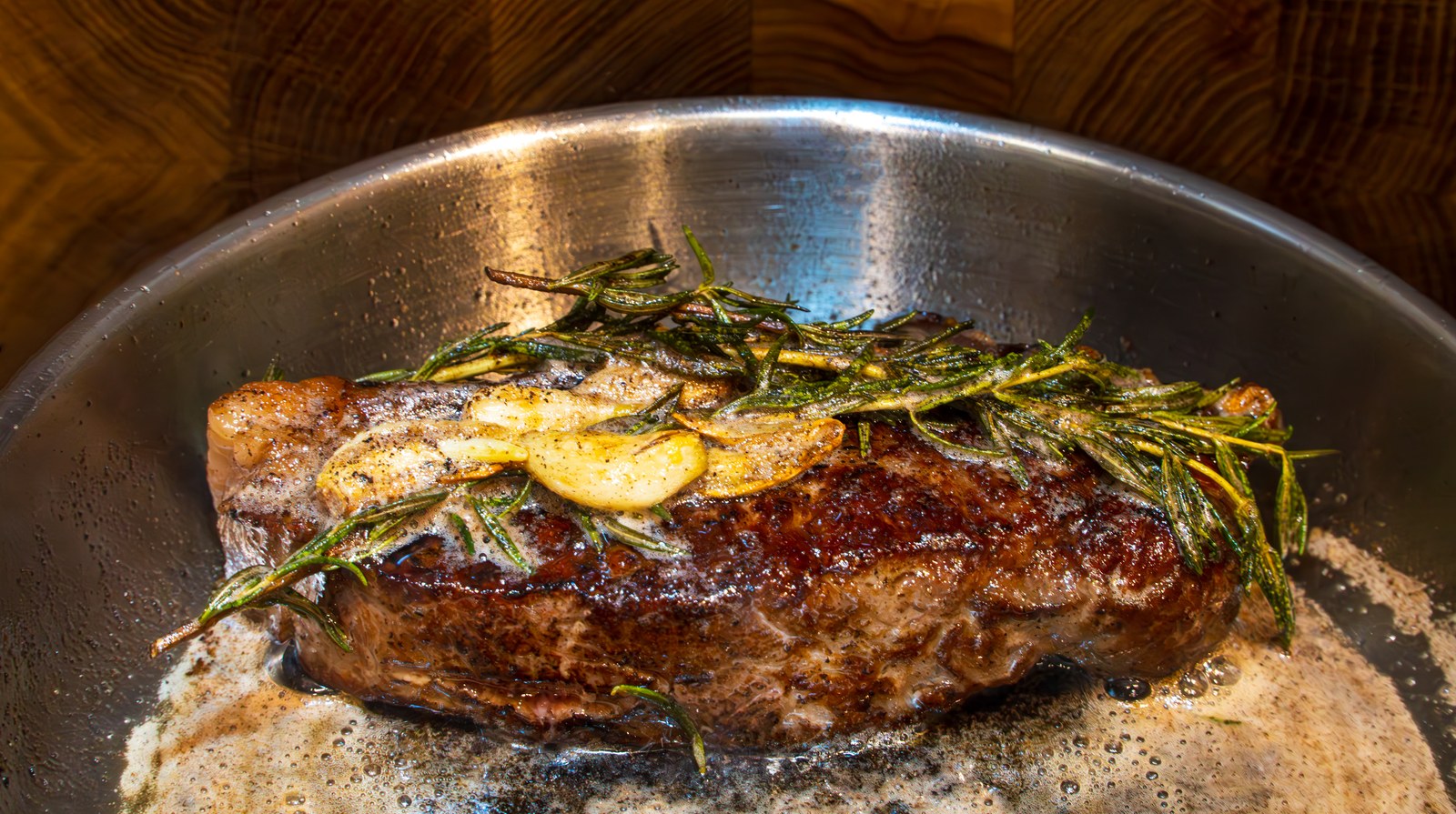
Reduce heat to medium. Add butter, garlic, and thyme to the pan. Once butter foams, tilt pan toward you and use a large spoon to continuously baste the steak with the melted butter for 2-3 minutes. The butter should be bubbling and fragrant. Check internal temp: 120°F for rare, 130°F for medium-rare, 140°F for medium.
-
Rest and serve
Transfer steaks to a cutting board or warm plate. Spoon some of the garlic-thyme butter over the top. Rest 5-10 minutes. Slice against the grain if desired, or serve whole.
Chef's notes
SHOPPING: Look for ribeye at least 1.25 inches thick with good marbling throughout. USDA Choice is fine; Prime is better. Bone-in adds flavor but makes pan contact trickier.
The fat cap should be creamy white, not yellow. Yellow fat indicates older beef.
If your steak is thicker than 1.5 inches, finish in a 400°F oven after searing.
Save the pan drippings for eggs the next morning.