Before you cook
Background Recipe story & origin
Salmon has been a prized food for thousands of years, central to the diets and cultures of Indigenous peoples along the Pacific and Atlantic coasts of North America, as well as throughout Scandinavia and the British Isles. But the specific technique of pan-searing salmon to achieve a shatteringly crisp skin while keeping the interior silky and just barely cooked through is a more recent culinary achievement, one that emerged from the French tradition of cooking fish à la meunière and evolved through the hands of restaurant chefs in the latter half of the 20th century.nnThe 1980s and 1990s marked a turning point for salmon in fine dining. As aquaculture expanded and Atlantic salmon became widely available year-round, chefs across Europe and North America began experimenting with preparations that highlighted the fish's natural richness rather than masking it. Pioneers of nouvelle cuisine like Paul Bocuse and Michel Guérard had already shifted the focus toward lighter, more precise cooking, and salmon—with its forgiving fat content and versatile flavor—became a canvas for technique. Cooking the fish skin-side down in a screaming-hot pan, pressing it flat, and resisting the urge to move it became a hallmark of professional kitchens, producing results that home cooks struggled to replicate.nnBy the early 2000s, pan-seared salmon had crossed from restaurant menus into the mainstream home kitchen, helped along by food television and a growing culture of recipe sharing online. The accompanying lemon-butter pan sauce—built from the golden fond left in the skillet—draws directly from classic French saucing technique, transforming a few humble ingredients into something that tastes deeply considered. Today, pan-seared salmon sits at an interesting intersection: it is weeknight-accessible yet technically rewarding, a dish that rewards patience and a properly preheated pan above all else.
Before you start Equipment you'll need
- stainless steel or cast iron skillet — Retains high heat for creating deep brown crust on salmon skin while maintaining even temperature
Safety Safety & allergen notes
- Oil at 400-450°F will splatter when salmon is added; use a splatter screen or lid to protect yourself from burns.
- Keep hands and face away from the pan during the initial sear—hot oil can cause severe burns.
- Use pot holders or an oven mitt when handling the hot skillet; the handle remains extremely hot throughout cooking.
- Salmon should reach 125°F for medium (slightly translucent center) or 145°F for well done; use a meat thermometer to verify doneness safely.
- Hot melted butter will foam vigorously when lemon juice is added; stand back to avoid steam burns and splatters.
Non-negotiables Rules for success
-
Dry the skin completely.
Moisture prevents crispy skin formation; water on the surface steams rather than browns, creating soggy skin instead of a crackling crust
-
Start skin-side down.
Skin needs longest contact with heat to render fat and crisp; placing flesh-side down first wastes time and results in undercooked skin
-
Do not move the fish.
Movement breaks the developing crust, prevents even browning, and tears delicate flesh, disrupting the sear
-
Cook mostly on skin side (5-6 minutes vs 2-3 minutes).
Extended skin-side cooking renders fat and crisps the exterior while keeping flesh moist; flipping too early leaves skin pale and rubbery
-
Press gently for first 30 seconds after placing in pan.
Initial pressure ensures full skin contact with hot pan surface, maximizing heat transfer for even crisping and preventing skin from curling
Prep Get set first
About 8 min of prep
- Pat salmon fillets very dry, especially skin
- Bring salmon to room temperature (10-15 min)
- Juice the lemon
- Chop fresh dill
- Measure out olive oil and butter
- Have salt and pepper ready
- Heat skillet until very hot (400-450°F)
Crispy salmon skin requires three things: completely dry fish, a screaming hot pan, and the discipline not to move it. Everything else is just sauce.
Ingredients
Instructions
Unlock Grouped Step Actions
Plus members get tap-to-check action steps and live ingredient swaps for this recipe.
-
Sear the salmon
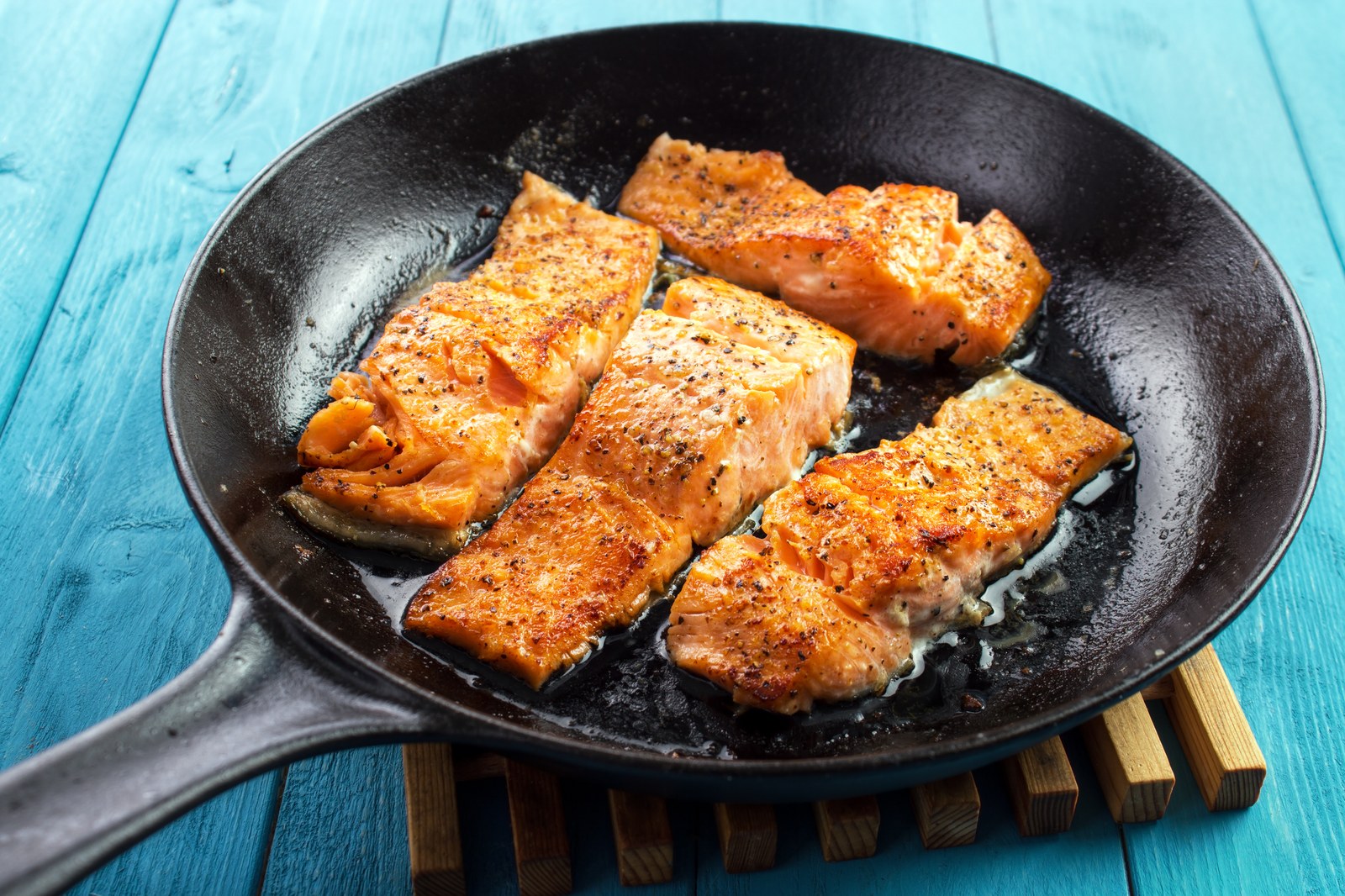
Pat salmon very dry with a clean kitchen towel, especially the skin. Season with salt and pepper. Heat oil in a skillet over high heat (400-450°F surface) until shimmering. Place salmon skin-side down. Press gently with spatula for first 30 seconds. Reduce heat to medium-high. Cook 5 to 6 minutes without moving until skin is crispy and releases easily. Flip and cook 2 to 3 minutes more for medium. Remove to plates.
-
Make the sauce and serve
Reduce heat to medium. Add butter to pan. When melted and foaming, add juice of the lemon. Swirl to combine. Stir in dill. Spoon sauce over salmon. Serve immediately.
Chef's notes
Room temperature fish cooks more evenly.
Pressing gently on flesh indicates doneness: soft is rare, firm is well done.
Skin should release naturally when ready to flip.
The lemon-butter sauce takes 2 minutes.
Tomorrow's Meal
Salmon Salad Cakes with Crispy Exterior
Flaked cold salmon mixed with mayo, herbs, and breadcrumbs, formed into patties and pan-fried until golden—like salmon cakes but built from yesterday's dinner
You'll need to pick up:
Quick overview:
- Flake cold salmon into bite-sized pieces, removing any bones
- Mix with 2 tbsp mayo per cup of salmon, fresh herbs, 1/4 cup panko, salt and pepper
- Form into 3-inch patties, chill 15 minutes
- Pan-fry in 1/4 inch oil at 350°F for 3-4 minutes per side until golden
- Serve with lemon and fresh greens or in a sandwich