Before you cook
Background Recipe story & origin
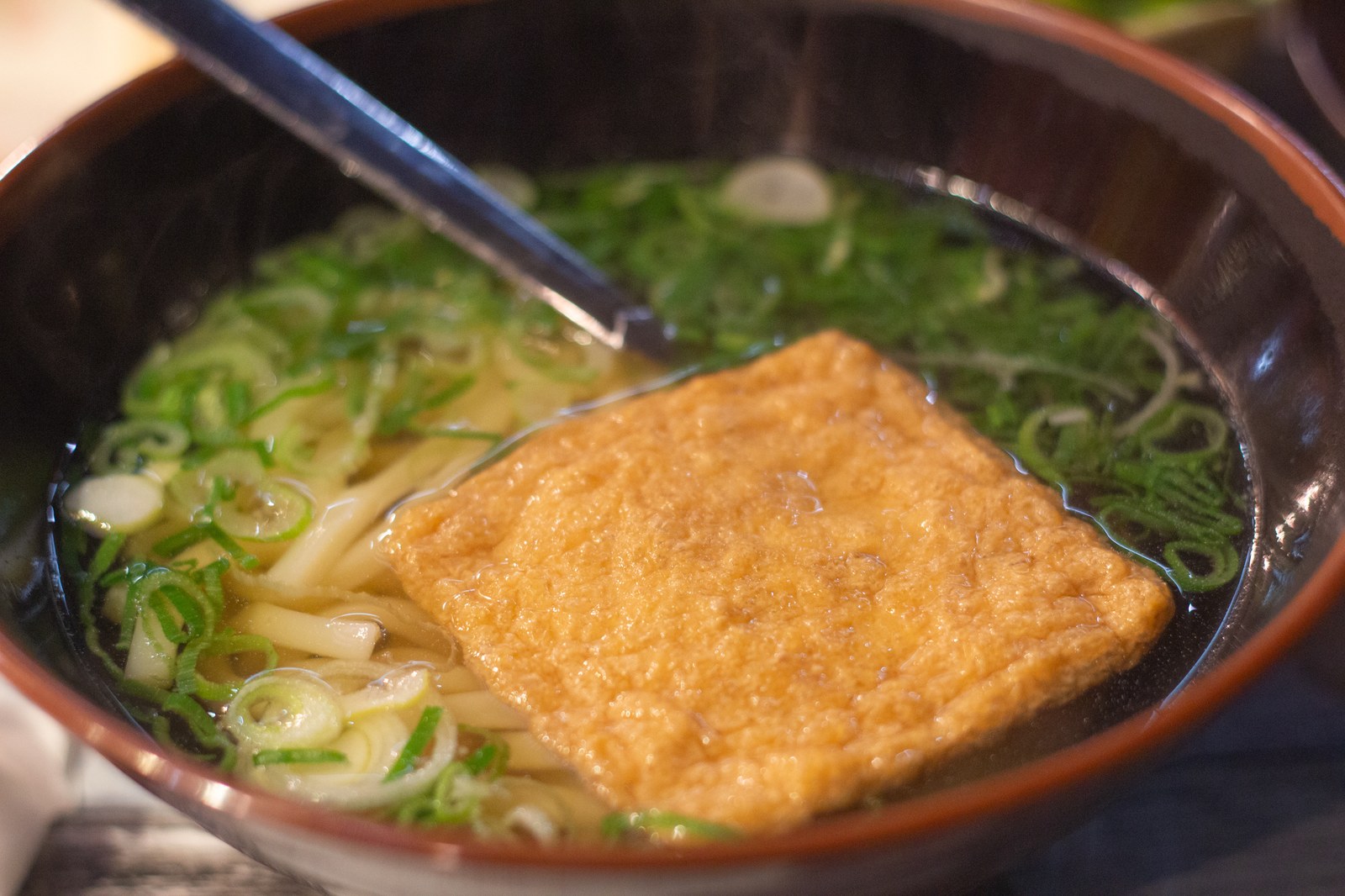
Kitsune udon (fox noodles) is one of Japan's most popular udon preparations. The name comes from Japanese folklore, which holds that foxes are fond of fried tofu. The dish originated in Osaka in the late 1800s, where a restaurant owner placed sweetly simmered aburaage (fried tofu pouches) on top of udon. The contrast between light, savory dashi broth and sweet, juicy tofu defines the dish. Osaka-style kitsune udon tends to be sweeter than Tokyo-style. The broth should be clear and clean-tasting, made from proper dashi. Udon noodles should be thick, chewy, and freshly cooked. This is Japanese comfort food at its purest: simple, warming, and satisfying.
Before you start Equipment you'll need
- large pot — Provides ample space for cooking noodles and making broth with proper heat control
- medium saucepan — Provides controlled heat for simmering ingredients until properly seasoned and tender
Safety Safety & allergen notes
- Aburaage is very oily; blanching removes excess oil.
- Udon overcooks easily; watch timing carefully.
- Hot broth and noodles require careful handling.
Non-negotiables Rules for success
-
Blanch aburaage before simmering.
Blanching removes excess oil so the tofu absorbs the sweet soy broth
-
Simmer tofu until well-seasoned.
The sweet-savory tofu is what defines kitsune udon; under-seasoned tofu is bland
-
Don't overcook the udon.
Udon should be chewy; overcooked noodles become mushy
-
Serve immediately.
Udon absorbs broth and softens; the texture changes quickly
Prep Get set first
About 8 min of prep
- Blanch aburaage to remove excess oil
- Prepare dashi (or use instant)
- Slice scallions and kamaboko
- Have udon noodles ready
Kitsune udon is simple and fast. The sweet tofu pouches are the star - don't skip the simmering step.
Ingredients
Instructions
Unlock Grouped Step Actions
Plus members get tap-to-check action steps and live ingredient swaps for this recipe.
-
Prepare and simmer aburaage
Pour boiling water over aburaage to remove excess oil; drain and squeeze gently. Cut each piece in half diagonally. In a saucepan, combine 1 cup dashi, soy sauce for tofu, mirin for tofu, sugar, and sake. Add aburaage, bring to a simmer, and cook 15 minutes until liquid is mostly absorbed and tofu is well-seasoned.
-
Make the broth and cook noodles
In a large pot, bring remaining 5 cups dashi to a simmer. Season with soy sauce for broth, mirin for broth, and salt. Taste and adjust. In a separate pot of boiling water, cook udon according to package directions (usually 1 to 3 minutes for fresh/frozen). Drain and rinse briefly.
-
Assemble and serve
Divide noodles among 4 bowls. Ladle hot broth over noodles. Top each bowl with 2 pieces of simmered aburaage. Add kamaboko slices if using. Garnish with scallions. Serve with shichimi togarashi on the side.
Chef's notes
Kitsune means 'fox' - folklore says foxes love fried tofu.
Osaka-style kitsune udon has sweeter broth than Tokyo-style.
Fresh or frozen udon is far better than dried.
The broth should be light and clean, not heavy.