Before you cook
Background Recipe story & origin
French toast originated as pain perdu (lost bread) in medieval Europe, a practical way to rescue stale bread by soaking it in egg and milk before frying. The technique appears in Roman texts as early as the 4th century, where Apicius described soaking bread in milk before frying in oil. The French formalized the method in the 15th century, creating the egg-and-milk base with spices. English colonists brought the dish to America, where it became a breakfast staple by the 18th century. The name French toast first appeared in American cookbooks in the 1870s, distinguishing the egg-soaked version from plain fried bread. Regional variations developed across the U.S., with New Orleans adding powdered sugar and creating pain perdu as a distinct Creole dish, while diners popularized the butter-and-syrup service. The technique remains unchanged: bread absorbs the egg mixture, heat sets the eggs, and butter creates the golden crust. Modern versions use thick-cut brioche or challah for better absorption, but the core method transforming stale bread into breakfast survives from medieval kitchens to contemporary brunch menus.
Before you start Equipment you'll need
- shallow bowl — Wide surface area allows easy dipping and coating of flat items
- whisk — Wire loops incorporate air and break up lumps better than spoons
- large skillet — Flat cooking surface provides even heat distribution for pan-frying
- spatula — Flat edge slides under food for turning without tearing or breaking
Safety Safety & allergen notes
- Hot skillet surface can cause burns. Use spatula with long handle to keep hands away from heat.
- Butter will sputter and pop when it hits the hot pan. Stand back slightly when adding.
- Egg mixture dripping from bread can hit hot surface and splatter. Wipe excess before placing in pan.
Non-negotiables Rules for success
-
Use day-old bread, not fresh
Fresh bread has too much moisture and will turn soggy when soaked. Day-old bread has dried slightly and creates structure that holds the egg mixture without falling apart.
-
Soak bread 20-30 seconds per side, no longer
Longer soaking saturates the bread completely and it will fall apart when you try to flip it. The bread needs to absorb enough egg to cook through but still hold its shape.
-
Cook over medium heat, not high
High heat burns the outside before the egg inside cooks through, leaving raw egg in the center. Medium heat (325-350°F) sets the egg proteins gradually and creates even browning.
-
Rest finished toast on a wire rack, not paper towels
Paper towels trap steam underneath and turn the crispy bottom soggy. A wire rack allows air circulation so the crust stays crisp while you cook the remaining batches.
Prep Get set first
About 5 min of prep
- Set out eggs and milk to come to room temperature
- Slice bread into thick 3/4-inch slices if using a whole loaf
- Measure out sugar, cinnamon, vanilla, and salt
- Place shallow bowl near stove for dipping station
- Set large skillet on burner with spatula nearby
- Have butter ready to add to pan
- Clear counter space for plating finished toast
Day-old bread absorbs the egg mixture without falling apart. Fresh bread will get soggy and tear when you flip it.
Ingredients
Instructions
Unlock Grouped Step Actions
Plus members get tap-to-check action steps and live ingredient swaps for this recipe.
-
Make the egg mixture
Whisk eggs, milk, vanilla, cinnamon, sugar, and salt in a shallow bowl until well combined.
-
Heat the skillet
Heat butter in a large skillet over medium heat until melted and foaming (about 325-350°F surface temperature).
-
Soak the bread
Dip each bread slice in the egg mixture, letting it soak for 20-30 seconds per side. The bread should absorb the mixture but not fall apart.
-
Cook until golden
Place soaked bread in the hot skillet and cook 3-4 minutes per side until golden brown. Add more butter to the pan as needed for remaining slices.
-
Serve
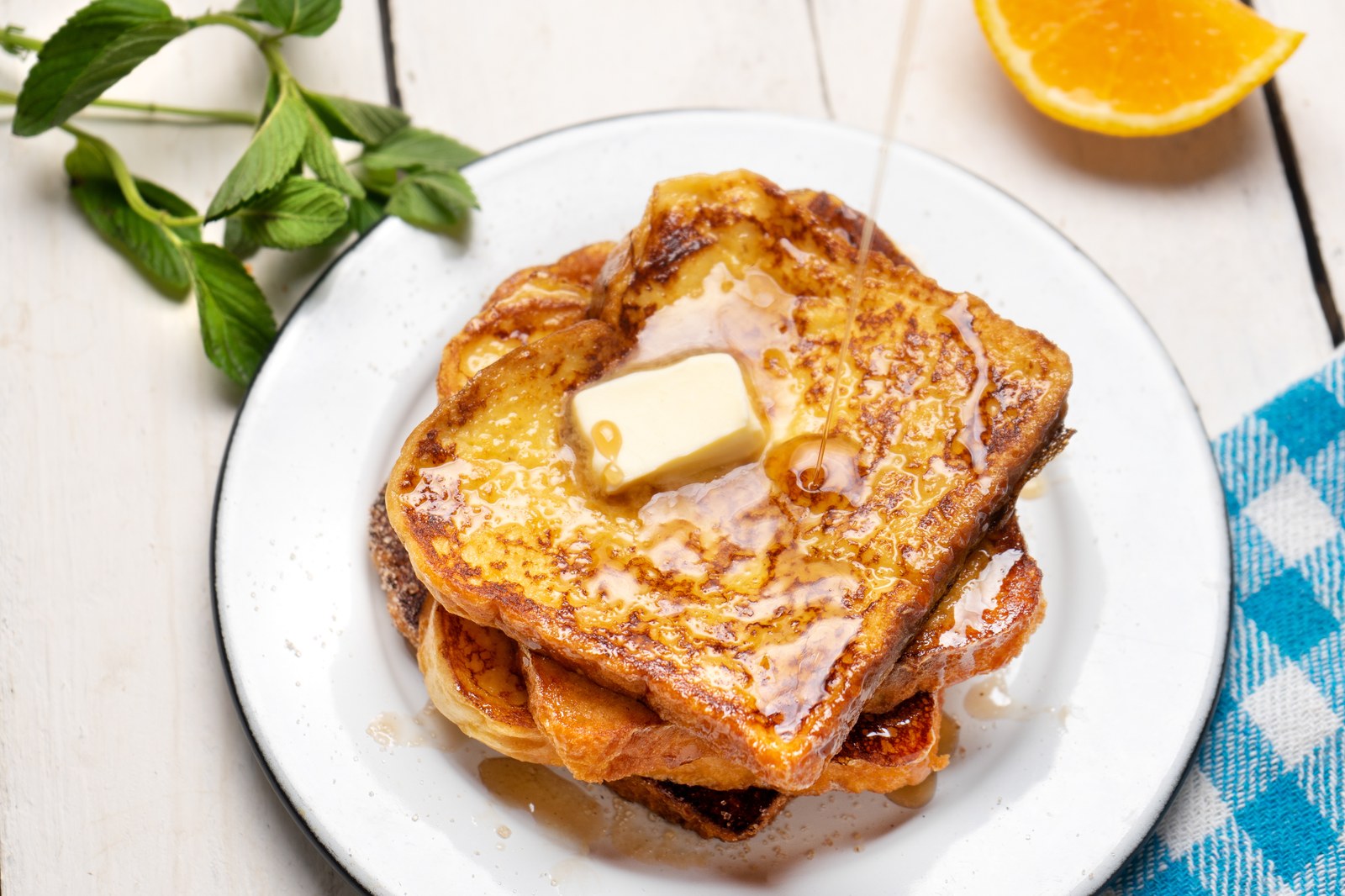
Serve immediately with butter, maple syrup, and fresh berries if desired.
Chef's notes
Brioche and challah have enough structure to absorb egg mixture without falling apart. Sandwich bread becomes too soggy.
Day-old bread works better than fresh. The drier texture absorbs liquid without getting mushy.
Keep finished toast warm on a wire rack in a 200°F oven while cooking remaining batches. Paper towels will steam the crust and make it soggy.
Egg mixture can be whisked the night before and refrigerated. Whisk again before using.
French toast does not reheat well. The texture becomes rubbery. Best eaten immediately.