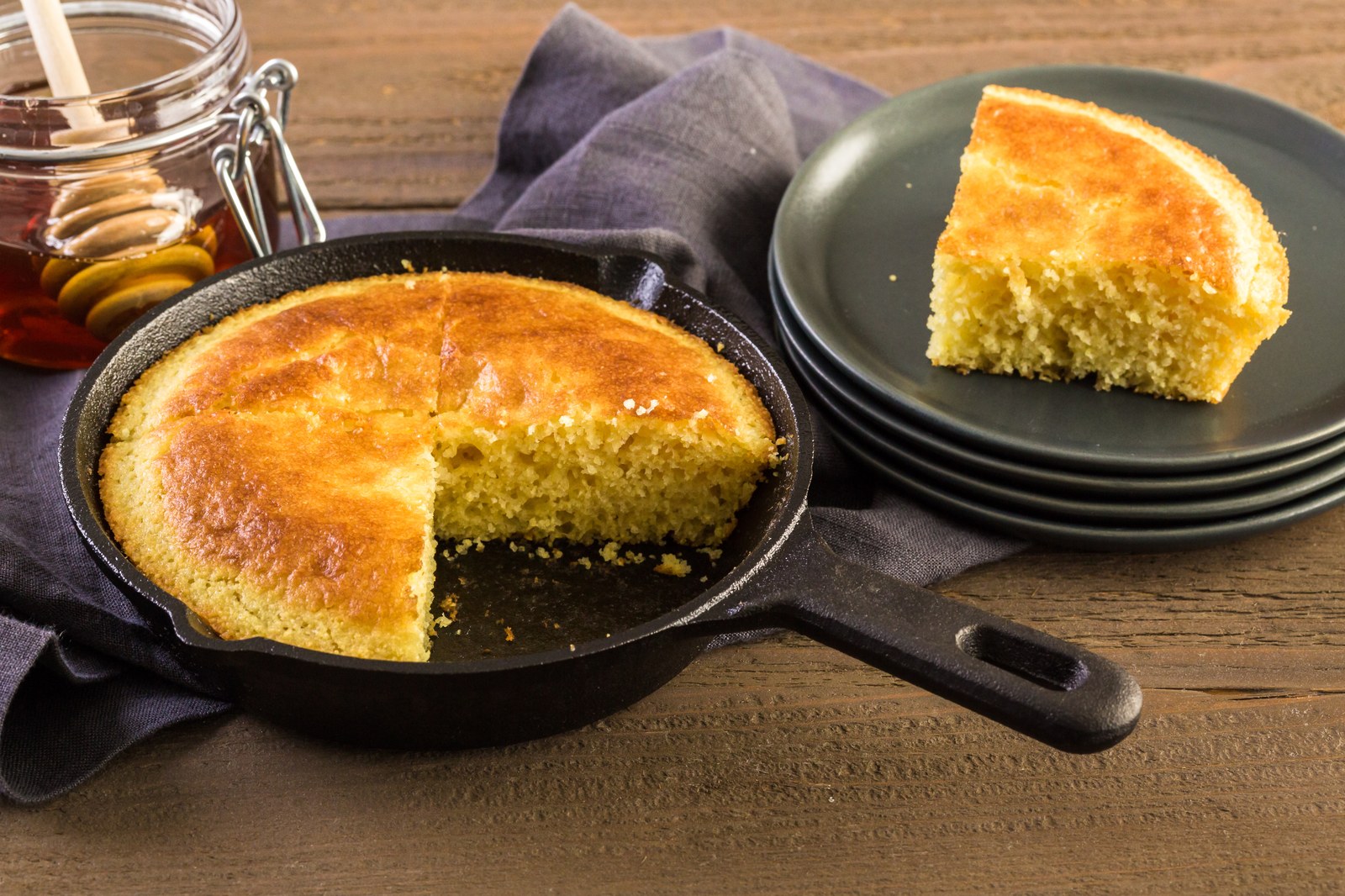
Before you cook
Background Recipe story & origin
Cornbread traces its origins to Indigenous peoples of the Americas, who made maize cakes from ground corn as early as 1000 BCE. European settlers in the 1600s-1700s adapted these techniques, and by the 1800s, cornbread was a staple in Southern cooking, where corn was more abundant and affordable than wheat. The use of cast iron skillets became standard in the 19th century when cast iron cookware became widely available (Lodge Manufacturing, founded 1896, became a major producer). The technique of preheating the skillet (creating a crisp, caramelized crust) was documented in cookbooks like 'The Virginia House-Wife' (1824 by Mary Randolph) and became standard in Southern kitchens. By the 1950s, cornbread was a Southern and Midwestern staple, appearing in cookbooks like 'The Joy of Cooking' (1951 edition) and 'Better Homes and Gardens New Cook Book' (1953). This classic version mirrors mid-century American home cooking: balanced sweetness, even crumb, and crisp edges from a preheated cast iron skillet, the traditional method that became an American comfort food icon.
Before you start Equipment you'll need
- 10 inch cast iron skillet — manageable size for controlled heat and easy ingredient tossing
- mixing bowl — keeps prepped ingredients organized and ready to go
- whisk — wire loops incorporate air and break up lumps better than spoons
- rubber spatula — flexible edge scrapes every bit from bowls and folds gently without deflating
Safety Safety & allergen notes
- Skillet stays extremely hot when removed from oven.
- Pouring batter into hot fat may steam and sizzle.
- Do not overmix. Overmixing toughens crumb.
Non-negotiables Rules for success
-
Preheat cast iron skillet with oil for crispy bottom crust.
Cold pan creates pale, soft bottom instead of crispy crust.
-
Use buttermilk for tender crumb and tangy flavor.
Regular milk creates dense, bland cornbread.
-
Mix batter just until combined, no more.
Overmixing develops gluten and creates tough, dense texture.
-
Bake until top is golden and toothpick comes out clean.
Underbaked cornbread is gummy; overbaked is dry.
-
Let rest 10 minutes before cutting.
Hot cornbread crumbles; resting allows it to set.
Prep Get set first
About 3 min of prep
- Prepare 10 inch cast iron skillet
- Have mixing bowl ready
- Have whisk ready
- Have rubber spatula ready
Cornbread comes together quickly. Have everything ready before heating the skillet.
Ingredients
Instructions
Unlock Grouped Step Actions
Plus members get tap-to-check action steps and live ingredient swaps for this recipe.
-
Preheat and prep pan
Place cast iron skillet in oven and heat to 425°F.
-
Mix the dry ingredients
Whisk cornmeal, flour, sugar, baking powder, and salt in mixing bowl.
-
Mix the wet ingredients
Whisk milk, melted butter, and egg in separate bowl.
-
Combine gently
Pour wet ingredients into dry and fold gently until just combined.
-
Oil the skillet
Remove skillet from oven, add neutral oil, swirl to coat.
-
Pour and bake
Pour batter into hot skillet and bake 18 to 20 minutes until golden.
-
Cool slightly
Cool 5 minutes before slicing.
Chef's notes
Built to pair with classic or enhanced chili.
Sugar can be reduced or removed for less sweetness.
Batter should be slightly thick; thin with teaspoon of milk if needed.