Before you cook
Background Recipe story & origin
New England Clam Chowder's story begins in the early 18th century along the rocky coastlines of Massachusetts, Rhode Island, and Maine, where Indigenous peoples had long harvested the region's abundant clams long before European settlers arrived. When French and British fishermen and colonists established communities along the Atlantic seaboard in the 1700s, they adapted their Old World chowder traditions—derived from the French word 'chaudière,' meaning a large cooking pot—to the ingredients at hand. Early versions were rustic affairs: layers of salt pork, onions, hardtack biscuits, and clams slow-cooked together in iron pots, often aboard fishing vessels or in humble shoreside kitchens.nnThe first known printed recipe for clam chowder appeared in the Boston Evening Post in 1751, already describing a dish recognizable in its bones to what we eat today. Milk and cream began replacing water as the liquid base throughout the 18th and 19th centuries, giving the chowder its signature richness and distinguishing it sharply from the tomato-based Manhattan-style chowder that would emerge in the mid-1800s—a variation that New Englanders viewed with such suspicion that a Maine legislator famously introduced a bill in 1939 to make putting tomatoes in clam chowder illegal.nnBy the 19th century, New England Clam Chowder had become a regional institution, served in Boston's legendary waterfront restaurants and celebrated at community clambakes up and down the coast. The dish codified into its modern form—cream, potatoes, clams, salt pork or bacon, and onions—and became so culturally emblematic that Boston's Union Oyster House, America's oldest continuously operating restaurant, has served it since 1826. Today it remains one of the most iconic regional dishes in American cuisine, a bowl of history in every creamy, briny spoonful.
Before you start Equipment you'll need
- large pot — Holds clams and water for steaming until shells open and release flavorful broth
- dutch oven — Provides heavy bottom for building chowder base and simmering soup with even heat distribution
- colander — Strains clams from cooking liquid while preserving the broth for the chowder
- chef's knife — Dices potatoes, onions, and celery into uniform pieces for even cooking
- cutting board — Provides safe surface for preparing vegetables
- wooden spoon or ladle — Stirs chowder base and serves without damaging dutch oven surface
- measuring cups and spoons — Accurately measures broth, cream, and seasonings for proper flavor balance
Safety Safety & allergen notes
- Steam pot reaches high temperatures (400-450°F surface) - use pot holders and keep hands/face away from steam when removing lid.
- Discard any clams that don't open after cooking - unopened clams may contain harmful bacteria.
- Do not boil after adding cream or it may curdle - maintain gentle heat (below 180°F) once dairy is added.
- Hot clam broth can cause severe burns - strain carefully through fine mesh and allow to cool slightly before handling.
- Chowder thickens as it sits; thin with milk if needed - reheat gently without boiling to prevent cream from separating.
Non-negotiables Rules for success
-
Use fresh clams if possible.
Fresh clams have better texture and you get the clam broth
-
Render the salt pork properly.
Crispy salt pork bits add texture and porky depth
-
Do not boil after adding cream.
Boiling cream causes it to curdle and separate
-
Let it rest before serving.
Chowder improves as flavors meld; even 10 minutes helps
-
Cook flour roux for 2 minutes after adding.
Cooking the flour removes raw flour taste and allows it to properly thicken the broth
Prep Get set first
About 15 min of prep
- Scrub clams and discard any open ones
- Dice salt pork into small pieces
- Dice potatoes, onion, and celery
- Measure cream and milk
- Chop fresh parsley
- Have large pot and dutch oven ready
Fresh clams make better chowder, but canned work in a pinch. The salt pork is not optional—it provides essential flavor.
Ingredients
Instructions
Unlock Grouped Step Actions
Plus members get tap-to-check action steps and live ingredient swaps for this recipe.
-
Steam the clams
Scrub clams and discard any that are open. Place in large pot with water. Cover and steam over high heat (400-450°F surface) 6 to 8 minutes until clams open. Remove clams, discarding any that stayed closed. Strain broth through fine mesh and reserve. Remove clam meat from shells and chop roughly.
-
Build the chowder base
Cook salt pork in dutch oven over medium heat (325-350°F surface) until crispy and fat is rendered, about 8 minutes. Remove crispy bits and reserve. Add butter to fat. Add onion and celery, cook 5 minutes until soft. Add flour and stir 2 minutes. Add reserved clam broth, potatoes, bay leaf, and thyme. Simmer 15 minutes until potatoes are tender.
-
Finish the chowder
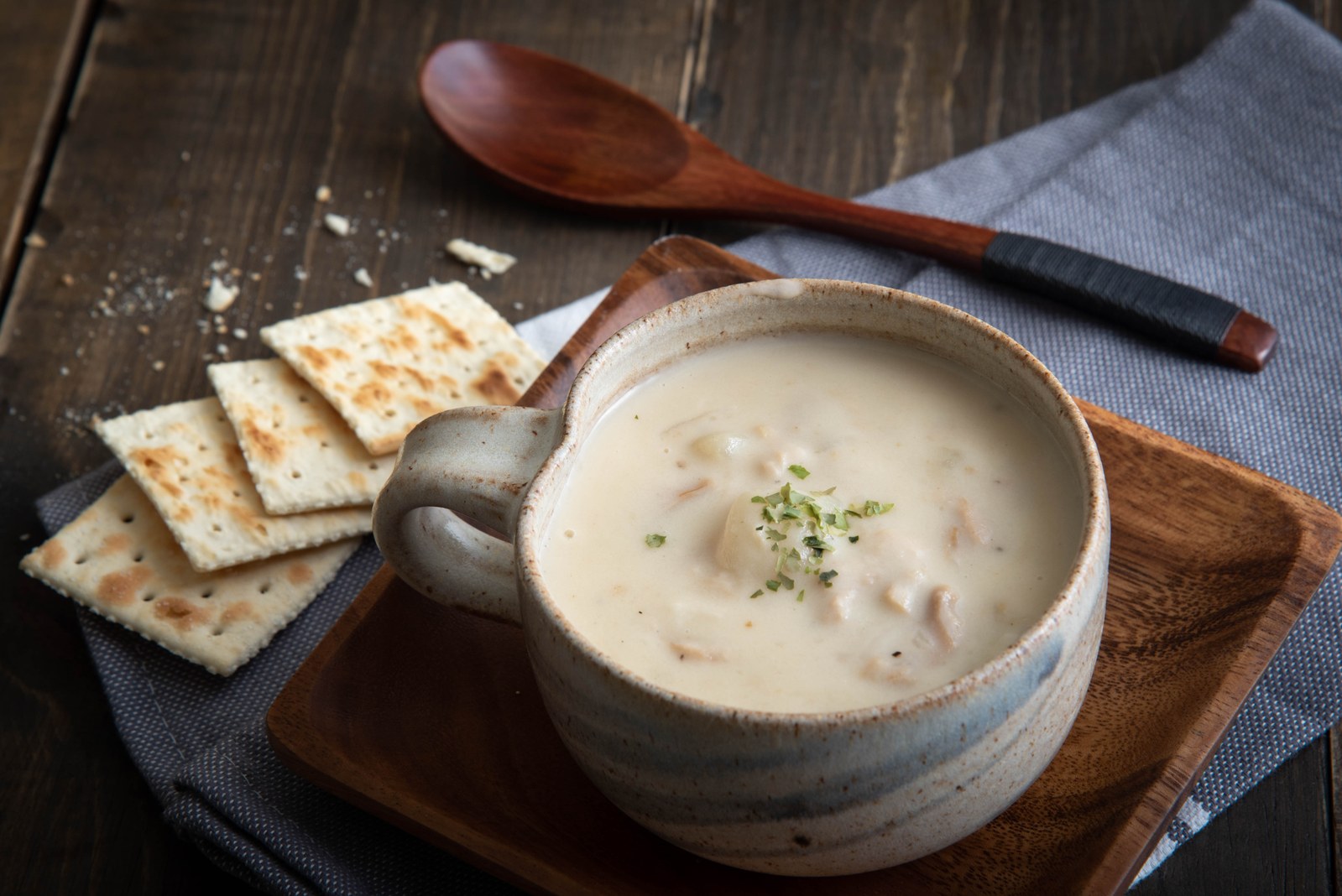
Remove bay leaf and thyme. Add milk and cream. Heat gently without boiling. Add chopped clams, salt, and pepper. Simmer 3 minutes to heat through. Let rest 10 minutes. Serve topped with crispy salt pork bits and parsley.
Chef's notes
Salt pork can be substituted with thick-cut bacon.
Quahog or cherrystone clams are traditional.
Serve with oyster crackers.
Tomorrow's Meal
Crispy Clam Chowder Bread Bowls
Leftover chowder thickened and baked inside hollowed bread rounds until golden, creating a savory bread-soup hybrid
You'll need to pick up:
Quick overview:
- Reheat chowder gently on stovetop, simmer 5 minutes to reduce excess liquid
- Hollow out bread rolls leaving 1/2-inch walls
- Brush insides with melted butter, toast at 375°F for 5 minutes
- Fill bread bowls with thickened chowder
- Bake 12-15 minutes until bread is crispy and golden
- Top with fresh thyme and serve immediately