Before you cook
Background Recipe story & origin
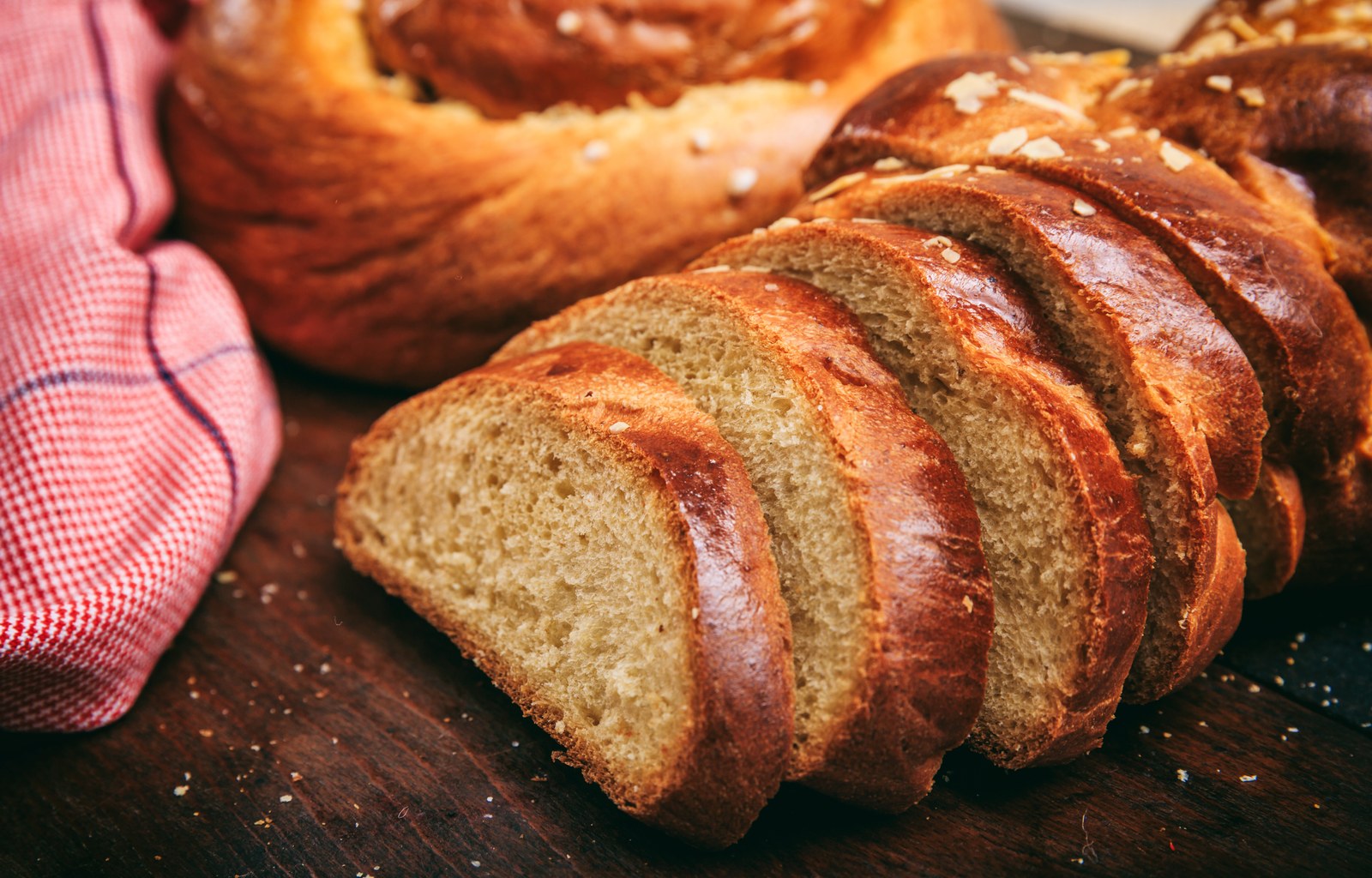
Christopsomo ('Christ's bread') is traditional Greek Christmas bread associated with mainland regions like Thessaly, Epirus, and the Peloponnese. Families reserved their best white flour for holiday baking, preparing a large loaf on Christmas Eve to share at the table. Olive oil serves as the primary fat, while honey and citrus reflect local agriculture. Warm spices-cinnamon and clove-appear across regional versions. The loaf is decorated with a cross formed from dough, sometimes with walnuts, and intended as table bread that can be broken and enjoyed over several days.
Before you start Equipment you'll need
- Large mixing bowl — Provides room for dough to be mixed and turned without spilling
- Wooden spoon or dough whisk — Combines wet and dry cleanly without overworking gluten before kneading
- Small saucepan — Simmer-sweetens dried fruit so it tastes round and stays moist in the crumb
- Microplane or fine grater — Pulls zest from citrus fruits without bitter white pith for clean flavor
- Bench scraper — Keeps the work surface clean and helps move and portion dough during shaping
- Baking sheet — Supports the loaf with stable heat and room for expansion
- Parchment paper — Prevents sticking and allows easy transfer without deforming the loaf
- Pastry brush — Applies egg wash evenly without pressing down the decorative cross
- Clean kitchen towel or plastic wrap — Covers dough during proofing to prevent a dry skin that tears during baking
- Instant-read thermometer — Confirms doneness at 190-195°F internal so crumb sets even when crust browns early
- Cooling rack — Allows steam to escape so the crumb sets and the bottom crust stays dry
Safety Safety & allergen notes
- Egg-washed loaves brown quickly due to honey in the dough; tent loosely with foil after 30 minutes if crust darkens too fast.
- Let loaf cool fully before slicing to avoid compressing the crumb and creating gummy texture.
- Hot saucepan and simmering fruit can splatter; stir gently and keep heat at a simmer, not a boil.
- Dough temperature affects rise; if kitchen is cold, proof in a turned-off oven with the light on.
Non-negotiables Rules for success
-
Use bread flour, not all-purpose.
Bread flour provides the density and chew expected of Christopsomo; all-purpose makes it too soft and cake-like.
-
Sweeten dried fruit before mixing into dough.
Raw dried fruit steals moisture from the dough and tastes sharp; simmering in juice and honey rounds the flavor and keeps it moist.
-
Knead until dough passes the windowpane test.
Properly developed gluten creates the structured, sliceable crumb that defines this bread.
-
Do not overproof the shaped loaf.
This bread should rise visibly but remain dense; overproofing creates an airy crumb that isn't traditional and won't hold shape.
-
Bake to internal temperature, not color alone.
Honey in the dough causes early browning; the interior may be underbaked even when the crust looks done.
-
Cool completely before slicing.
The crumb continues setting as it cools; cutting too early compresses the structure and creates gumminess.
Prep Get set first
About 10 min of prep
- Warm water to 95-100°F
- Zest orange before juicing (easier to zest whole fruit)
- Measure all dry ingredients
- Soften butter for whipped butter if serving same day
- Line baking sheet with parchment
- Clear counter space for kneading
This is a 4.5-hour project from start to slicing. Most of that time is passive rising, but plan your afternoon accordingly. The loaf keeps well for several days, so consider baking the day before serving.
Ingredients
Instructions
Unlock Grouped Step Actions
Plus members get tap-to-check action steps and live ingredient swaps for this recipe.
-
Sweeten the fruit
Combine raisins, orange juice, honey, and orange peel strip in a small saucepan. Bring to a gentle simmer over medium heat, maintaining liquid around 190-200°F. Cook until fruit is plump and liquid is mostly absorbed, 5 to 7 minutes. Remove and discard orange peel. Spread fruit on a plate to cool completely before adding to dough.
-
Bloom the yeast
In a small bowl, combine warm water (95-100°F) with 1 teaspoon of the sugar. Sprinkle yeast over the surface and stir gently. Let stand 5 to 10 minutes until foamy and active. If yeast does not foam, it is dead; discard and start with fresh yeast.
-
Mix the dry ingredients
In a large bowl, whisk together bread flour, remaining sugar, salt, cinnamon, and ground clove until evenly combined.
-
Form the dough
Add the bloomed yeast mixture, honey, olive oil, vanilla, and orange zest to the dry ingredients. Stir with a wooden spoon until a cohesive dough forms and no dry flour remains. Dough will look rough but unified. Do not add the fruit yet.
-
Knead to windowpane
Turn dough onto an unfloured surface. Knead by hand using a steady push-fold-turn rhythm for 10 to 14 minutes, or knead in a stand mixer on low speed for 8 to 10 minutes. Dough is ready when it passes the windowpane test: pinch off a small piece and stretch it gently between your fingers. It should stretch thin enough to see light through without tearing. If it tears, continue kneading. This step is critical for structure. Target dough temperature after kneading: 76-78°F.
-
Fold in fruit
Flatten the kneaded dough into a rough rectangle. Scatter the cooled sweetened fruit evenly over the surface. Fold dough over the fruit and knead gently just until fruit is evenly distributed, about 1 minute. Do not overwork or fruit will tear the gluten structure.
-
First rise
Shape dough into a tight ball (about 1 inch diameter). Place in a lightly oiled bowl, turning once to coat. Cover with a clean kitchen towel or plastic wrap. Let rise at 72-75°F until doubled in size, 90 to 120 minutes. Dough is ready when a finger indentation fills in slowly.
-
Shape and decorate
Punch down dough gently. Reserve a piece about the size of a large lemon (roughly 100g) for decoration. Shape the main dough into a tight round loaf and place on a parchment-lined baking sheet. Roll the reserved dough into two ropes about 10 inches long. Lay ropes in a cross over the loaf, tucking ends underneath. Press lightly to adhere without flattening the center.
-
Final proof
Cover loaf loosely with a kitchen towel or plastic wrap. Let proof at 72-75°F until puffy and expanded by 60-70%, 45 to 60 minutes. Loaf should feel aerated but still have resistance when gently pressed.
-
Preheat the oven and prepare egg wash
Position rack in center of oven. Preheat oven to 350°F. Whisk egg with 1 tablespoon water until smooth.
-
Apply the egg wash and bake
Brush egg wash gently over entire loaf, including the cross decoration. Bake 40 to 45 minutes, rotating pan once at 25 minutes for even browning. The loaf is done when internal temperature reaches 190-195°F at the center. Do not rely on crust color alone; the honey causes early browning and the interior may still be raw. If crust darkens before internal temp is reached, tent loosely with foil and continue baking. Use an instant-read thermometer inserted into the center to confirm doneness.
-
Cool the completely
Transfer loaf to a cooling rack. Cool at least 60 minutes before slicing. The crumb continues setting during this time; cutting too early results in gummy texture.
-
Make the whipped honey-orange butter
In a medium bowl, whip softened butter with honey, orange zest, and a pinch of salt until light and airy, 2 to 3 minutes. Butter should be pale, smooth, and spreadable. Serve alongside sliced bread.
Chef's notes
Storage: Wrap tightly and store at room temperature up to 3 days. Toast slices lightly after day two to refresh.
Density control: If your kitchen is very dry, hold back 2 tablespoons of water and add only if dough feels stiff after mixing.
Serving: Traditionally served plain or with honey; the whipped butter is a modern accompaniment that complements without turning it into dessert.
Decoration: The cross is traditional, but some families add walnuts pressed into the dough or shape the cross ends into small spirals.
Make ahead: The bread improves slightly on day two as flavors meld. Bake the day before if serving for Christmas breakfast.