Before you cook
Background Recipe story & origin
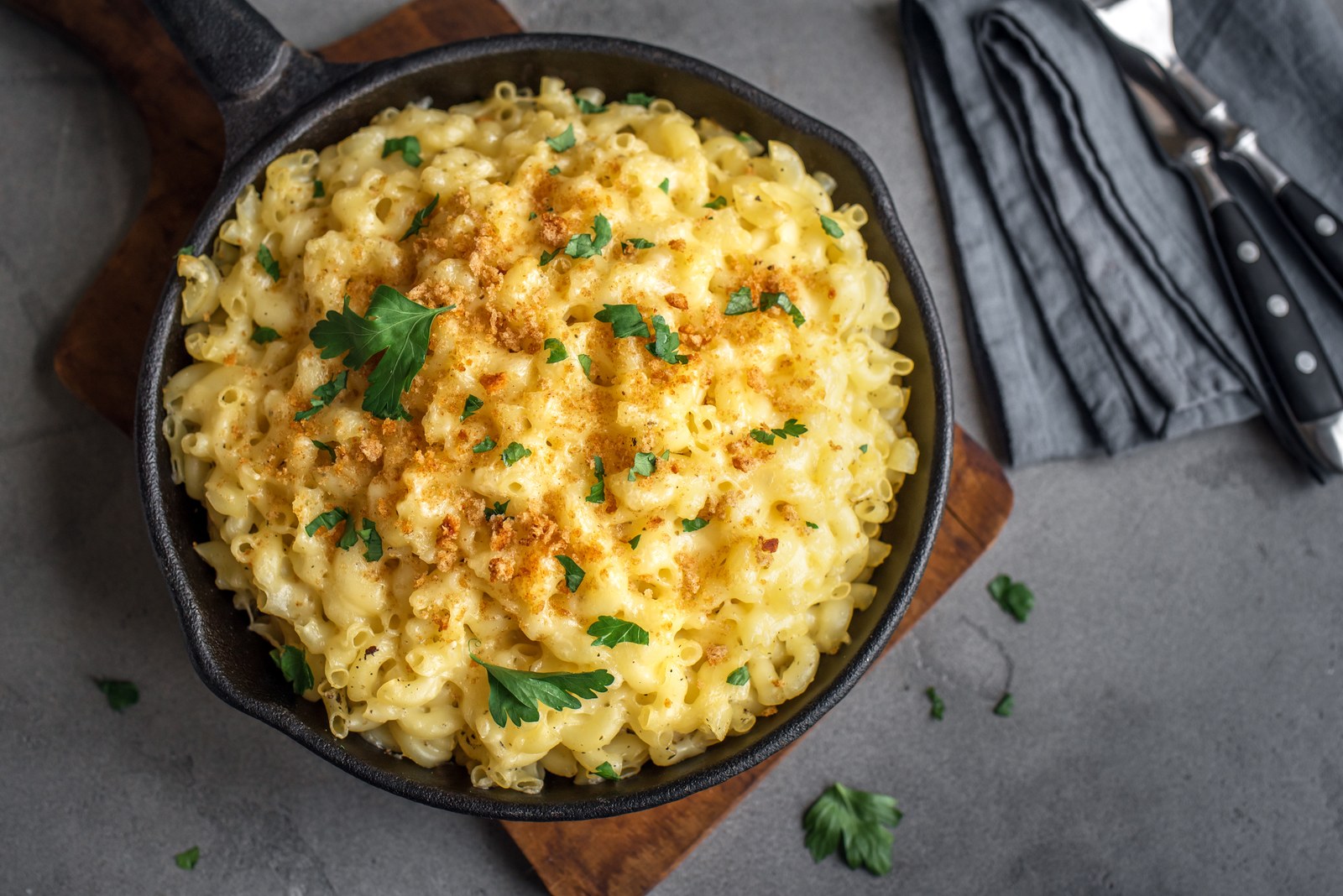
Macaroni and cheese entered American cooking through Thomas Jefferson, who encountered pasta dishes in France and Italy during his time as Minister to France (1785-1789). Jefferson brought a macaroni machine back to America and served macaroni with Parmesan cheese at a White House dinner in 1802, introducing the concept to American high society. The dish spread through cookbooks like Mary Randolph's 'The Virginia House-Wife' (1824), which included a 'macaroni pudding' recipe. By the late 1800s, pasta became more affordable as Italian immigration increased and domestic pasta production grew. The baked casserole format, layering cooked macaroni with cheese sauce and baking until golden, became standard in American home cooking by the early 1900s, appearing in cookbooks like Fannie Farmer's 'Boston Cooking-School Cook Book' (1896). Kraft introduced boxed macaroni and cheese in 1937, making it a pantry staple during the Great Depression and World War II. This baked version follows the pre-Kraft tradition: a stovetop béchamel-based cheese sauce mixed with macaroni, topped lightly, and baked until the edges brown and the sauce bubbles, the method found in mid-century church cookbooks and family recipe collections.
Before you start Equipment you'll need
- large pot — handles large batches with room for stirring without overflow
- 9x13 baking dish — promotes even melting and creates golden brown top without burning edges
- saucepan — tall sides make stirring liquids easier and reduce splatter
- whisk — wire loops incorporate air and break up lumps better than spoons
- spoon or spatula — thin edge slides under delicate foods without breaking them
- cheese grater — shreds cheese and vegetables uniformly for even melting and cooking
Safety Safety & allergen notes
- Hot pasta water can splash; drain carefully.
- Cheese sauce thickens quickly-stir constantly to avoid scorching.
- Baking dish will be extremely hot when removing from oven.
Non-negotiables Rules for success
-
Cook pasta 1-2 minutes shy of package directions.
Pasta continues cooking in the oven and will become mushy if fully cooked first.
-
Whisk flour into melted butter until completely smooth.
Lumpy roux creates grainy sauce that can't be fixed later.
-
Remove pan from heat before adding cheese.
High heat breaks cheese and causes greasy, separated sauce.
-
Bake only until edges bubble and top is lightly golden.
Overbaking dries out the center and makes sauce tight and grainy.
Prep Get set first
About 5 min of prep
- Preheat oven to 350°F
- Prepare large pot for pasta
- Prepare 9x13 baking dish
- Have saucepan ready
- Have whisk ready
- Have spoon or spatula ready
- Shred cheddar cheese (4 cups total)
- Measure out milk and heavy cream
Total time is about 50 minutes including baking and resting; have all equipment and ingredients prepped so the cheese sauce comes together quickly once the roux is made.
Ingredients
Instructions
Unlock Grouped Step Actions
Plus members get tap-to-check action steps and live ingredient swaps for this recipe.
-
Preheat the oven
Heat oven to 350°F.
-
Cook the pasta
Boil elbow macaroni in salted water until just shy of tender. Drain and set aside.
-
Make the roux
Melt butter in saucepan over medium heat (325-350°F surface). Whisk in all purpose flour and cook 1 minute until smooth and pale.
-
Add the milk and cream
Slowly whisk in whole milk and heavy cream. Simmer 3 to 4 minutes until thick enough to coat a spoon.
-
Add the cheese
Turn off heat. Add shredded sharp cheddar a handful at a time, whisking until melted and smooth. Season with salt, black pepper, and optional paprika.
-
Combine pasta and sauce
Stir cooked macaroni into cheese sauce until coated evenly.
-
Transfer to dish
Pour mixture into the baking dish. Scatter extra cheddar for topping on top.
-
Bake until golden
Bake 20 to 25 minutes until edges bubble and top is lightly golden.
-
Rest and serve
Cool 5 minutes so the interior sets slightly before scooping.
Chef's notes
Baseline mac and cheese meant to sit next to meatloaf, fried chicken, green beans, or glazed carrots.
For creamier texture, cover with foil for the first 15 minutes of baking.
Block cheese shredded at home melts more cleanly than pre shredded.
Paprika is optional for color and mild depth.
Tomorrow's Meal
Crispy Mac and Cheese Cakes
Transform cold mac and cheese into golden, crispy-edged cakes with a creamy interior—like the best parts of a grilled cheese meets hash browns
You'll need to pick up:
Quick overview:
- Chill leftover mac and cheese until completely cold and firm (at least 4 hours or overnight)
- Use a large spoon or ice cream scoop to portion into 3-4 inch wide, 1 inch thick patties on parchment paper
- Heat oil or butter in a nonstick skillet over medium heat until shimmering
- Carefully slide cakes into pan and cook 4-5 minutes per side until deeply golden and crispy
- Let rest 2 minutes on a rack so bottoms stay crispy, then serve hot with your favorite dipping sauce