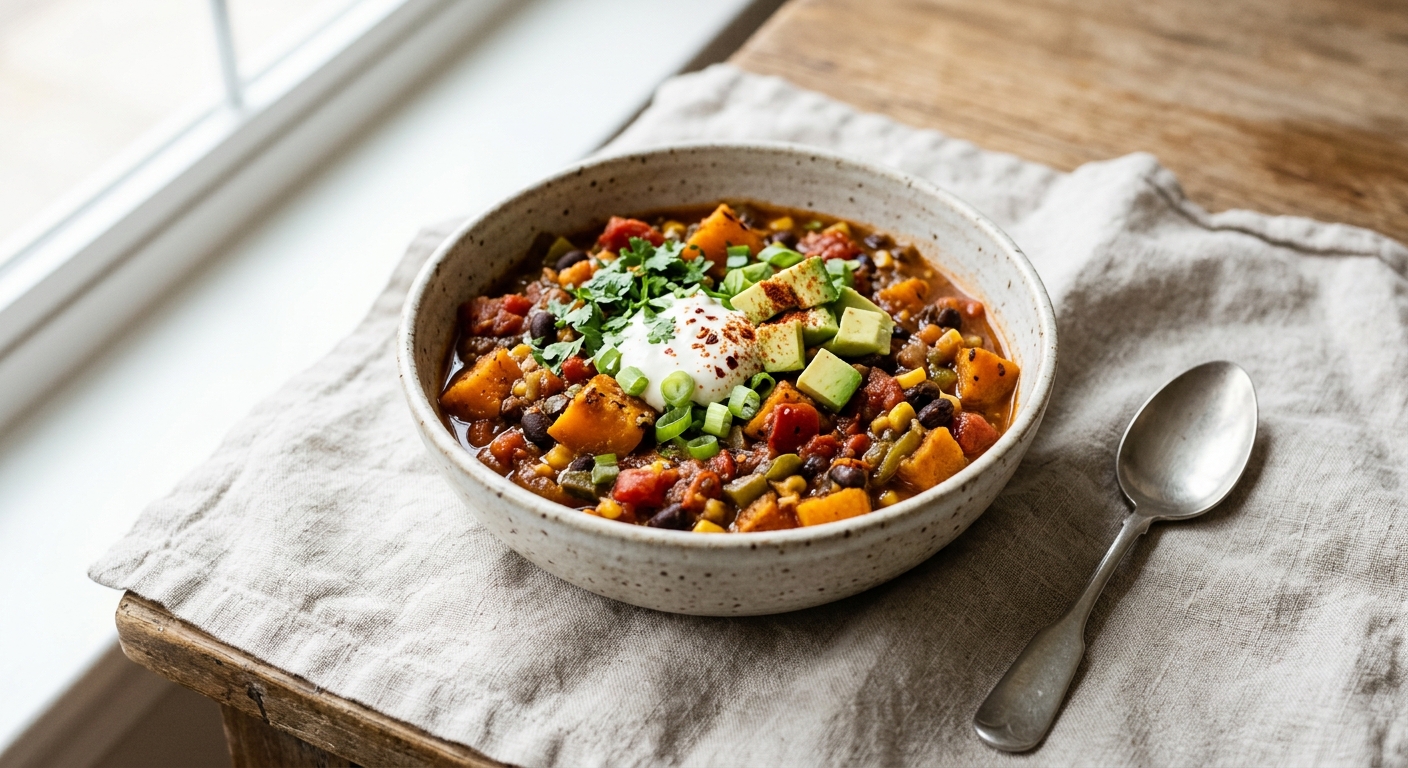
Before you cook
Background Recipe story & origin
The roots of pumpkin and black bean chili trace back to pre-Columbian Mesoamerica, where the Aztecs cultivated both pumpkin (called "ayote") and black beans as dietary staples. These ingredients were prepared in countless ways, often combined in ceremonial and everyday dishes. When Spanish conquistadors arrived in the 16th century, they encountered chili peppers and brought them back to Europe, eventually spreading them throughout the world. However, the concept of "chili" as a thick, spiced stew didn't fully develop until centuries later, primarily in the American Southwest during the 19th century, where Mexican and Native American cooking traditions merged. The specific combination of pumpkin and black beans in a chili-style dish is a more recent invention, emerging in the late 20th century as part of the farm-to-table and seasonal cooking movements. This harvest-inspired version gained popularity in the 1990s and 2000s as vegetarian and health-conscious cooking trends grew, and as cooks began experimenting with autumn vegetables in traditional chili recipes. Pumpkin adds natural sweetness and body to the dish, while black beans provide protein and earthiness, making it both a nod to indigenous ingredients and a contemporary interpretation of a beloved American comfort food. Today, it represents the ongoing evolution of chili from its complex historical roots into countless delicious regional and creative variations.
Before you start Equipment you'll need
- Large heavy-bottomed pot or Dutch oven — Distributes heat evenly to prevent scorching; holds volume for simmering chili without splashing.
- Wooden spoon or silicone spatula — Stirs chili without scratching pot; reaches corners to prevent sticking.
- Knife and cutting board — Dices onion and bell pepper for even cooking and texture.
- Measuring spoons and cups — Ensures consistent spice balance and pumpkin ratio.
Safety Safety & allergen notes
- Hot oil and pot surfaces can cause severe burns - use pot holders when handling the pot and keep hands away from steam rising from the pot
- Stir carefully when adding ingredients to hot oil to prevent splattering - use a long-handled spoon and keep face away from pot
- When bringing chili to a simmer, liquid may bubble and splash - stir gently and avoid leaning directly over the pot
- The pot and lid remain hot during the 25-minute simmer - always use pot holders when stirring or removing the lid
Non-negotiables Rules for success
-
Drain and rinse black beans before adding to chili
Canned bean liquid contains excess sodium and starch that creates a cloudy, overly thick broth and unbalanced saltiness in the final dish
-
Cook aromatics until translucent before adding spices
Softened onions and peppers release natural sugars that create a deeper flavor base; adding spices to raw aromatics results in harsh, raw spice flavors
-
Toast spices for 1 minute after adding to aromatics
Heat blooms dried spices and releases their essential oils, intensifying flavor; skipping this step leaves spices tasting flat and muted in the final chili
-
Simmer uncovered on medium-low for full 25 minutes
Uncovered simmering allows excess moisture to evaporate and concentrates flavors; covering traps steam and prevents proper thickening and flavor development
-
Stir occasionally during simmering to prevent sticking and scorching
Regular stirring distributes heat evenly and prevents pumpkin and beans from settling and burning on the pot bottom, which creates bitter flavors
Prep Get set first
About 8 min of prep
- Dice yellow onion and red bell pepper
- Mince garlic cloves
- Drain and rinse black beans
- Measure out cumin, chili powder, and oregano
- Have large heavy-bottomed pot or Dutch oven ready
- Gather wooden spoon or silicone spatula
- Open cans of diced tomatoes and tomato paste
This is a straightforward one-pot chili that takes about 40 minutes total, with most of that being hands-off simmering time.
Ingredients
Instructions
Unlock Grouped Step Actions
Plus members get tap-to-check action steps and live ingredient swaps for this recipe.
-
Sauté aromatics and build flavor base
Heat olive oil in large heavy-bottomed pot over medium heat. Add diced yellow onion and diced red bell pepper; cook, stirring occasionally, until softened and translucent. Stir in minced garlic, ground cumin, chili powder, and dried oregano; cook until fragrant.
-
Add tomatoes, beans, and pumpkin; bring to simmer
Pour in diced tomatoes with juices and add black beans (drained and rinsed). Stir in pureed pumpkin, vegetable broth, and tomato paste until well combined. Season with kosher salt and black pepper to taste; bring to a simmer.
-
Simmer until flavors meld
Reduce heat to medium-low and simmer uncovered, stirring occasionally, until chili thickens and flavors deepen.
-
Finish and serve
Taste and adjust seasoning with additional kosher salt, black pepper, or chili powder as needed. Ladle into bowls and serve with desired toppings.
Chef's notes
Pureed pumpkin (not pumpkin pie filling) is essential—pie filling contains added sugar and spices that will throw off flavor balance.
For deeper flavor, toast cumin and chili powder in the dry pot for 30 seconds before adding oil.
Chili thickens as it cools; if too thick when serving, thin with vegetable or chicken broth.
Make ahead: Prepare through the simmer step, cool completely, and refrigerate up to 4 days or freeze up to 3 months.
For spicier chili, add fresh jalapeño (diced) with the onion and bell pepper, or increase chili powder by 1 teaspoon.
Canned black beans work perfectly; drain and rinse to reduce sodium and gas-producing compounds.