Before you cook
Background Recipe story & origin
Fruit crisps as we know them today developed in 19th-century Britain, evolving from earlier fruit puddings and cobblers. British home cooks created the crisp as an economical dessert that required minimal ingredients and no yeast or eggs—making it perfect for everyday family meals. The oat topping, likely inspired by Scottish and Northern English baking traditions, provided a satisfying contrast to stewed fruit. By the Victorian era, crisps had become a standard British pudding, appearing regularly in household cookbooks and country estates alike.nnThe introduction of cardamom to Western desserts reflects the spice's journey along ancient trade routes. Though cardamom had been prized in Middle Eastern and Indian cuisines for millennia, it gradually entered European cooking through the spice trade of the 17th and 18th centuries. Scandinavian bakers embraced cardamom enthusiastically, incorporating it into their baked goods and fruit desserts. The combination of cardamom with stone fruits, particularly peaches, became especially popular in Nordic and Northern European cuisine, where the spice's warm, slightly citrusy notes complemented the fruit's delicate sweetness.nnCast iron's role in this dish's story is distinctly American. As cast-iron skillets became standard equipment in American kitchens during the 19th and 20th centuries, home cooks adapted the British crisp to their cookware, baking it directly in seasoned iron rather than ceramic dishes. This method improved heat distribution and created a crispier, more caramelized topping. Today, the cast-iron skillet crisp represents a beautiful fusion of British dessert tradition, European spice influence, and American cooking pragmatism—a humble dish that showcases how recipes evolve across cultures and generations.
Before you start Equipment you'll need
- 10-inch cast-iron skillet — Distributes heat evenly for caramelized fruit and crispy topping; retains warmth for serving.
- Small bowl — Mix oat crumble topping ingredients efficiently.
- Cutting board and sharp knife — Halve and pit peaches cleanly without crushing fruit.
- Oven — Bakes peaches and crisps oat topping to golden, crunchy finish.
Safety Safety & allergen notes
- When halving peaches, use a sharp knife on a stable cutting board and keep fingers clear of the blade path to avoid cuts from the pit
- Cast-iron skillet retains extreme heat during and after baking - use thick oven mitts or pot holders when handling, and avoid touching the skillet rim or handle for at least 10 minutes after removal from oven
- Hot peach juices and caramelized sugar can cause severe burns - keep hands, face, and children away from the skillet during baking and cooling
- Do not place a hot cast-iron skillet directly on cold surfaces or wet countertops, as thermal shock can crack the pan
Non-negotiables Rules for success
-
Use cold butter cubed small and pinch with fingers until pea-sized clumps form
Cold butter creates steam pockets during baking that produce a light, crispy texture; warm or over-mixed butter creates a dense, greasy topping
-
Place peaches cut-side up and leave some fruit edges visible when topping
Exposed fruit edges allow peach juices to bubble up and caramelize, creating concentrated flavor and proper moisture balance in the crisp
-
Bake until oat topping is golden brown AND peach juices bubble at edges
Golden color alone doesn't indicate doneness; bubbling juices confirm peaches are cooked through and flavors have melded, preventing undercooked fruit
-
Rest for 5 minutes before serving
Resting allows fruit juices to set slightly so they don't run excessively when served, maintaining structure while keeping the crisp moist
Prep Get set first
About 10 min of prep
- Have 10-inch cast-iron skillet ready
- Gather small bowl for oat mixture
- Get cutting board and sharp knife
- Measure out all dry ingredients (oats, flour, brown sugar, cardamom, salt)
- Cut unsalted butter into cubes and keep cold
- Wash and have 6 medium peaches ready to halve and pit
This is a straightforward 40-minute dessert with about 10 minutes of active prep work before baking.
Ingredients
Instructions
Unlock Grouped Step Actions
Plus members get tap-to-check action steps and live ingredient swaps for this recipe.
-
Prep the peaches
Halve fresh peaches and remove the pit, then place cut-side up in the cast-iron skillet. Sprinkle granulated sugar and lemon juice over the peaches.
-
Make the cardamom oat crumble
In a small bowl, combine rolled oats, all-purpose flour, brown sugar, and ground cardamom. Add cold unsalted butter cut into small cubes and pinch with your fingers until the mixture resembles coarse breadcrumbs with pea-sized clumps. Stir in sea salt.
-
Assemble and bake
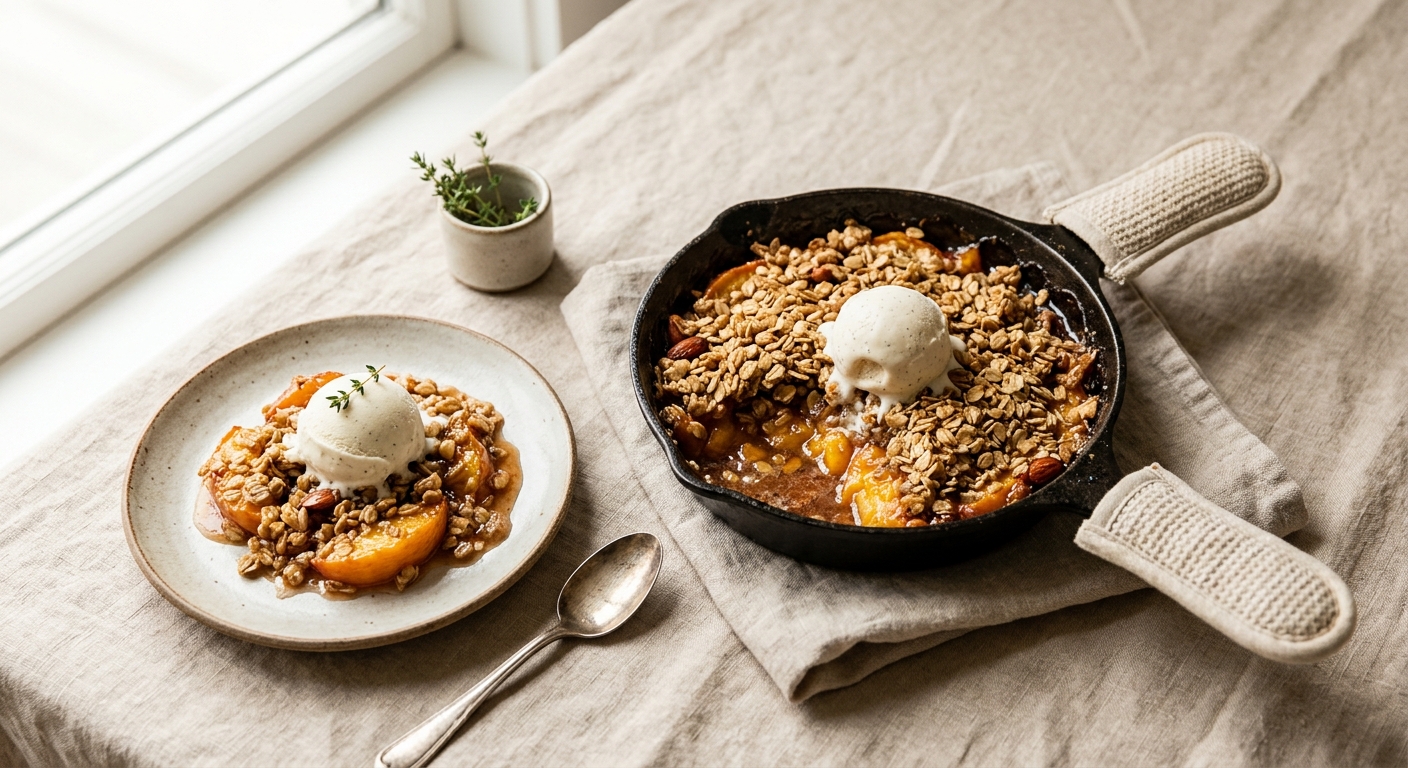
Preheat the oven to 375°F. Spread the cardamom oat crumble evenly over the peaches in the cast-iron skillet, leaving some fruit edges visible. Bake the crisp until the oat topping is golden brown and the peach juices bubble at the edges, about 25–30 minutes.
-
Rest and serve
Let the crisp rest in the skillet for 5 minutes to allow juices to set slightly. Serve warm directly from the cast-iron skillet with vanilla ice cream or whipped cream if desired.
Chef's notes
Use peak-season peaches (late June–August); they should yield slightly to pressure. Underripe fruit will not release enough juice.
Cardamom is essential to the flavor profile—do not omit. Crush pods lightly before grinding for fresher spice.
Assemble and bake just before serving; the crisp is best eaten warm, within 2 hours of coming out of the oven.
If peaches are very large, cut into quarters instead of halves for faster cooking and more even caramelization.
Butter must be cold when mixed into oats; this creates the crispy, clumpy texture. Warm butter makes the topping dense.