Before you cook
Background Recipe story & origin
The galette's origins lie in medieval France, where it emerged as a humble, practical dessert among rural communities. The word itself comes from the Old French 'galette,' meaning a flat cake, and the technique represented a clever solution to ingredient scarcity. Rather than requiring elaborate pastry skills or abundant butter for enclosed pies, galettes allowed cooks to showcase seasonal fruit with just a simple dough folded around the edges, creating a rustic, free-form tart that was both economical and elegant.nnBy the 18th and 19th centuries, French culinary traditions elevated the galette from peasant fare to a respected pastry form, particularly in Normandy and Brittany where apple and pear galettes became regional specialties. The combination of heirloom tomatoes and peaches in a galette reflects a modern interpretation of this centuries-old technique, merging the savory-sweet sensibilities that have gained popularity in contemporary cuisine. This pairing celebrates the late summer harvest when both fruits reach peak ripeness, echoing the original galette philosophy of letting seasonal produce shine with minimal intervention.nnToday's heirloom tomato and peach galette represents a return to the galette's authentic spirit—rustic, ingredient-focused, and unpretentious—while embracing the farm-to-table movement that values heritage varieties and seasonal cooking. It honors the French tradition of simple elegance while showcasing the unique flavors that only heirloom produce can deliver, making it a modern classic that connects us to centuries of culinary wisdom.
Before you start Equipment you'll need
- Food processor — Cuts cold butter into flour quickly for tender, flaky pastry; manual mixing works but requires more care to avoid overworking dough.
- Parchment paper — Prevents sticking and allows galette to be shaped and transferred to baking sheet without tearing.
- Baking sheet — Provides even heat distribution and catches any filling drips during baking.
- Rolling pin — Flattens dough to even thickness; hands or a smooth glass work if dough is soft enough.
- Bench scraper or offset spatula — Helps fold and lift pastry edges without tearing; useful for shaping the galette rim.
Safety Safety & allergen notes
- Food processor blade is sharp - keep fingers away from the bowl when pulsing; use a spatula to scrape dough instead of hands
- Oven will reach 400°F - use oven mitts when preheating, placing baking sheet, and removing galette to prevent burns
- Hot filling will bubble at edges during baking - keep face and hands away from oven opening to avoid steam burns
- Sharp knife needed for slicing peaches and tomatoes - use a cutting board and keep fingers curled away from blade; wash hands after handling raw produce
Non-negotiables Rules for success
-
Keep all pastry ingredients and equipment cold throughout dough-making
Cold butter creates steam pockets when baked, producing a flaky, layered crust; warm butter blends into flour and creates a dense, greasy pastry
-
Do not overmix the dough; stop pulsing when it just comes together
Overmixing develops gluten, making the pastry tough and chewy instead of tender and crisp
-
Refrigerate dough for at least 30 minutes before rolling
Resting allows gluten to relax and butter to re-solidify, preventing shrinkage during baking and ensuring a flaky texture
-
Let refrigerated dough sit 5 minutes before rolling to soften slightly
Cold dough is too brittle and cracks when rolled; slight softening makes it pliable without warming the butter
-
Drain tomato slices on paper towels before arranging on galette
Excess moisture from tomatoes releases during baking and creates a soggy, wet pastry crust instead of crispy
-
Leave a 2-inch border of dough without filling before folding edges
Insufficient border prevents proper sealing and causes filling to leak out during baking
Prep Get set first
About 8 min of prep
- Cube cold butter and keep chilled
- Measure flour and salt
- Have ice water ready
- Prep food processor or pastry cutter
- Wash and dry peaches and tomatoes
- Measure goat cheese and have ready
- Line baking sheet with parchment paper
- Preheat oven to 400°F when dough is chilling
This elegant galette requires 30 minutes dough chill time upfront, but active prep and assembly take only 11 minutes total—plan for about 90 minutes start to finish including baking and cooling.
Ingredients
Instructions
Unlock Grouped Step Actions
Plus members get tap-to-check action steps and live ingredient swaps for this recipe.
-
Make the pastry dough
Combine all-purpose flour and fine sea salt in a food processor. Cut cold unsalted butter into small cubes and add to flour mixture; pulse until texture resembles coarse meal with some pea-sized butter pieces remaining. Add ice water one tablespoon at a time, pulsing gently until dough just comes together; do not overmix. Form dough into a flat disk, wrap in plastic wrap, and refrigerate for at least 30 minutes.
-
Prepare the filling ingredients
Slice ripe peaches in half, remove the pit, and cut into thin wedges; toss with granulated sugar and lemon juice. Core heirloom tomatoes and slice into thin rounds; season lightly with fine sea salt and set on a paper towel to drain excess moisture. Tear or chop fresh basil leaves into bite-sized pieces.
-
Shape and fill the galette
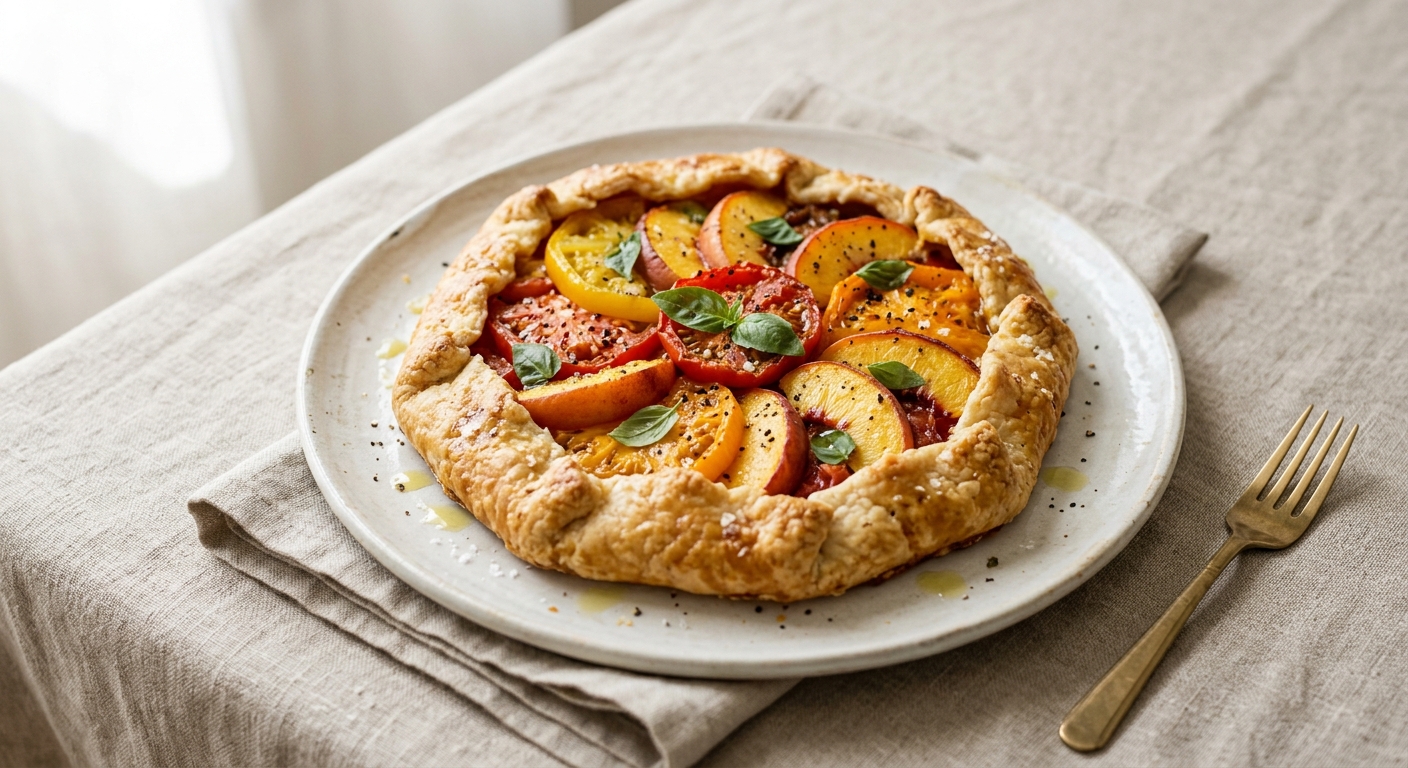
Preheat oven to 400°F and line a baking sheet with parchment paper. Remove dough from refrigerator and let sit 5 minutes to soften slightly; roll or press between parchment sheets into a 12-inch round. Transfer dough round on parchment to prepared baking sheet. Spread crumbled goat cheese in a thin layer over the center of the dough, leaving a 2-inch border. Arrange peach slices and heirloom tomato slices in overlapping concentric circles over the goat cheese. Fold pastry edges up and over the filling, pleating gently as you go; brush edges with egg wash if desired.
-
Bake the galette
Bake at 400°F until pastry is golden brown and filling is bubbling at the edges.
-
Cool and finish
Cool galette on the baking sheet for 10 minutes; scatter fresh basil over the top. Drizzle with extra-virgin olive oil and finish with a pinch of fleur de sel; serve warm or at room temperature.
Chef's notes
Make the dough up to 2 days ahead; wrap tightly and refrigerate. Thaw 10 minutes before rolling.
Choose ripe but firm peaches and tomatoes at peak season; overripe fruit will release too much liquid and make the crust soggy.
Brush pastry edges with egg wash for a deeper golden color; omit for a matte finish.
If filling leaks during baking, slide a baking sheet underneath to catch drips and prevent oven mess.
Serve warm or at room temperature. Galette is best eaten the same day but keeps covered at room temperature for up to 8 hours.
Goat cheese can be crumbled or spread thinly; spreading creates a creamy barrier that protects the crust from moisture.