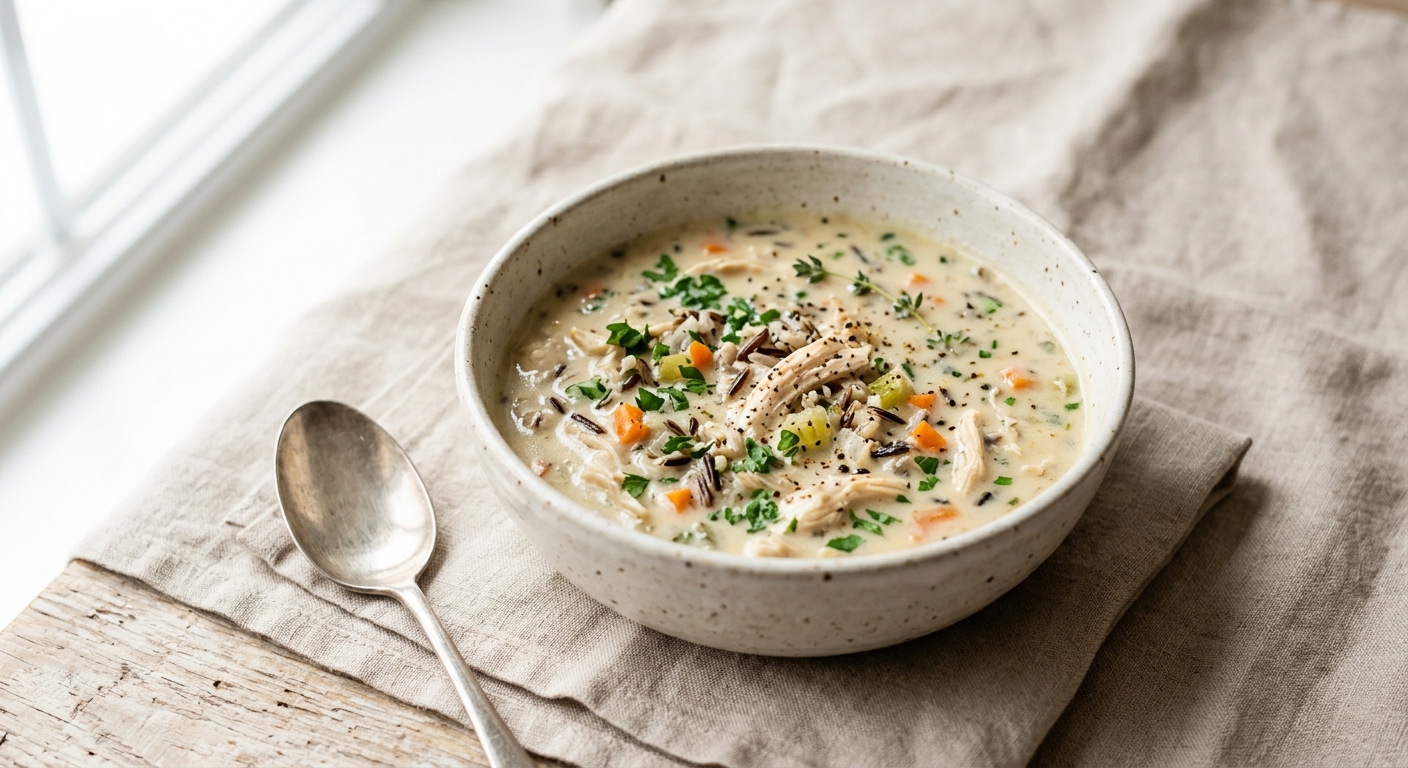
Before you cook
Background Recipe story & origin
The story of creamy chicken wild rice soup begins long before European settlers arrived in North America, rooted in the traditions of the Ojibwe (Anishinaabe) people who have harvested wild rice—or manoomin, meaning 'the good berry'—from the lakes and rivers of the Great Lakes region for over a thousand years. Wild rice was not merely a food source but a sacred crop central to Ojibwe culture, spirituality, and survival through harsh northern winters. Harvested each autumn by canoe, the grain was dried, processed, and stored to sustain communities through the cold months, often cooked into simple, nourishing broths with game birds and waterfowl.nnWhen Scandinavian and German settlers began flooding into Minnesota and Wisconsin in the mid-to-late 1800s, they encountered wild rice through trade with Indigenous communities and quickly incorporated it into their own hearty, cream-based cooking traditions. These immigrant farmers, already accustomed to thick, warming soups made with whatever was on hand—chicken from the yard, cream from the dairy, root vegetables from the cellar—found that wild rice added a distinctive nutty depth unlike anything they had known in Europe. By the early 20th century, creamy chicken wild rice soup had become a fixture of Midwestern home kitchens, church suppers, and community cookbooks across Minnesota.nnThe soup gained wider recognition in the latter half of the 20th century when Byerly's, a beloved Minneapolis-area grocery chain, began selling its own iconic version in the 1970s, sparking a regional obsession and inspiring countless imitations. Today, the soup is considered the unofficial comfort food of Minnesota, appearing on restaurant menus from small-town diners to upscale bistros, and in home kitchens across the country. It stands as a rare and beautiful example of culinary exchange—a dish that honors Indigenous agricultural heritage while reflecting the immigrant traditions that shaped the American Midwest.
Before you start Equipment you'll need
- Large pot or Dutch oven — Holds soup volume and distributes heat evenly for simmering
- Wooden spoon or silicone spatula — Stirs without scratching pot; prevents sticking and scorching
- Cutting board — Safe surface for dicing vegetables and chicken
- Chef's knife — Efficiently dices vegetables and cuts chicken into uniform pieces
- Measuring cups and spoons — Ensures accurate proportions for broth, rice, and cream
Safety Safety & allergen notes
- Use a meat thermometer to verify chicken reaches 165°F internal temperature before serving to prevent foodborne illness
- Keep hands and utensils away from hot broth and steam when stirring - steam can cause burns
- Use pot holders or oven mitts when handling the hot pot; keep handles turned inward to prevent accidental contact
- Allow soup to cool slightly before ladling to prevent splashing of hot liquid that can cause burns
Non-negotiables Rules for success
-
Dice vegetables into small, uniform pieces
Uniform size ensures even cooking; smaller pieces cook faster and distribute flavor evenly throughout the soup
-
Cut chicken into bite-sized pieces before cooking
Smaller pieces cook through evenly in 15 minutes; larger chunks may remain undercooked in the center
-
Sauté aromatics until softened before adding broth
Cooking vegetables develops their flavor through caramelization and creates a flavorful base; raw vegetables taste sharp and bitter
-
Add garlic and thyme for only 1 minute after aromatics
Garlic burns quickly and becomes bitter if cooked too long; brief cooking releases fragrance without scorching
-
Reduce heat to medium-low after boiling and simmer gently
Gentle simmering allows rice to cook through evenly without breaking apart; vigorous boiling damages rice grains and makes broth cloudy
-
Stir cream in gently and bring to gentle simmer, not a boil
Heavy cream can separate or curdle if boiled vigorously; gentle heat keeps it smooth and creamy
Prep Get set first
About 8 min of prep
- Dice 2 medium onions, 4 medium carrots, and 4 stalks celery into uniform pieces
- Cut 2 lbs boneless, skinless chicken breast into bite-sized pieces
- Mince 2 garlic cloves
- Measure out 6 cups chicken broth, 0.75 cup wild rice, 2 tablespoons butter, heavy cream, and fresh thyme
- Have large pot or Dutch oven ready on stovetop
- Gather wooden spoon/silicone spatula, cutting board, and chef's knife
Active prep takes about 8 minutes; total cooking time is 50+ minutes, so plan accordingly for a leisurely dinner.
Ingredients
Instructions
Unlock Grouped Step Actions
Plus members get tap-to-check action steps and live ingredient swaps for this recipe.
-
Prep ingredients
Dice the onion, carrots, and celery into small, uniform pieces. Cut the boneless, skinless chicken breast into bite-sized pieces.
-
Build the base: Sauté aromatics
Melt the butter in a large pot or Dutch oven over medium heat. Add the onion, carrots, and celery; sauté until softened, about 5 minutes. Stir in the garlic and thyme; cook for 1 minute until fragrant.
-
Add broth and rice
Pour in the chicken broth and add the wild rice; stir well. Bring to a boil, then reduce heat to medium-low and simmer for 20 minutes.
-
Cook chicken and rice
Add the boneless, skinless chicken breast pieces to the pot; stir gently. Simmer for 15 minutes until the chicken is cooked through and wild rice is tender.
-
Finish with cream and seasonings
Stir in the heavy cream and bring to a gentle simmer. Season with salt and black pepper to taste. Ladle into bowls and serve hot.
Chef's notes
Wild rice takes longer to cook than white rice; do not substitute without extending cook time by 10–15 minutes.
For deeper flavor, use low-sodium chicken broth and taste before adding salt.
Shred or dice chicken into bite-sized pieces for even cooking and eating.
Stir occasionally during simmering to prevent wild rice from settling and sticking.
Soup thickens as it cools; thin with additional broth or cream if needed when reheating.
For a lighter version, substitute half-and-half or whole milk for heavy cream.