Before you cook
Before you start Equipment you'll need
- Large oven-safe skillet (10 to 12 inches) — Provides enough surface area for searing chicken without crowding, and allows direct transfer to oven for finishing without temperature loss
- Meat thermometer — Ensures chicken reaches safe internal temperature of 165°F without overcooking
- Paper towels — Essential for patting chicken dry before searing to achieve proper browning and crust formation
- Measuring spoons and cups — Ensures correct proportions of garlic, butter, and seasonings for balanced flavor
- Knife for mincing garlic — Minces garlic into small pieces for even distribution in butter sauce and faster cooking
Safety Safety & allergen notes
- Oil will splatter when placing chicken in the hot skillet - use a splatter screen or keep a lid nearby, and wear an apron to protect from burns
- The skillet handle remains extremely hot after searing and baking - always use thick oven mitts or pot holders when handling, and warn others it is hot
- Use a meat thermometer to verify chicken reaches 165°F internally - do not rely on color alone to prevent foodborne illness
- When transferring the hot skillet to the oven, keep hands clear of the handle and use both hands with oven mitts to prevent dropping or spilling hot liquid
Non-negotiables Rules for success
-
Pat chicken breasts completely dry before seasoning
Moisture on the surface prevents proper browning and creates steam that inhibits the Maillard reaction needed for golden crust
-
Heat oil until shimmering before adding chicken
Oil must reach proper temperature (around 350°F) to sear chicken immediately and create a golden crust; cold oil causes sticking and steaming
-
Don't move chicken during first sear (4-5 minutes)
Constant movement prevents crust formation; undisturbed contact with hot pan creates the golden-brown exterior through Maillard reaction
-
Reduce heat to medium before adding garlic
Medium-high heat burns garlic quickly, creating bitter flavors; medium heat allows garlic to release aromatic oils without scorching
-
Verify internal temperature reaches 165°F at thickest part
This temperature kills harmful bacteria; undercooked chicken poses food safety risk, overcooked becomes dry and tough
-
Rest chicken for 3 minutes after cooking
Resting allows muscle fibers to relax and reabsorb juices; cutting immediately causes juices to escape, resulting in dry meat
Prep Get set first
About 8 min of prep
- Preheat oven to 400°F
- Pat chicken breasts dry with paper towels
- Mince 6 cloves of garlic
- Measure out all ingredients: olive oil, butter, lemon juice, chicken broth, salt, pepper, thyme, red pepper flakes
- Have large oven-safe skillet ready
- Gather meat thermometer, measuring spoons/cups, and serving spoon
This is a quick 30-minute weeknight dinner with mostly hands-on searing time upfront, then passive oven time while you relax.
Ingredients
Instructions
Unlock Grouped Step Actions
Plus members get tap-to-check action steps and live ingredient swaps for this recipe.
-
Preheat oven
Preheat your oven to 400°F.
-
Season the chicken
Pat the chicken breasts dry with paper towels and season both sides evenly with salt, pepper, and thyme.
-
Heat the oil
Heat olive oil in a large oven-safe skillet over medium-high heat until shimmering.
-
Sear chicken first side
Once the oil is hot, carefully place the chicken breasts in the skillet and sear for 4 to 5 minutes on the first side without moving them, until golden brown.
-
Sear chicken second side
Flip the chicken and sear for another 3 to 4 minutes on the second side until golden.
-
Add aromatics
Reduce heat to medium and add the minced garlic and red pepper flakes to the skillet, stirring constantly for about 30 seconds until fragrant.
-
Add butter and liquids
Add the butter to the skillet and let it melt, then pour in the lemon juice and chicken broth.
-
Bake chicken
Transfer the skillet to the preheated oven and bake for 12 to 15 minutes, until the chicken reaches an internal temperature of 165°F at the thickest part.
-
Rest the chicken
Remove the skillet from the oven and let the chicken rest for 3 minutes before serving.
-
Serve
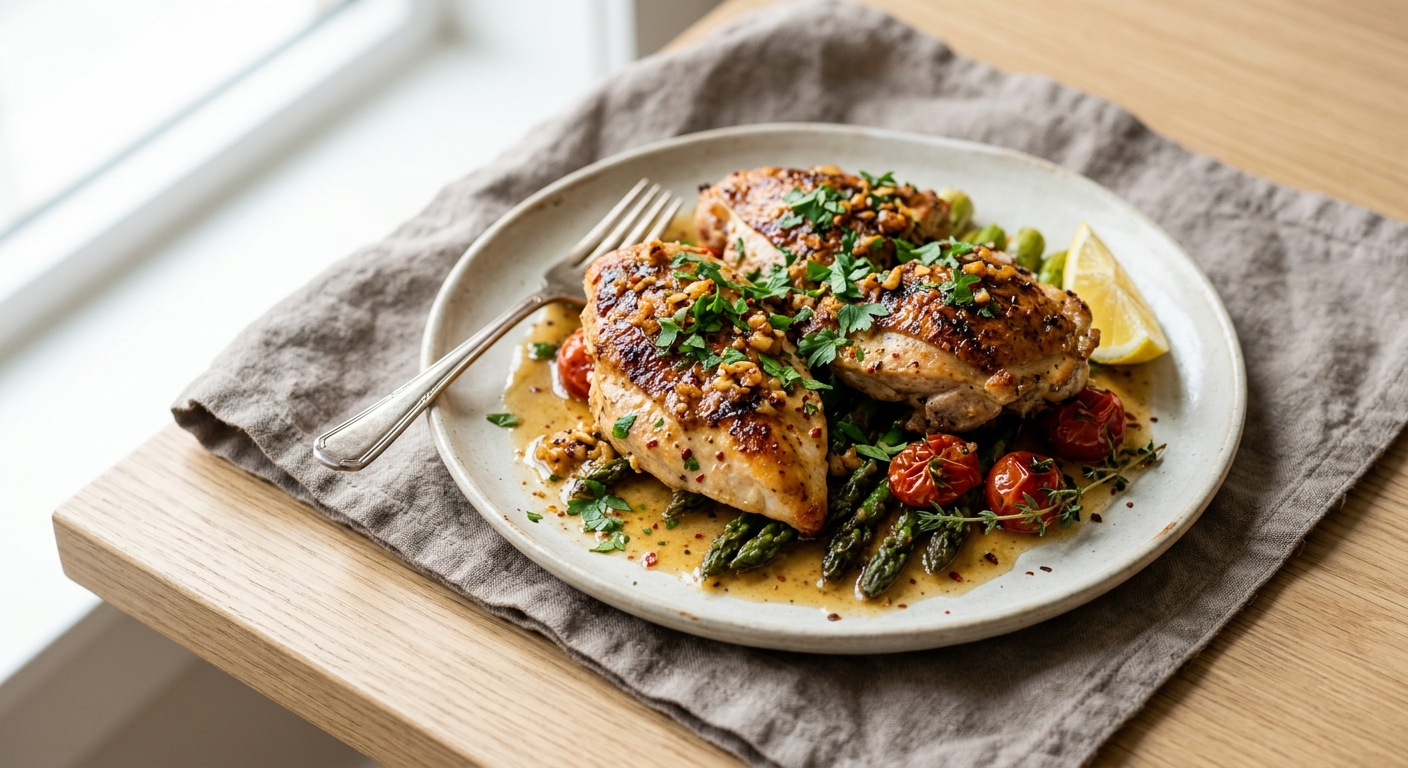
Spoon the garlic butter sauce over the chicken and serve immediately.
Chef's notes
Serve with roasted vegetables, rice, or crusty bread to soak up the flavorful garlic butter sauce.
For extra richness, add 2 tablespoons of heavy cream to the sauce after removing from the oven.
Fresh herbs like parsley or chives make an excellent garnish.
Can be assembled up to 4 hours ahead; sear and finish in oven just before serving.