Before you cook
Background Recipe story & origin
The story of beef stew is essentially the story of human cooking itself. Archaeological evidence suggests that early humans were making rudimentary stews as far back as 8,000 BCE, using animal stomachs or clay pots to slow-cook meat and foraged vegetables over fire. As cattle were domesticated across Europe, Asia, and the Middle East, beef became a central ingredient in these simmered one-pot meals. Every culture that raised cattle developed its own version: the French perfected boeuf bourguignon, the Belgians created carbonnade, and the Irish made their iconic lamb and beef stews that would travel to America with waves of immigrants.nnIn America, beef stew became a defining dish of frontier and working-class cooking throughout the 18th and 19th centuries. It was the perfect meal for a young, resource-conscious nation — cheaper, tougher cuts of beef like chuck and round became tender and flavorful after hours of slow simmering, stretching a modest amount of meat to feed an entire family. The addition of root vegetables like potatoes, carrots, and onions made it a complete, nourishing meal from a single pot. Civil War army cooks prepared massive vats of stew for soldiers, and the dish became deeply embedded in American culinary identity.nnBy the early 20th century, classic beef stew had become a Sunday staple in households across the country, its recipe passed down through generations with small regional and family variations. The introduction of canned broths and vegetables in the mid-1900s made it even more accessible, while the rise of slow cookers in the 1970s gave the dish a modern revival. Today, the classic version — beef, potatoes, carrots, celery, and a rich, thickened broth — remains one of the most beloved comfort foods in the world, a testament to the timeless truth that patience and simple ingredients can create something deeply satisfying.
Safety Safety & allergen notes
- Hot oil can splatter when beef is added - use a splatter screen or lid to protect yourself, and keep hands and face away from the pot
- Dutch oven and pot handles remain extremely hot throughout cooking - always use pot holders or oven mitts when handling
- When deglazing with wine, pour carefully to avoid steam burns from the hot liquid hitting the surface
- Stew reaches boiling temperatures - use a wooden spoon to stir and keep hands at a safe distance from steam rising from the pot
- Bay leaves are inedible and can be choking hazards - carefully remove all bay leaves before serving and account for each one used
Non-negotiables Rules for success
-
Pat beef dry before seasoning and dredging
Moisture on the surface prevents proper browning; dry beef develops a flavorful crust through the Maillard reaction
-
Brown beef in batches without overcrowding
Overcrowding lowers pan temperature and causes steaming instead of browning, resulting in pale, tough meat
-
Scrape up browned bits (fond) when deglazing
Fond contains concentrated flavors from the meat; scraping it dissolves into the liquid and deepens the stew's savory taste
-
Maintain low heat during the long simmer
High heat toughens the beef and causes rapid liquid evaporation; low heat allows collagen to break down into gelatin for tender, rich stew
-
Add vegetables only after initial 45-minute simmer
Potatoes and carrots cook faster than beef; adding them early results in mushy vegetables while beef remains tough
Prep Get set first
About 15 min of prep
- Cut beef chuck into 1.5-inch cubes and pat dry with paper towels
- Dice 1 medium yellow onion
- Mince 3 garlic cloves
- Cut 3 medium carrots into 1-inch pieces
- Cut 3 medium potatoes into 1-inch cubes
- Halve 1 cup mushrooms
- Gather all ingredients: flour, salt, pepper, tomato paste, red wine, beef broth, bay leaves, thyme, Worcestershire sauce
- Set up large Dutch oven or heavy-bottomed pot with lid on stovetop
- Have wooden spoon, small bowl, measuring cups and spoons ready
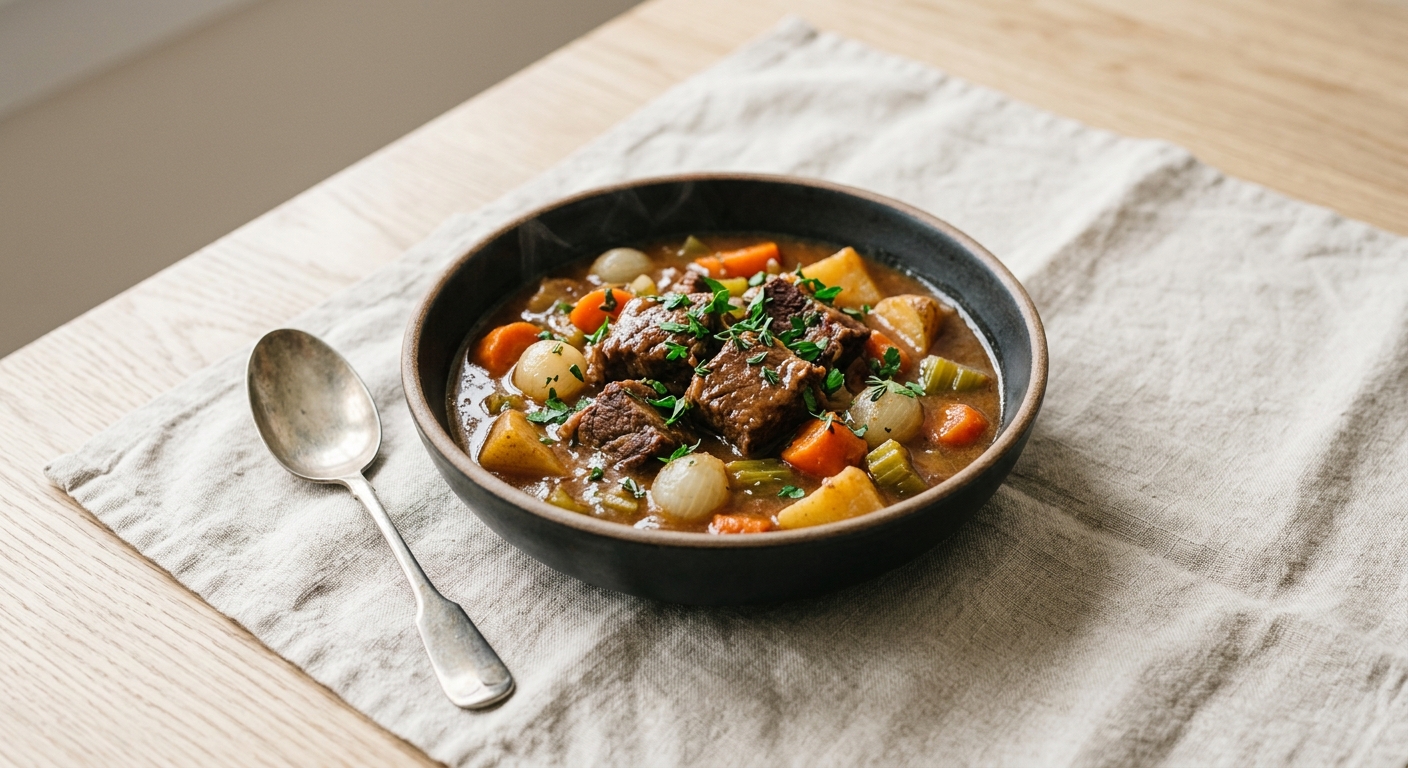
This classic beef stew requires about 15 minutes of prep work, then 1.5 hours of mostly hands-off simmering time.
Ingredients
Instructions
Unlock Grouped Step Actions
Plus members get tap-to-check action steps and live ingredient swaps for this recipe.
-
Prepare the beef
Pat the beef cubes dry with paper towels and season with salt and pepper.
-
Dredge the beef
In a small bowl, combine the flour with a pinch of salt and pepper, then dredge the beef cubes to coat lightly.
-
Heat the oil
Heat the vegetable oil in a large Dutch oven or heavy-bottomed pot over medium-high heat.
-
Brown the beef
Working in batches to avoid overcrowding, brown the beef on all sides for about 2-3 minutes per side, then transfer to a plate.
-
Sauté the onion
Reduce heat to medium, add the diced onion to the pot, and cook until softened, about 3-4 minutes.
-
Add the garlic
Add the minced garlic and cook for 1 minute until fragrant.
-
Add the tomato paste
Stir in the tomato paste and cook for 1 minute.
-
Deglaze the pot
Pour in the red wine (or broth) and scrape up any browned bits from the bottom of the pot.
-
Return beef and add broth
Return the beef to the pot along with the beef broth, bay leaves, and thyme.
-
Simmer the stew
Bring to a simmer, then reduce heat to low, cover, and cook for 45 minutes.
-
Add the vegetables
Add the carrots, potatoes, and mushrooms to the pot and stir well.
-
Finish cooking
Cover and continue cooking for another 45 minutes until the vegetables are tender and the beef is fork-tender.
-
Season the stew
Stir in the Worcestershire sauce and adjust seasoning with additional salt and pepper as needed.
-
Finish and serve
Remove the bay leaves before serving.
Chef's notes
Serve with crusty bread, egg noodles, or mashed potatoes to soak up the delicious broth.
For a thicker stew, mix 1 tablespoon cornstarch with 2 tablespoons cold water and stir into the stew during the last 5 minutes of cooking.
Store covered in the refrigerator for up to 4 days before serving.
Tomorrow's Meal
Crispy Beef Stew Pie
Leftover beef stew spooned into a pastry shell and baked until golden - the rich, tender meat and vegetables create the perfect filling
You'll need to pick up:
Quick overview:
- Preheat oven to 400°F
- Reheat stew gently until warmed through, then cool slightly
- Line a pie dish with pastry, fill with stew mixture
- Top with second pastry sheet, seal edges, brush with egg wash
- Bake 25-30 minutes until crust is golden brown
- Rest 5 minutes before serving