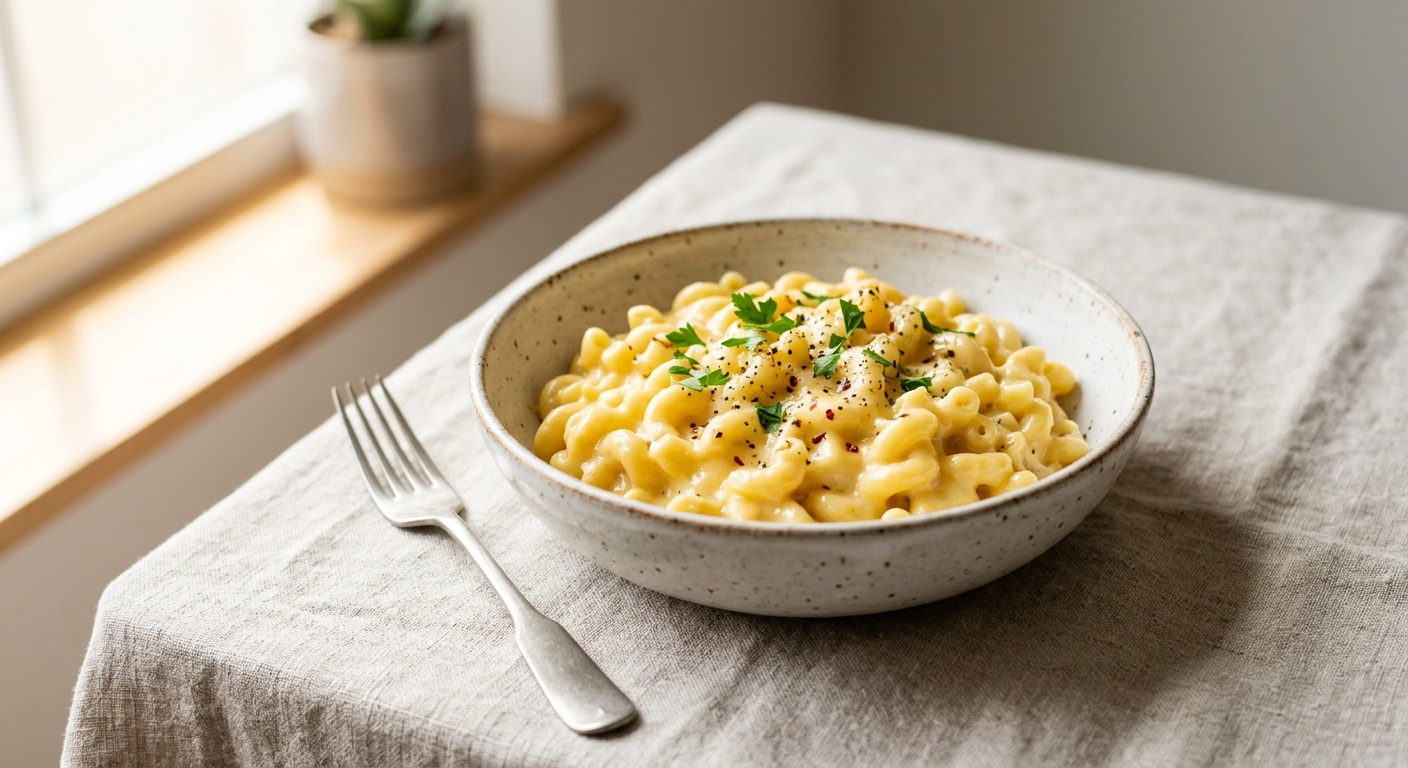
Before you cook
Background Recipe story & origin
The earliest known recipe for a pasta and cheese dish appears in a 14th-century Italian cookbook, 'Liber de Coquina,' which described a dish of fermented cheese and pasta. A similar recipe appeared in the English cookbook 'The Forme of Cury' around 1390, featuring a dish called 'makerouns'—fresh pasta layered with butter and cheese. These medieval dishes were considered luxurious fare, as both pasta and aged cheese were expensive ingredients available only to the wealthy.nnIn America, the dish's rise to prominence is closely tied to Thomas Jefferson. After serving as minister to France in the 1780s, Jefferson became enamored with European pasta dishes and even sketched a design for a pasta-making machine. He is often credited with serving macaroni and cheese at a White House dinner in 1802, though the dish likely arrived via his enslaved chef, James Hemings, who had trained in French cuisine in Paris. An early American recipe attributed to Jefferson's household called for macaroni layered with butter and cheese and baked until golden—a more refined ancestor of today's stovetop version.nnThe real democratization of mac and cheese came in 1937 when Kraft introduced its boxed macaroni and cheese dinner for 19 cents, marketing it as 'a meal for four in nine minutes' during the Great Depression. It sold 8 million boxes in its first year. The stovetop method—cooking pasta, draining it, and stirring in a creamy cheese sauce—became the everyday standard, offering a faster, silkier result than the baked casserole version. Today, stovetop mac and cheese is one of the most beloved comfort foods in America, with endless variations from sharp cheddar to Gruyère, yet always anchored by that simple, satisfying combination of tender pasta and rich, melted cheese.
Safety Safety & allergen notes
- Boiling water and steam from the pasta pot can cause severe burns - keep hands and face away from the pot rim and use pot holders when handling
- The roux and cheese sauce reach high temperatures - stir carefully to avoid splashing hot liquid on skin, and use a whisk with a long handle to maintain distance
- Milk added to hot roux can splatter - add gradually while whisking and wear an apron to protect clothing
- The pot remains extremely hot after cooking - use pot holders throughout steps 2-5 and warn others before moving or serving
Non-negotiables Rules for success
-
Cook pasta to al dente, not soft
Al dente pasta maintains firm texture when mixed with sauce; overcooking causes mushy, falling-apart pasta that creates poor mouthfeel
-
Cook roux for 1-2 minutes until light golden
Cooking removes raw flour taste and allows flour to fully hydrate; insufficient cooking leaves bitter raw flavor, over-cooking darkens roux and reduces thickening power
-
Add milk gradually while whisking continuously
Gradual addition and constant whisking prevents lumps from forming; dumping milk at once causes flour clumps that won't dissolve and create grainy sauce
-
Remove pot from heat before adding cheese
High heat can cause cheese proteins to clump and separate, creating grainy texture and greasy appearance; off-heat allows cheese to melt smoothly into creamy sauce
-
Fold pasta gently into sauce and serve immediately
Gentle folding prevents breaking pasta and ensures even coating; immediate serving maintains creamy consistency before sauce cools and thickens
Prep Get set first
About 8 min of prep
- Large pot ready for pasta water
- Colander or strainer accessible
- Butter, flour, and milk measured and nearby
- Cheddar cheese shredded (or grater ready)
- Whisk and wooden spoon at hand
- Salt, black pepper, cayenne, and dry mustard measured out
- All ingredients gathered in one area
This stovetop mac and cheese takes about 25-30 minutes total, mostly hands-on time for sauce-making and stirring.
Ingredients
Instructions
Unlock Grouped Step Actions
Plus members get tap-to-check action steps and live ingredient swaps for this recipe.
-
Cook the pasta
Bring a large pot of salted water to a boil and cook the elbow macaroni according to package directions until al dente, then drain and set aside.
-
Make the roux
In the same pot, melt the butter over medium heat. Whisk in the flour to create a roux and cook for 1-2 minutes, stirring constantly, until it turns light golden and smells nutty.
-
Make the cheese sauce
Gradually add the milk while whisking continuously to prevent lumps from forming. Continue cooking and stirring until the sauce thickens enough to coat the back of a spoon, about 5-7 minutes.
-
Add the cheese and seasonings
Remove the pot from heat and stir in the shredded cheddar cheese until completely melted and smooth. Season the sauce with salt, black pepper, cayenne pepper, and dry mustard powder if using.
-
Combine and serve
Add the cooked pasta back to the pot and fold gently until all pasta is coated evenly with the cheese sauce. Serve immediately while hot and creamy.
Chef's notes
Best served immediately for optimal creaminess; the sauce will thicken as it cools.
Leftovers can be stored in an airtight container in the refrigerator for up to 3 days.
For a lighter version, substitute half-and-half or evaporated milk for whole milk.
Customize with additions such as crispy bacon, jalapeños, or panko breadcrumbs for texture.
Tomorrow's Meal
Crispy Mac and Cheese Squares
Cold mac and cheese sliced into squares, pan-fried until golden and crackling on the outside while staying creamy within
You'll need to pick up:
Quick overview:
- Cut cold mac and cheese into 2-inch squares
- Heat 1/4 inch oil in skillet to 350°F
- Fry squares 2-3 minutes per side until golden brown and crispy
- Drain on paper towels and serve hot with hot sauce