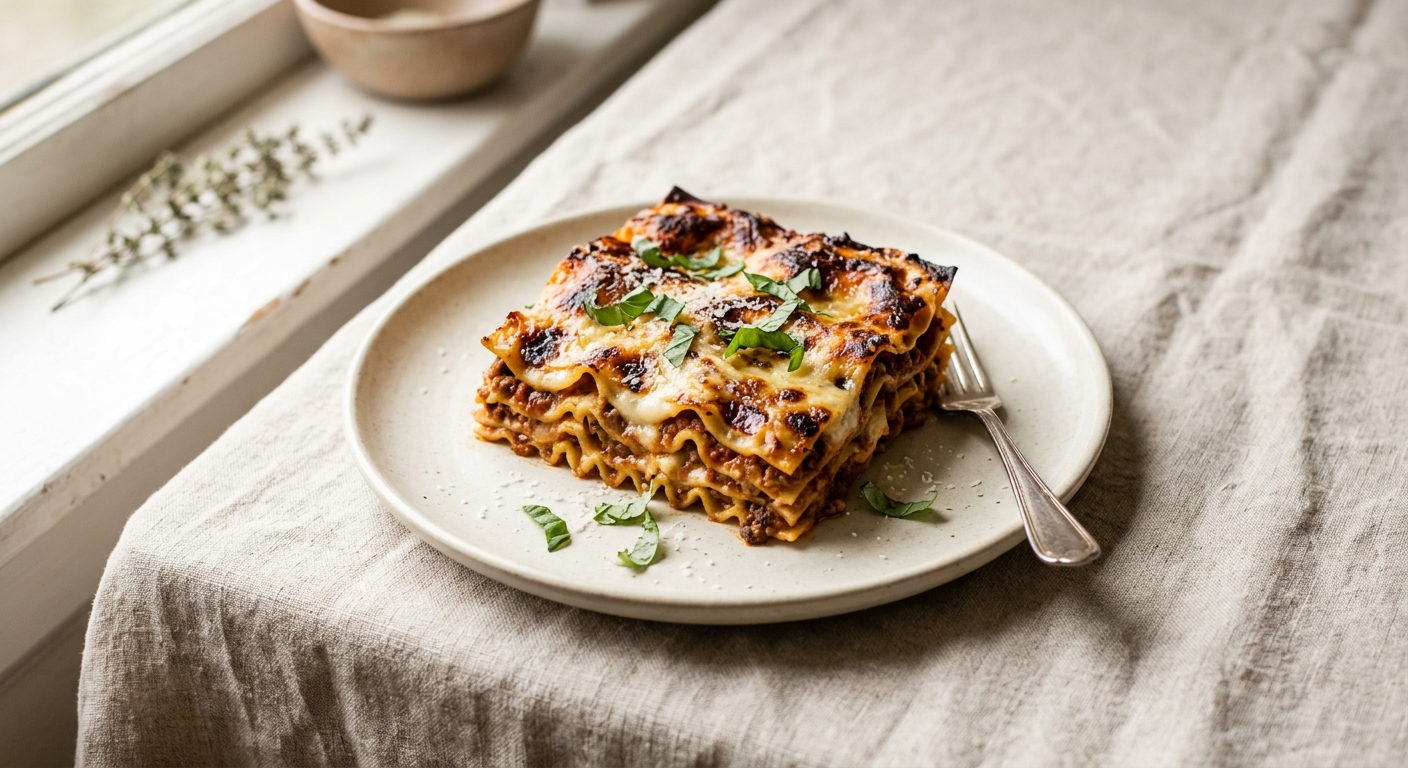
Before you cook
Background Recipe story & origin
Lasagna's story begins in the kitchens of medieval Italy, with the earliest known written recipe appearing in a 14th-century manuscript called the 'Liber de Coquina,' believed to have been compiled in Naples around 1304. The dish took its name from the Latin 'lasanum,' referring to the cooking pot in which it was made, though some food historians trace the word even further back to the ancient Greek 'lasanon,' meaning a chamber pot—a humble origin for such a beloved dish. These early versions bore little resemblance to what we know today: they were layered flat pasta sheets tossed with cheese and spices, with no tomato in sight, since tomatoes wouldn't arrive in Europe from the Americas until the 16th century.nnFor centuries, lasagna remained a dish of the wealthy, as fresh pasta required time, skill, and expensive ingredients like aged cheese and meat. The tomato-based version we recognize today began taking shape in the 18th and 19th centuries in the Emilia-Romagna region of northern Italy, particularly in Bologna. This is where the now-canonical 'Lasagna alla Bolognese' was born—built on layers of fresh egg pasta, slow-cooked ragù, béchamel sauce, and Parmigiano-Reggiano. In 1982, the Italian Academy of Cuisine officially registered a recipe for Lasagna alla Bolognese with the Bologna Chamber of Commerce, enshrining the green spinach-pasta version as the regional standard.nnWhen Italian immigrants arrived in the United States in the late 19th and early 20th centuries, they brought lasagna with them—and the dish transformed again. American adaptations swapped béchamel for ricotta cheese (more affordable and widely available), introduced mozzarella for extra melt, and embraced heartier, more robust tomato sauces. Over decades, 'Classic Lasagna' became a cornerstone of Italian-American home cooking, a Sunday dinner showpiece and a symbol of comfort food at its most generous. Today it exists in dozens of regional and family variations across Italy and around the world, yet every version carries that same ancient instinct: layer by layer, building something greater than the sum of its parts.
Safety Safety & allergen notes
- Oven racks and baking dish are extremely hot - use oven mitts when placing, removing, or uncovering the dish during all baking steps
- Ground beef must reach an internal temperature of 160°F to be safely consumed - ensure no pink remains when browned
- Boiling water and steam from pasta cooking can cause severe burns - keep hands and face away from the pot and use a colander carefully
- Hot meat sauce can splatter - stir gently and keep skin covered when simmering
- Allow lasagna to rest 15 minutes before slicing to avoid burns from escaping steam and hot cheese
Non-negotiables Rules for success
-
Cook noodles to al dente, not soft
Noodles continue cooking in the oven; overcooking them now results in mushy, falling-apart lasagna layers
-
Lay cooked noodles flat on oiled sheet immediately after draining
Prevents noodles from sticking together and tearing when you try to separate them during assembly
-
Drain excess fat from browned beef completely
Excess grease creates an oily, greasy lasagna with separated sauce instead of a cohesive, well-textured dish
-
Tent foil slightly so it doesn't touch the cheese layer
Direct contact causes cheese to stick to foil and tear away from the lasagna when removing the cover
-
Rest lasagna for at least 15 minutes before slicing
Allows the layers to set and bind together; cutting too soon causes layers to slide apart and creates messy, loose slices
Prep Get set first
About 10 min of prep
- Preheat oven to 375°F (190°C)
- Grease 9x13-inch baking dish with olive oil or nonstick spray
- Set up large pot of salted water for noodles (or skip if using oven-ready)
- Gather all ingredients and measure out dried herbs
- Set up cutting board and knife for dicing onion and mincing garlic
- Have large skillet/saucepan ready for meat sauce
- Prepare medium and small mixing bowls for ricotta and cheese blends
- Set out baking sheet for cooked noodles
- Have aluminum foil, wooden spoon, ladle, and colander ready
Classic lasagna requires about 10 minutes of prep work, then 70+ minutes of active cooking and baking time—plan for 1.5 hours total.
Ingredients
Instructions
Unlock Grouped Step Actions
Plus members get tap-to-check action steps and live ingredient swaps for this recipe.
-
Preheat oven and prepare baking dish
Preheat your oven to 375°F (190°C) and lightly grease a 9x13-inch baking dish with olive oil or nonstick spray.
-
Cook lasagna noodles (if not using oven-ready)
If using standard dry lasagna noodles, bring a large pot of heavily salted water to a boil. Cook the noodles according to package directions until just al dente (about 8–10 minutes), then drain and lay them flat on a lightly oiled baking sheet to prevent sticking. Skip this step if using oven-ready noodles.
-
Prep the aromatics
Finely dice the yellow onion and mince the garlic cloves.
-
Sauté onion and garlic
Heat 1 tablespoon of olive oil in a large skillet or saucepan over medium-high heat. Add the diced onion and cook, stirring occasionally, for 4–5 minutes until softened and translucent. Add the minced garlic and cook for 1 minute more, stirring constantly, until fragrant.
-
Brown the ground beef
Add the ground beef to the skillet, breaking it up with a wooden spoon. Cook until fully browned with no pink remaining, about 6–8 minutes. Drain any excess fat from the pan.
-
Build and simmer the meat sauce
Stir in the tomato paste, marinara sauce, dried oregano, dried basil, and red pepper flakes. Season with salt and black pepper to taste. Reduce heat to low and let the meat sauce simmer for 10 minutes, stirring occasionally.
-
Make the ricotta mixture
Finely chop the fresh parsley. In a medium bowl, combine the ricotta cheese, egg, chopped parsley, and a pinch of salt and pepper. Stir until the mixture is smooth and well combined.
-
Combine the cheese blend
In a separate small bowl, toss together the shredded mozzarella and grated Parmesan cheese to create the cheese blend.
-
Assemble the lasagna
Spread a thin layer of meat sauce (about ½ cup) across the bottom of the dish. Lay 3 noodles side by side, spread half the ricotta mixture over them, top with one-third of the remaining sauce, and sprinkle with one-third of the cheese blend. Repeat with 3 more noodles, the remaining ricotta, another one-third of the sauce, and another one-third of the cheese blend. Finish with the final 3 noodles, the remaining sauce, and the remaining cheese blend, ensuring the top is fully covered.
-
Bake covered
Cover the baking dish tightly with aluminum foil, tenting it slightly so the foil does not touch the cheese. Bake in the preheated oven for 45 minutes.
-
Bake uncovered until golden
Remove the foil and continue baking for an additional 15–20 minutes, until the cheese on top is melted, golden, and bubbling around the edges.
-
Rest and serve
Remove the lasagna from the oven and let it rest uncovered for at least 15 minutes before slicing and serving. This resting time is essential for clean, firm slices.
Chef's notes
Allow the lasagna to cool completely before covering. Store tightly wrapped or in an airtight container in the refrigerator for up to 4 days before serving.
The lasagna can be fully assembled, covered tightly, and refrigerated up to 24 hours before baking. Add 10–15 extra minutes to the covered baking time if baking directly from the refrigerator.
Serve alongside a simple green salad and warm garlic bread for a complete meal.
Tomorrow's Meal
Crispy Lasagna Cake with Marinara
Cold lasagna cut into squares, pan-fried until edges are golden and crispy, served with warm marinara for dipping
You'll need to pick up:
Quick overview:
- Cut cold lasagna into 3-inch squares
- Heat 2 tablespoons olive oil in large skillet over medium-high heat
- Fry lasagna squares 3-4 minutes per side until edges are golden and crispy
- Warm marinara sauce in small pot
- Serve hot lasagna cakes with warm marinara for dipping, garnish with fresh basil