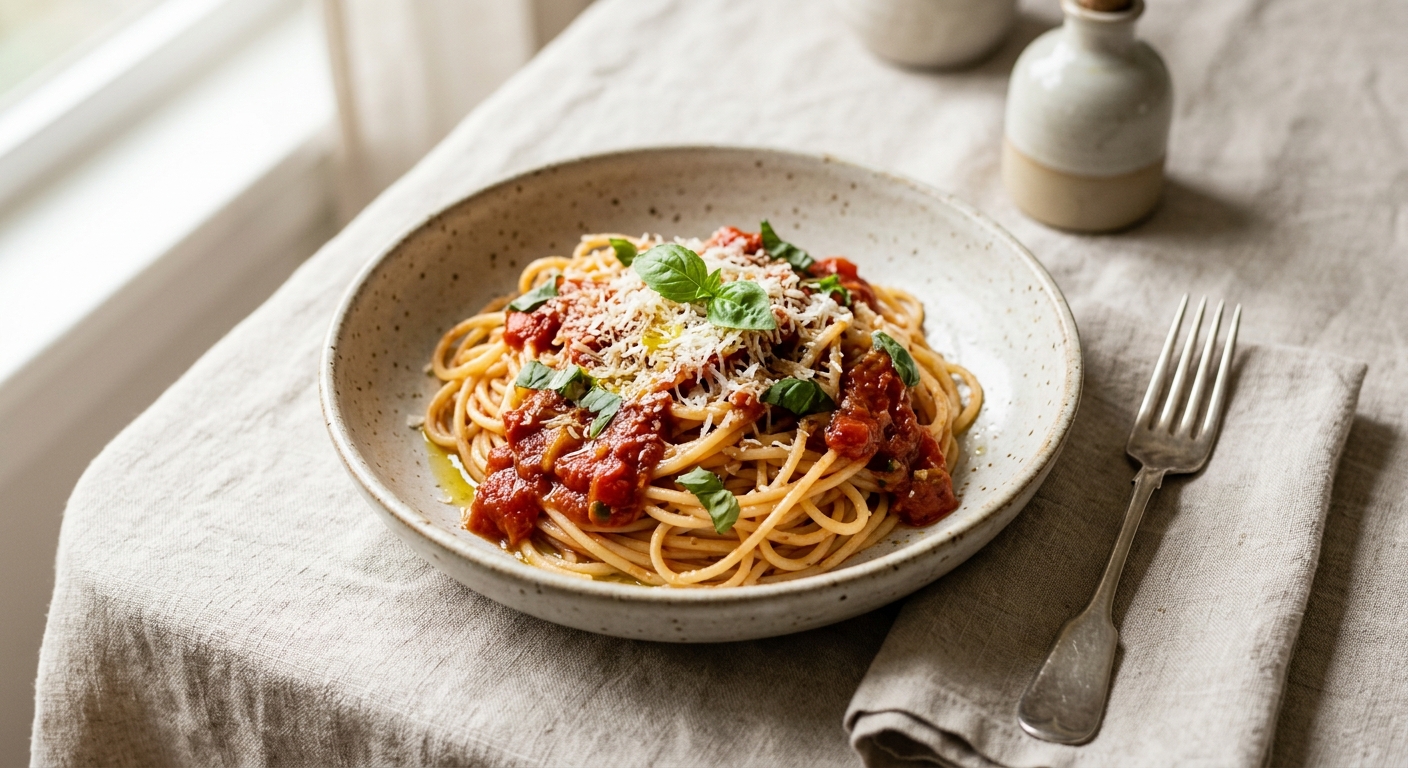
Before you cook
Background Recipe story & origin
The story of pasta marinara begins in Naples, Italy, sometime around the mid-18th century, shortly after the tomato—long feared as poisonous by Europeans—was finally embraced as a food source by the city's poor. Naples was a teeming port city, and it was here that sailors, fishermen, and dockworkers first began eating pasta tossed with a cooked tomato sauce. The name 'marinara' is widely believed to derive from 'la marinara,' referring to the maritime wives and cooks who prepared the sauce for sailors. Because tomatoes, garlic, olive oil, and oregano kept well on long sea voyages and could be quickly prepared upon a sailor's return, the sauce became deeply associated with seafaring life. Notably, the name does not mean the sauce contains seafood—a common misconception.nnBy the 19th century, pasta al pomodoro in various forms had spread throughout southern Italy, and marinara emerged as one of its most iconic expressions. Its genius lay in its restraint: a handful of humble ingredients transformed by heat into something bright, aromatic, and deeply satisfying. Neapolitan cooks prided themselves on the quality of their San Marzano tomatoes, grown in the volcanic soil near Mount Vesuvius, which gave the sauce its characteristic sweetness and low acidity. The dish was street food before it was restaurant food, sold by vendors to the working class who had neither the time nor the money for elaborate meals.nnWhen millions of southern Italian immigrants arrived in the United States between the 1880s and 1920s, they brought marinara with them, and it quickly became a cornerstone of Italian-American cooking. American adaptations often made the sauce heartier and more heavily seasoned than its Neapolitan ancestor, but the essential spirit remained: a fast, honest tomato sauce that lets good ingredients speak for themselves. Today, pasta marinara is recognized around the world as a symbol of Italian culinary philosophy—that simplicity, quality, and tradition are the highest forms of cooking.
Before you start Equipment you'll need
- Large pot (at least 6-quart) — Provides adequate space for pasta to cook evenly in boiling water without crowding or boiling over
- Large wide skillet or sauté pan (12-inch recommended) — Allows even distribution and reduction of marinara sauce while accommodating cooked pasta for finishing
- Colander — Drains pasta efficiently while allowing you to reserve pasta water for sauce consistency adjustment
- Large mixing bowl — Useful for crushing canned tomatoes by hand before adding to sauce for better texture
- Wooden spoon or silicone spatula — Heat-resistant for stirring hot sauce without damaging cookware or melting
- Ladle or measuring cup — Reserves starchy pasta water to adjust sauce consistency and help it cling to pasta
- Box grater or Microplane — Freshly grates cheese for better melting and flavor compared to pre-grated varieties
Safety Safety & allergen notes
- Boiling water can cause severe burns — keep hands and face away from the pot rim and steam when adding pasta
- Use a long-handled spoon or pasta fork to stir pasta in boiling water to avoid splashing
- Hot tomato sauce can splatter when simmering — stir carefully and keep skin covered
- The skillet handle remains extremely hot during cooking — always use pot holders or kitchen towels when handling
- When draining pasta, tilt the pot away from your body and use a colander to prevent steam burns
Non-negotiables Rules for success
-
Salt the pasta water generously until it tastes like mild seawater
This is the only opportunity to season the pasta itself; under-salted water results in bland pasta that cannot be fixed later
-
Do not let garlic brown when blooming in oil
Browned garlic develops a bitter, acrid flavor that will ruin the entire sauce
-
Crush canned tomatoes by hand and reserve all juices
Hand-crushing creates texture variation and rough pieces that cook down into a rustic sauce; discarding juices loses flavor and body
-
Cook pasta 1-2 minutes less than package directions (al dente)
Pasta continues to cook when tossed with hot sauce; cooking to package time results in mushy, overcooked pasta
-
Reserve pasta cooking water before draining and use it to loosen the sauce
Starchy pasta water emulsifies with the sauce and helps it cling to the pasta; without it, the sauce will not coat evenly
Prep Get set first
About 8 min of prep
- Fill large pot with water and place on stove
- Peel and slice 5 garlic cloves
- Open and crush canned tomatoes in a bowl
- Gather olive oil, red pepper flakes, sugar, salt, and pepper
- Have large skillet ready on stovetop
- Measure out fresh basil and parsley
- Set up colander near sink
- Have grater and Parmigiano-Reggiano ready for serving
Total cooking time is about 35-40 minutes; the sauce simmers for 20-25 minutes while pasta cooks, so most of this is hands-off time once you start.
Ingredients
Instructions
Unlock Grouped Step Actions
Plus members get tap-to-check action steps and live ingredient swaps for this recipe.
-
Boil and salt the water
Bring a large pot of water to a rolling boil over high heat. Season the water generously with kosher salt — it should taste pleasantly salty, like mild seawater. This is the only opportunity to season the pasta itself.
-
Prep the garlic and tomatoes
Peel and thinly slice the garlic cloves. Pour the canned tomatoes into a large bowl and crush them thoroughly by hand, squeezing each tomato until broken into rough, uneven pieces. Reserve all the juices from the can.
-
Bloom the garlic and chili flakes
Heat the olive oil in a large, wide skillet or sauté pan over medium-low heat. Add the sliced garlic and red pepper flakes. Cook gently, stirring occasionally, for 3 to 4 minutes until the garlic is fragrant and just beginning to turn pale golden. Do not let the garlic brown or it will turn bitter.
-
Build the sauce
Add the crushed tomatoes and all their juices to the skillet. Stir in the sugar, kosher salt, and black pepper. Raise the heat to medium and bring the sauce to a gentle simmer.
-
Simmer the sauce
Reduce the heat to medium-low and let the sauce simmer uncovered for 20 to 25 minutes, stirring occasionally, until it has thickened slightly and the oil has risen to the surface. Taste and adjust seasoning as needed.
-
Cook the pasta
Add the pasta to the boiling salted water and cook according to package directions until al dente — firm to the bite, typically 1 to 2 minutes less than the package suggests. Reserve 1 cup of pasta cooking water before draining.
-
Combine pasta and sauce
Drain the pasta and add it directly to the skillet with the marinara sauce over medium heat. Toss vigorously to coat, adding a splash of the reserved pasta water as needed to loosen the sauce and help it cling to the pasta.
-
Finish and serve
Remove the pan from heat and tear the fresh basil leaves over the pasta. Add the chopped parsley and toss once more to combine. Serve immediately in warm bowls topped with freshly grated Parmigiano-Reggiano.
Chef's notes
The sauce can be made up to 3 days in advance and refrigerated before serving.
For a vegan version, simply omit the Parmigiano-Reggiano or substitute with a plant-based alternative.
This sauce pairs beautifully with spaghetti, rigatoni, penne, or bucatini. Avoid very delicate pasta shapes like angel hair, which may become overwhelmed by the chunky sauce.
Tomorrow's Meal
Crispy Pasta Marinara Fritters
Cold pasta tossed with egg and cheese, formed into patties, and pan-fried until golden and crunchy on the outside
You'll need to pick up:
Quick overview:
- Mix cold pasta marinara with beaten eggs and Parmesan until well coated
- Form into 3-inch patties about 1/2 inch thick
- Heat 1/4 inch oil in skillet to 350°F
- Fry patties 3-4 minutes per side until golden brown and crispy
- Drain on paper towels, serve hot with extra marinara for dipping