Before you cook
Background Recipe story & origin
The story of deviled eggs stretches back over two thousand years to ancient Rome, where boiled eggs dressed with pungent sauces made from pepper, lovage, and wine were a fashionable appetizer among the wealthy. The Romans were so fond of beginning meals with eggs that they coined the phrase 'ab ovo usque ad mala'—'from eggs to apples'—to describe a meal from start to finish. This tradition of seasoned boiled eggs spread throughout Europe as Roman influence expanded, laying the groundwork for what would eventually become a global culinary staple.nnThe term 'deviled' emerged in 18th-century Britain, first appearing in print around 1786 to describe foods prepared with fiery spices or sharp condiments. By the 19th century, 'deviling' food was a fashionable cooking technique, and stuffed eggs prepared with mustard and pepper began appearing in American and European cookbooks. The addition of mayonnaise—which became widely available and affordable in the early 20th century following the commercial success of Hellmann's, launched in 1913—transformed the filling into the creamy, tangy mixture we recognize today. Southern American cooks especially embraced deviled eggs, elevating them to a cornerstone of church potlucks, holiday gatherings, and Sunday suppers.nnThe bacon-topped variation is a distinctly American flourish, born from the country's deep love affair with cured pork and the mid-20th century trend of garnishing deviled eggs with bold, savory toppings. As backyard barbecues and casual entertaining became central to American social life in the 1950s and 60s, deviled eggs with crispy bacon bits emerged as a crowd-pleasing upgrade to the classic. Today, deviled eggs rank among the most searched and shared appetizer recipes in the United States, and the bacon version remains one of the most popular—a simple, satisfying bridge between ancient tradition and American comfort food culture.
Before you start Equipment you'll need
- Large pot — Boils eggs to hard-cooked perfection with enough water to cover completely
- Slotted spoon — Safely removes hot eggs from boiling water without breaking them
- Ice bath bowl — Stops cooking process immediately and makes eggs easier to peel
- Cutting board — Provides stable surface for halving eggs and slicing bacon
- Sharp knife — Cleanly cuts eggs in half and slices bacon without tearing
- Skillet — Cooks bacon to crispy texture evenly
- Paper towels — Drains grease from cooked bacon and absorbs excess moisture
- Small bowl — Mixes yolk filling ingredients together thoroughly
- Fork or small whisk — Mashes egg yolks and blends filling to smooth, creamy consistency
- Small spoon or piping bag — Neatly fills egg white halves with yolk mixture for presentation
- Serving platter — Arranges finished deviled eggs attractively for serving
Safety Safety & allergen notes
- Boiling water and steam can cause severe burns - keep hands and face away from the saucepan when removing the lid, and use pot holders when handling the hot pan
- Hot bacon grease can splatter - use a splatter screen or keep a safe distance when frying bacon over medium heat
- Eggs are extremely hot after boiling - use a slotted spoon to transfer to ice bath to avoid burns from hot water
- Sharp knife hazard when halving eggs - cut slowly and carefully away from your body to prevent slipping and cutting your hand
Non-negotiables Rules for success
-
Use an ice bath immediately after boiling eggs
Stops the cooking process instantly and prevents the gray-green ring from forming around the yolk, which occurs when yolk continues to cook from residual heat
-
Peel eggs under cool running water
Water seeps between the shell and membrane, making it separate cleanly and preventing pitting or gouging of the egg white
-
Mash yolks until completely smooth before adding other ingredients
Lumpy yolks create uneven texture in filling and prevent proper emulsification with mayonnaise, resulting in grainy or separated filling
-
Chill filled eggs at least 30 minutes before serving
Allows flavors to meld and the filling to set firm enough to hold its shape when eaten, while cold temperature enhances taste perception of the seasonings
-
Cook bacon until crispy and cool completely before crumbling
Crispy bacon provides textural contrast to creamy filling; cooling prevents warm grease from softening the egg white and makes crumbling easier without breaking into powder
Prep Get set first
About 8 min of prep
- Fill large pot with water and place on stove
- Set up ice bath bowl with ice water nearby
- Have skillet ready for bacon
- Gather paper towels for draining bacon
- Prepare small bowl and fork for mashing yolks
- Have small spoon or piping bag ready for filling
- Arrange serving platter
- Measure out mayonnaise, Dijon mustard, vinegar, salt, and pepper
- Get cutting board and sharp knife ready
- Have slotted spoon ready for removing eggs from water
- Gather paprika and fresh chives for garnish
This recipe requires about 55 minutes total including 12 minutes passive egg cooking and 30 minutes chilling, with roughly 20 minutes of active prep and assembly work.
Ingredients
Instructions
Unlock Grouped Step Actions
Plus members get tap-to-check action steps and live ingredient swaps for this recipe.
-
Hard boil the eggs
Place eggs in a single layer in a saucepan and cover with cold water by 1 inch. Bring to a boil over high heat, then immediately remove from heat, cover, and let stand for 12 minutes.
-
Fry and crumble the bacon
Fry bacon in a skillet over medium heat until crispy, about 8–10 minutes. Drain on paper towels and crumble into small pieces once cooled.
-
Cool and peel the eggs
Transfer eggs to an ice bath and let cool for 5 minutes. Peel eggs under cool running water.
-
Halve the eggs and remove yolks
Slice each egg in half lengthwise. Carefully remove yolks and place them in a medium bowl.
-
Make the yolk filling
Mash yolks with a fork until smooth. Add mayonnaise, Dijon mustard, vinegar, salt, and pepper. Mix until creamy and well combined.
-
Fill the egg whites
Spoon or pipe the yolk mixture back into the egg white halves, filling each cavity generously.
-
Add toppings
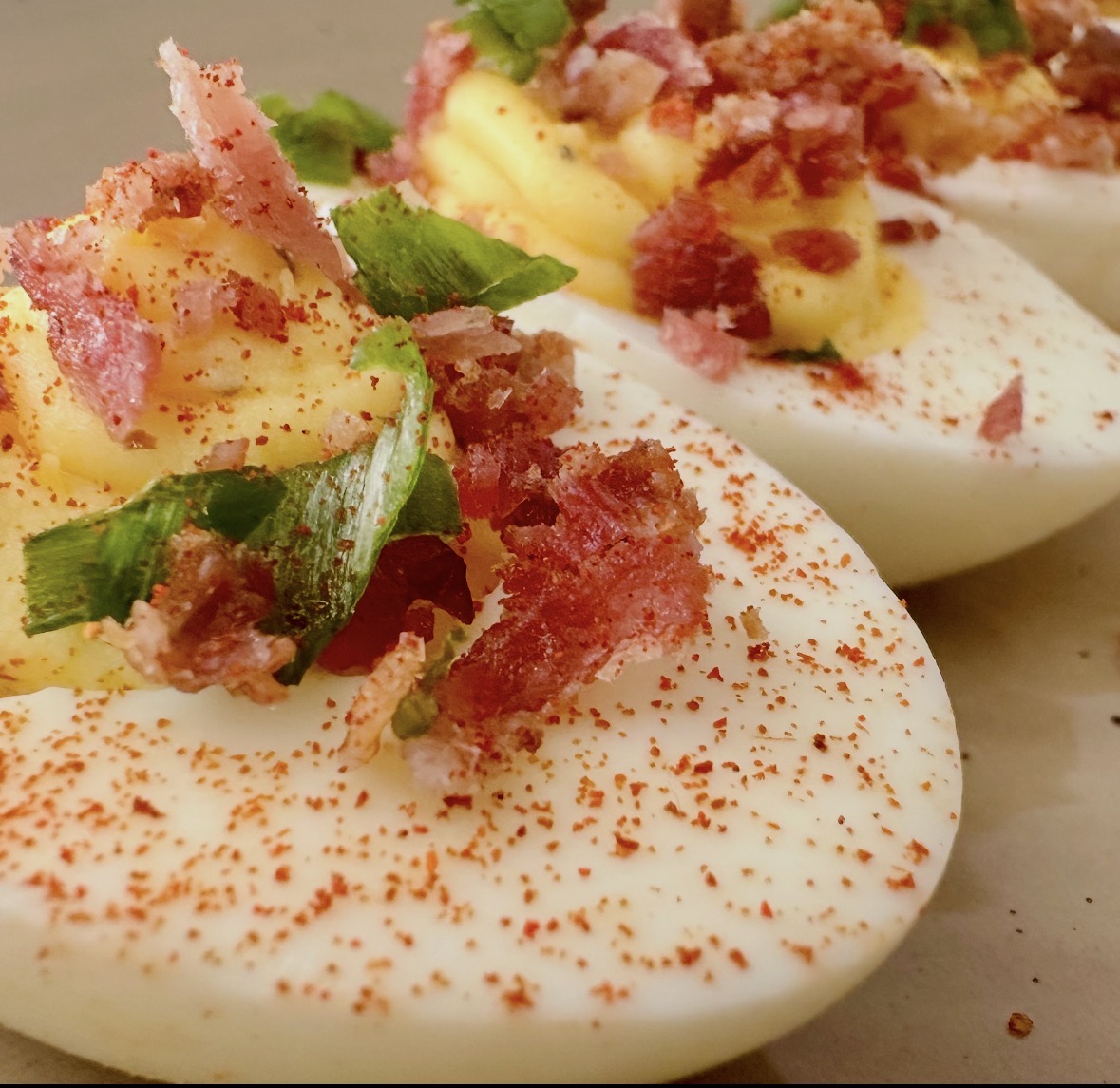
Top each deviled egg with crumbled bacon pieces. Sprinkle with paprika and garnish with chopped chives if desired.
-
Chill before serving
Refrigerate until ready to serve, at least 30 minutes for best flavor.
Chef's notes
Store covered in the refrigerator for up to 2 days before serving.
The filling can be made up to 1 day ahead and piped into eggs just before serving.
For variation, try adding a dash of hot sauce, smoked paprika, or a small amount of pickle relish to the filling.